
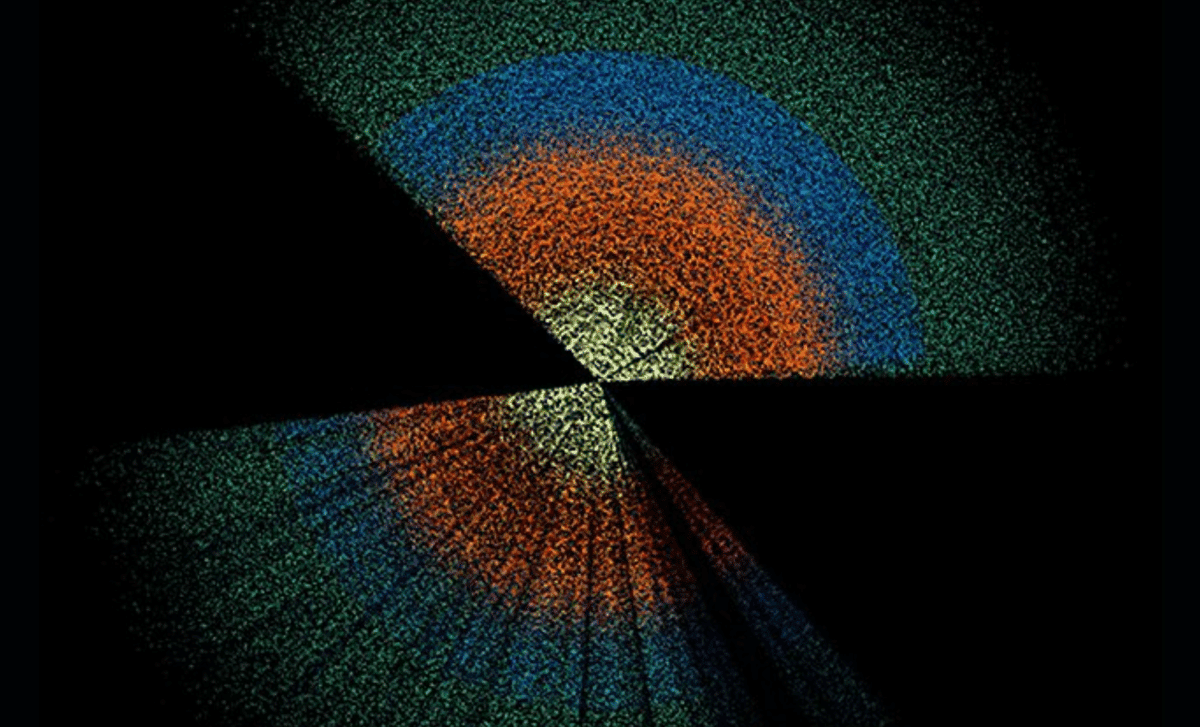
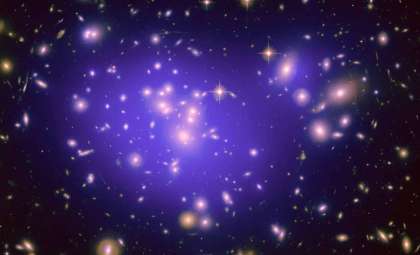
For decades, dark matter has remained one of the most elusive components of the cosmos, invisible yet outweighing ordinary matter by a factor of five. Although its existence is inferred through gravitational effects, the true nature of dark matter and how it interacts with gravity continues to perplex scientists. A new study featured in Nature Communications provides fresh perspectives on this cosmic puzzle by exploring how dark matter behaves within gravitational fields and whether it strictly follows the established laws of gravity.
The Interaction of Dark Matter and Gravity
Since antiquity, humanity has recognized the forces that govern the universe, with gravity playing a fundamental role alongside electromagnetism and nuclear forces. While ordinary matter interacts with these forces in well-understood ways, dark matter remains hidden, neither emitting nor reflecting light, which obscures direct observation. Despite this invisibility, dark matter critically influences galaxy formation and dynamics.
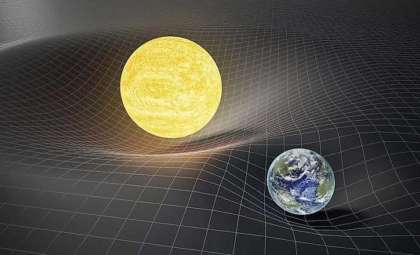
Scientists at the University of Geneva (UNIGE) have undertaken rigorous examination to determine whether dark matter adheres to the same gravitational principles as ordinary matter. Their study evaluated dark matter's response within gravitational wells—regions of warped spacetime caused by massive objects. Published in Nature Communications, the findings indicate that dark matter's motion aligns well with gravitational expectations, although significant questions remain about its full range of interactions. These discoveries enhance our grasp of dark matter and deepen our understanding of fundamental cosmic forces.

Exploring Dark Matter’s Gravitational Behavior
Key to this research was analyzing galaxy movements, where dark matter composes most of their mass, relative to the intensity of gravitational wells. The team sought to verify if dark matter responds to gravity in manners consistent with visible matter. Camille Bonvin, an associate professor at UNIGE and one of the study’s contributors, described their methodology:
“To answer this question, we compared the velocities of galaxies across the universe with the depth of gravitational wells.”
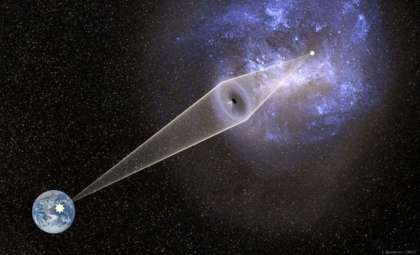
The underlying concept is straightforward: gravitational wells distort spacetime, influencing the trajectories of objects caught within their pull. Should dark matter behave identically to ordinary matter, galaxies should trace gravitational wells predictably. Conversely, if an unknown "fifth force" exists, galaxy motions could exhibit discrepancies.
This inquiry is pivotal because dark matter's undetectability leaves room for potential gravitational interactions beyond current understanding. The team’s data support the notion that dark matter largely conforms to gravitational laws, though the door remains open for alternative influences.
Considering a Potential Fifth Force
Although the results favor dark matter respecting conventional gravity, the researchers caution that an additional force may still exist. This hypothetical fifth force could subtly affect dark matter but remain below current detection thresholds. The study’s authors assert that if such a force were present, its strength would be limited to no more than 7% of gravity's pull; any stronger, and its effects would have been observable in existing data.
Nastassia Grimm, the lead author, adds,
“At this stage, however, these conclusions do not yet rule out the presence of an unknown force. But if such a fifth force exists, it cannot exceed 7% of the strength of gravity—otherwise it would already have appeared in our analyses.”
This measured stance highlights the necessity for continued exploration through improved observational tools and experiments.
The quest to unravel dark matter’s mysteries presses onward, leveraging new data sets and upcoming instruments. The Large Synoptic Survey Telescope (LSST) and the Dark Energy Spectroscopic Instrument (DESI) promise enhanced sensitivity to gravitational phenomena. Isaac Tutusaus, a co-author, emphasizes, “Upcoming data from the newest experiments, such as LSST and DESI, will be sensitive to forces as weak as 2% of gravity. They should therefore allow us to learn even more about the behavior of dark matter.”
- Categories:
- News






0 comments
Sign in to Comment