
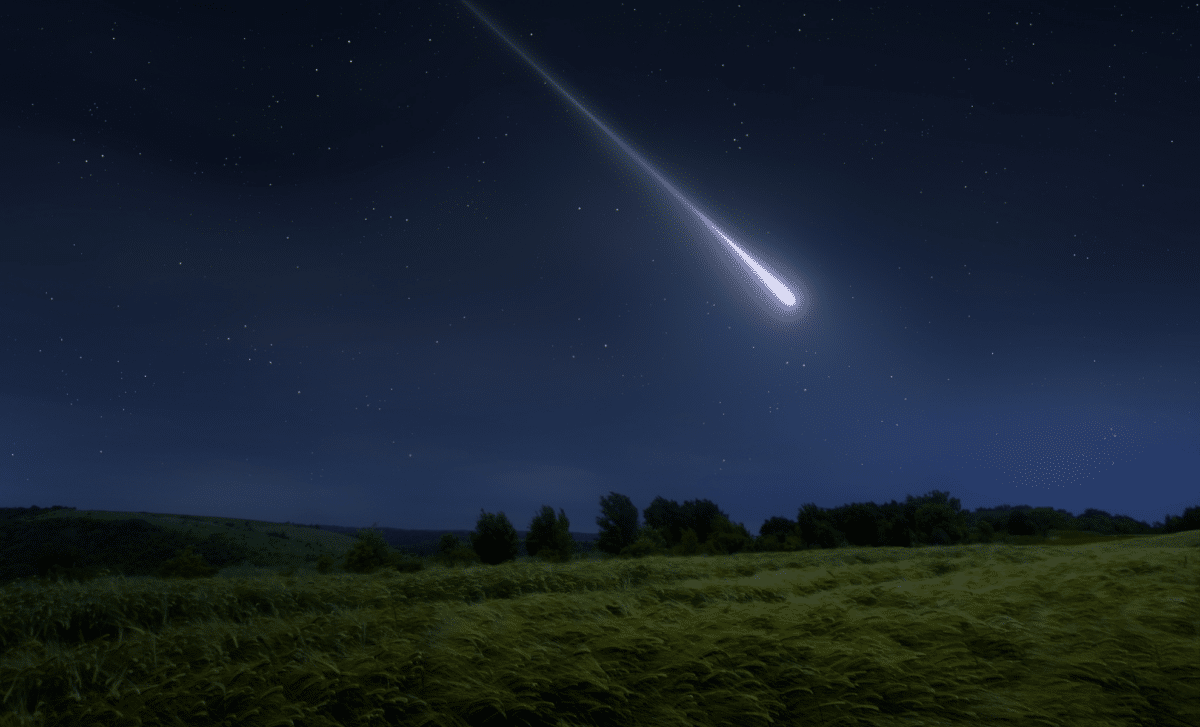
In late May, a small meteor measuring just a few feet in diameter exploded high above the northeastern United States, producing a powerful sonic boom heard across several states. Analysis shared by The Conversation estimates the event unleashed energy comparable to approximately 300 tons of TNT, underscoring the immense force even tiny celestial objects exhibit when entering Earth’s atmosphere.
The Science Behind a Small Meteor’s Massive Blast
The notion that a meteor only 3 to 5 feet wide could generate an explosion rivaling hundreds of tons of TNT may seem puzzling. The key factor is speed. According to NASA, the meteor entered Earth’s atmosphere at nearly 42,000 miles per hour (68,000 kilometers per hour). At these extraordinary velocities, even a small rock carries tremendous kinetic energy.
As the meteor descended into denser atmospheric layers, friction and compression heated its exterior dramatically. This process converted its swift motion into intense heat. About 40 miles above the surface, the meteor could no longer endure the imposing pressure and heat, causing it to break apart violently. This fragmentation created a blazing fireball and released a powerful energy burst across the atmosphere.

UPDATE: @NASA can confirm a fireball over New England at 2:06 p.m. EDT on Saturday, May 30, 2026. The meteor was about 5 feet (1.6 meters) in diameter with a mass of 5.6 metric tons and entered Earth’s atmosphere at roughly 42,000 mph.
— NASA Space Alerts (@NASASpaceAlerts) June 1, 2026
The meteor traveled through the atmosphere… https://t.co/GLeF68Q7NG
The ensuing shockwave moved faster than the speed of sound, generating the loud boom that residents across the area experienced. Although dramatic, the explosion’s energy was largely absorbed by the atmosphere. Researchers believe the surviving meteor fragments landed harmlessly in Cape Cod Bay, avoiding any ground damage.
Earth’s Atmosphere: An Effective Cosmic Shield
This incident highlights the incredible protection our atmosphere provides. Each day, Earth encounters debris remnants from the solar system’s birth, mostly tiny particles that burn up completely before reaching the ground.
Even comparatively large objects frequently disintegrate prior to posing a risk. The May 2026 meteor exemplifies this safeguard — despite its ability to unleash an explosion matching hundreds of tons of TNT, it never impacted Earth intact.
Scientists often refer to the atmosphere as the planet’s initial line of defense against space debris. Without it, impacts from meteoroids would be more frequent and damaging. Instead, our atmosphere absorbs, slows, and obliterates the vast majority of incoming objects, neutralizing potential dangers.
Fireballs occasionally visible in the sky serve as visible evidence of this process. What appears as stunning celestial phenomena are usually atmospheric defenses successfully preventing more serious impacts.
An Exceptionally Eventful Year for Meteors
The stunning East Coast fireball is among many meteor incidents noted in 2026. The Conversation reports several significant meteor sightings that have captivated scientists and sky enthusiasts alike.
In March, large fireballs illuminated the skies over Northern Europe. Subsequent recovery of fragments traced their origin to Vesta, one of the largest asteroids in the solar system, granting scientists rare samples from a body relatively unchanged since the solar system’s early history.
Another key meteor event happened on March 17, when an asteroid about six feet wide entered the atmosphere above Lake Erie. Traveling near 45,000 miles per hour, it created a bright daytime flash and released energy estimated at 250 tons of TNT. Quick trajectory analysis helped meteorite hunters recover fragments in Ohio soon after.
A smaller meteor streaked across Texas skies just days later. Though less powerful, it still produced energy roughly equivalent to 26 tons of TNT. One fragment even pierced a house roof, providing a rare example of space debris surviving its fiery descent to Earth.
The Chelyabinsk Meteor: The Modern Standard
While recent meteor explosions have been impressive, none compare to the modern-era benchmark established by the Chelyabinsk meteor.
On February 15, 2013, a much larger meteor approximately 60 feet in diameter and weighing around 10,000 tons entered the atmosphere over Russia. Exploding about 18 miles above the ground, it released an energy surge estimated to be nearly 30 times that of the Hiroshima atomic bomb.
The shockwave shattered windows over a wide region, causing injuries to around 1,500 people mainly due to flying glass. Seismic instruments recorded the explosion, highlighting both the strengths and the limits of Earth’s atmospheric shield.
The Chelyabinsk event is frequently cited in planetary defense discussions, illustrating the significant effects large meteoroids can have even when they disintegrate before ground impact.
Why Human Risk from Meteors is Minuscule
Despite sensational headlines, the odds of an individual being hit by a meteorite are extraordinarily low. The most well-documented case is that of Ann Hodges from Alabama, hit by a meteorite that crashed through her roof in 1954. While she suffered a notable bruise, her injuries were not life-threatening.
Such incidents are exceedingly rare largely because Earth’s surface is predominantly oceans, wilderness, deserts, and unpopulated areas — making direct hits on humans improbable. Most meteorites that survive atmospheric entry land far from populated regions.
To scientists, these space rocks are invaluable research materials. Meteorite recoveries provide direct access to primordial solar system matter, offering insights into planetary origins dating back over 4.5 billion years. Every fragment recovered is a precious window into the universe’s early days.
- Categories:
- News









0 comments
Sign in to Comment