

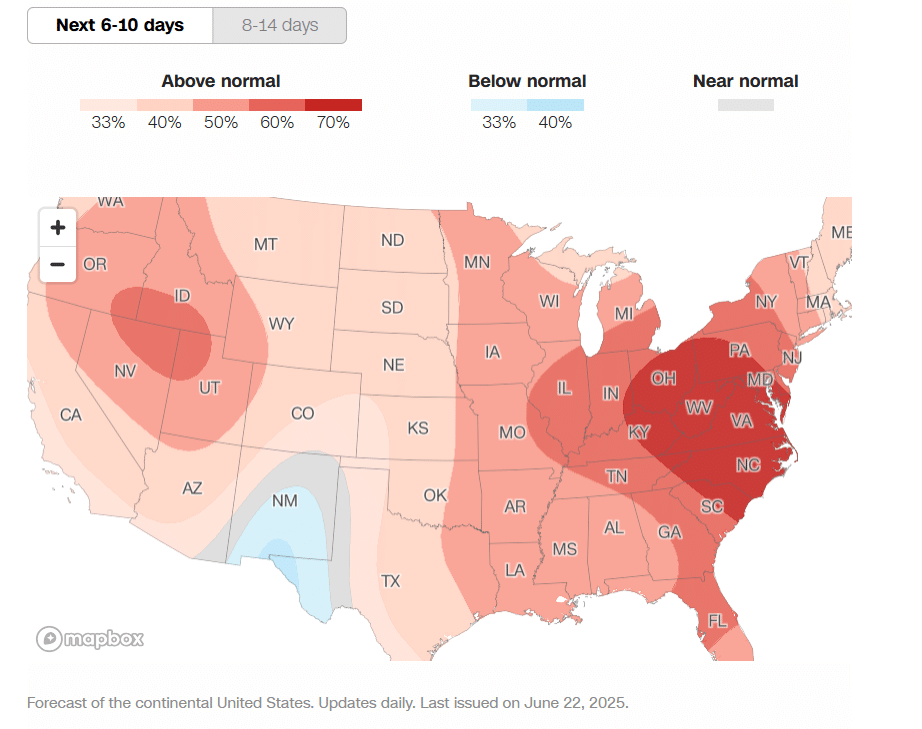
Across the eastern U.S., millions are preparing for a formidable weather phenomenon expected to shatter temperature records. From the Midwest stretching to the East Coast, a looming heat dome will bring perilously high temperatures in the coming days. This intense heat surge is predicted to be the most extreme of the year, with forecasts indicating widespread triple-digit heat index readings.
Historic Heat Levels and Increasing Hazards
The National Weather Service has declared the highest level 4-of-4 alert for extreme heat from Sunday through Thursday, alerting tens of millions of residents to expect soaring temperatures. Expect highs soaring approximately 15°F above average, with major urban centers like New York City, Washington, D.C., and Boston reaching the 90-degree mark. Combined with intense humidity, the heat index could feel as high as 110°F in parts of the Mid-Atlantic. This prolonged heat pattern poses serious concerns for public safety.
Temperatures are predicted to peak early next week, with New York City reaching about 97°F and Washington, D.C., climbing to 100°F. Monday and Tuesday are expected to challenge or exceed existing daily records. Boston will see highs near 94°F on Tuesday, approaching its all-time temperature records. Over 250 daily heat records could fall during this heatwave, including high daytime and elevated nighttime temperatures.

Amplifying Public Health Concerns
Heatwaves continue to represent the leading cause of weather-related fatalities in the U.S., responsible for over 800 deaths annually, according to recent research. This upcoming heat surge is expected to drive a rise in heat-induced illnesses. Emergency rooms often report increased visits during extreme heat events, worsened by high humidity and persistent warm overnight temperatures that inhibit the body's ability to cool down. Without adequate nighttime relief, the risks of heat stress intensify, especially for vulnerable groups.
The National Weather Service’s advisory stresses the importance of staying hydrated and using cooling strategies. “Long-lasting heat of this magnitude is uncommon,” the agency warns, “and nighttime relief may be minimal.” This heightens concerns about heat exhaustion and heatstroke, particularly for those lacking air conditioning access.
Climate Change’s Role in Extreme Heat
This severe heat event coincides with the summer solstice, marking the official beginning of summer in the Northern Hemisphere. Longer days and increased solar intensity during this time amplify the energy fueling the current heatwave. Experts in climate science view this early heat surge as a harbinger of future trends, as the peak summer months of July and August usually bring the warmest conditions.
The rise in both the occurrence and severity of heatwaves ties directly to ongoing global warming trends. One concerning consequence of climate change is the body's decreased capacity to cool down, especially at night, as overnight temperatures rise faster than daytime highs. These shifting patterns lead to prolonged heat events affecting broader regions with increased intensity.
This heatwave underscores the mounting influence of climate change on weather extremes. While the immediate heat threat may ease by next week’s end, these conditions highlight the expectation of more frequent and intense heat events in the near future.
- Categories:
- News









0 comments
Sign in to Comment