

A recent satellite investigation has uncovered that the progression of Earth's seasons is significantly more intricate and unpredictable than once thought. Featured in the journal Nature, this study analyzed two decades of satellite data to highlight zones where seasonal rhythms are remarkably out of sync, even among locations within close proximity.
Global Seasonal Patterns Mapped Like Never Before
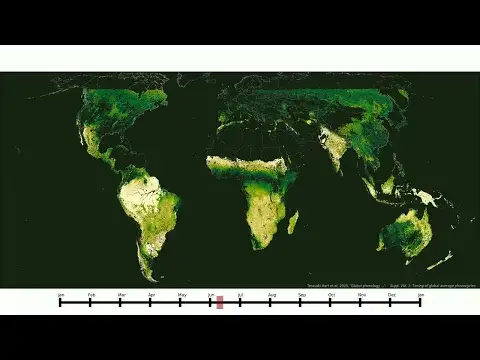
Throughout human history, the passage of time has been measured by the arrival of the four traditional seasons: winter, spring, summer, and fall. However, the investigation led by ecologist Drew Terasaki Hart from CSIRO suggests that this concept of steady, globally consistent seasons might be an oversimplification. The team introduced an animated visualization displaying seasonal plant growth cycles worldwide, uncovering complex temporal variations that contradict long-standing assumptions.
Employing satellite observations amassed over twenty years, this extensive phenological study tracked vegetative changes throughout each year. Unlike traditional approaches that presumed distinct growing seasons, this method detects subtle changes in the timing and intensity of plant activity, particularly within tropical and semi-arid zones, where seasonal shifts are less defined compared to temperate regions.

Regions of Seasonal Mismatch Found Across Continents
A notable outcome of the study is the identification of “zones of seasonal asynchrony”, remarkable areas in which ecosystem seasonal cycles vary greatly within short distances. Mediterranean climate regions—like those in California, central Chile, South Africa’s Cape area, southern Australia, and the Mediterranean Basin—stand out as prominent examples.
Forests in these areas often exhibit a “double peak” growth cycle, with the second surge in activity occurring up to two months later than neighboring ecosystems. This contrasts sharply with adjacent drylands, where plants respond mainly to summer rainfall. Consequently, these contrasting growth patterns create a patchwork of biologically out-of-phase ecosystems despite the same overarching climate.
An illustrative example is found in the U.S. Southwest. In Arizona, the cities of Phoenix and Tucson, just about 160 kilometers apart, show remarkably different seasonal growth patterns due to varying rainfall distribution. Phoenix experiences both winter and summer rains, whereas Tucson’s vegetation is greatly influenced by the summer monsoon, leading to distinct seasonal plant behavior.
Mountainous Areas Reveal Even Greater Seasonal Variability
The research further discovered that tropical mountainous regions present even more pronounced seasonal discrepancies. Here, altitude and terrain nuances result in diverse microclimates, causing neighboring valleys and slopes to experience sharply different seasonal cycles.
The study authors propose that these mismatched seasonal patterns might be “key to species distribution” in biodiversity-rich regions. Since resource availability such as food and water aligns closely with seasonal timing, these differences may drive evolutionary and ecological divergence.
Impacts on Biodiversity and Farming Practices
These findings have significant consequences beyond natural habitats. Areas with out-of-sync plant cycles may experience differences in the breeding times of species, restricting gene flow and potentially promoting genetic diversification and new species emergence over extended periods. This phenomenon could shed light on why many biodiversity hotspots coincide with areas of pronounced seasonal asynchrony.
Agricultural systems also face challenges. In Colombia, coffee plantations divided by a single mountain can have harvest schedules as asynchronous as farms located in opposite hemispheres. Such misalignments complicate production planning, supply chain management, and economic stability.
The animated map created by the research group offers real-time visualization of these seasonal disparities and serves as a predictive tool for phenological shifts under changing climate conditions. The team anticipates their work will be crucial for understanding how climate change might further alter life cycles on Earth, affecting ecological balance, food production, and species preservation.
- Categories:
- News








0 comments
Sign in to Comment