
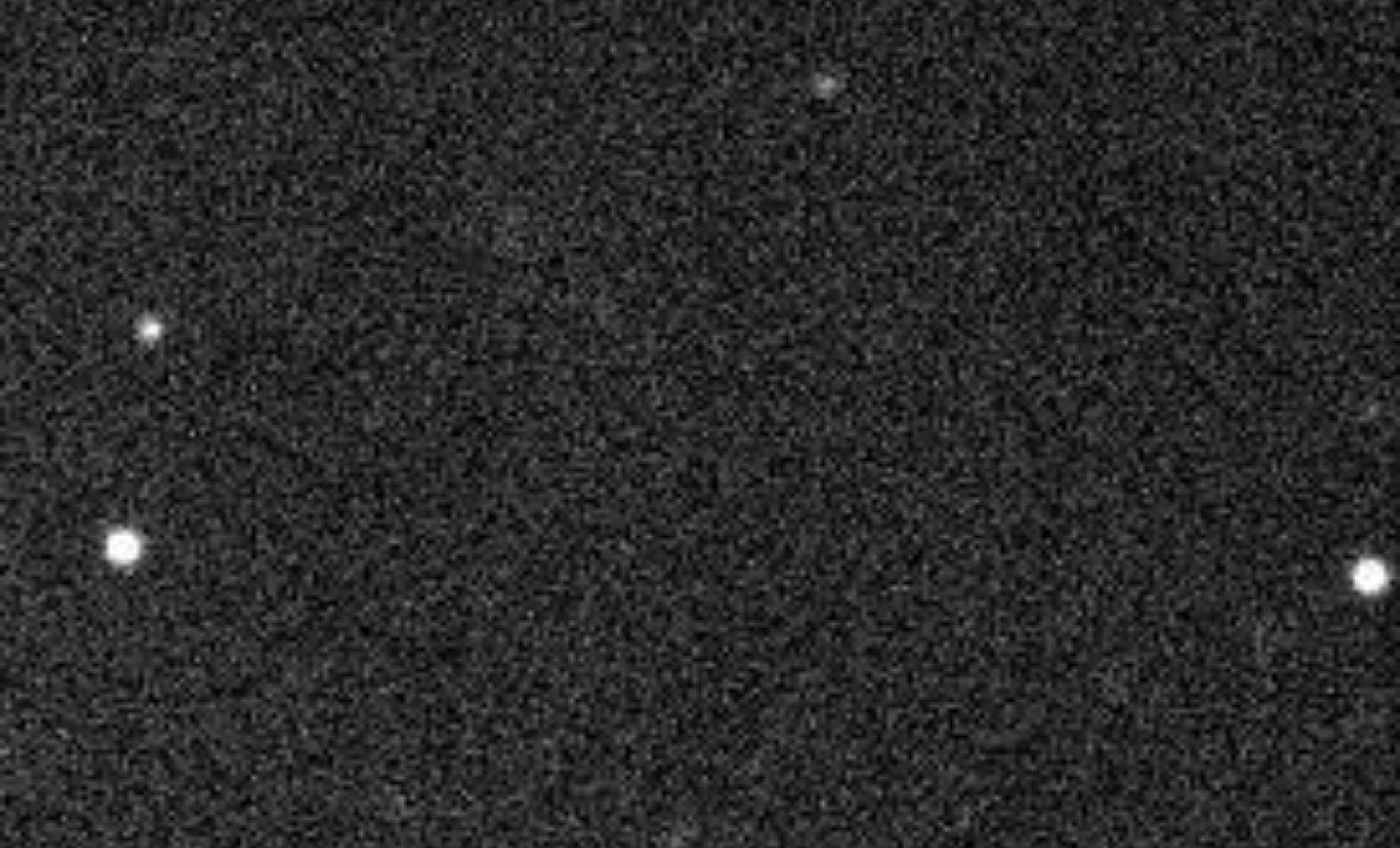
A recently discovered asteroid, dubbed 2025 SC79, has captivated astronomers with its swift journey through the inner solar system. This rare space rock is only the second known asteroid orbiting entirely within the orbit of Venus, and it now ranks as the second fastest asteroid ever tracked. The discovery, made by experts at Carnegie Science, was shared in the Minor Planet Electronic Circulars.
Discovering a Celestial Rarity at Twilight
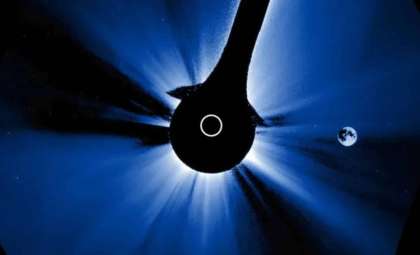
Asteroids close to the Sun pose significant detection challenges, as the Sun's intense light often obscures them. These elusive objects, called twilight asteroids, can only be spotted during brief periods just after sunset or before sunrise, when the sun is low enough below the horizon.
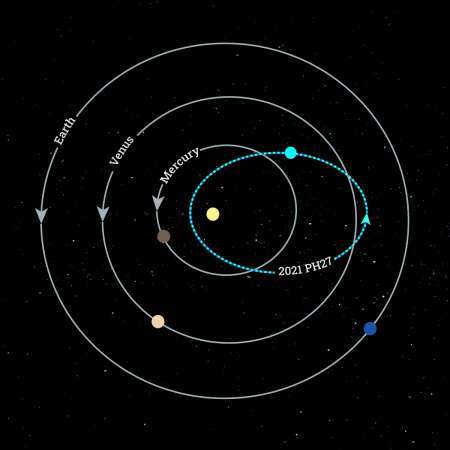
2025 SC79 was first observed on September 27, revealing a fascinating orbit that completes a solar circuit every 128 days. This rapid orbit places it just behind 2021 PH27, which, with its 113-day orbit, holds the record. Notably, 2025 SC79's path dips beneath the orbit of Mercury while remaining completely inside that of Venus.

Illuminating Hidden Asteroid Hazards Near the Sun
Although numerous near-Earth objects (NEOs) have been cataloged, twilight asteroids like 2025 SC79 remain particularly elusive.
“The most dangerous asteroids are the most difficult to detect,” explains Scott S. Sheppard, an astronomer at Carnegie Science who participated in the discovery.
Due to their proximity to the Sun’s blinding brightness, these objects evade conventional asteroid searches, which generally occur during the darkest hours of night.
The closeness to the Sun heightens potential risks if their orbits intersect with Earth's path. Although 2025 SC79 currently poses no direct threat, its discovery underscores the likelihood of many undiscovered objects in similar orbits. At roughly 700 meters (about 2,300 feet) across, 2025 SC79 is a notably large asteroid among NEOs.
The Intriguing Orbit of 2025 SC79
Most asteroids typically reside in two main populations: the belt between Mars and Jupiter, or in the distant Kuiper Belt beyond Neptune. However, gravitational forces, known as perturbations, can shift these bodies into closer solar orbits. Over time, some of these asteroids migrate inward, settling into unusual pathways like that of 2025 SC79.
“Understanding how they arrived at these locations can help us protect our planet and also help us learn more about solar system history,” Sheppard says.
Preparing for Future Observations of 2025 SC79
While the finding has generated significant excitement, 2025 SC79 is currently hidden behind the Sun from Earth's view, making direct observation temporarily impossible. Researchers plan to continue monitoring the asteroid once it becomes visible again in the coming months to study its composition, surface features, and survival mechanisms near intense solar radiation.
This follow-up effort will provide crucial data on how twilight asteroids withstand extreme heat and radiation conditions. Greater insights into their physical properties could reshape our understanding of these elusive celestial bodies, which may be far more abundant than previously recognized.
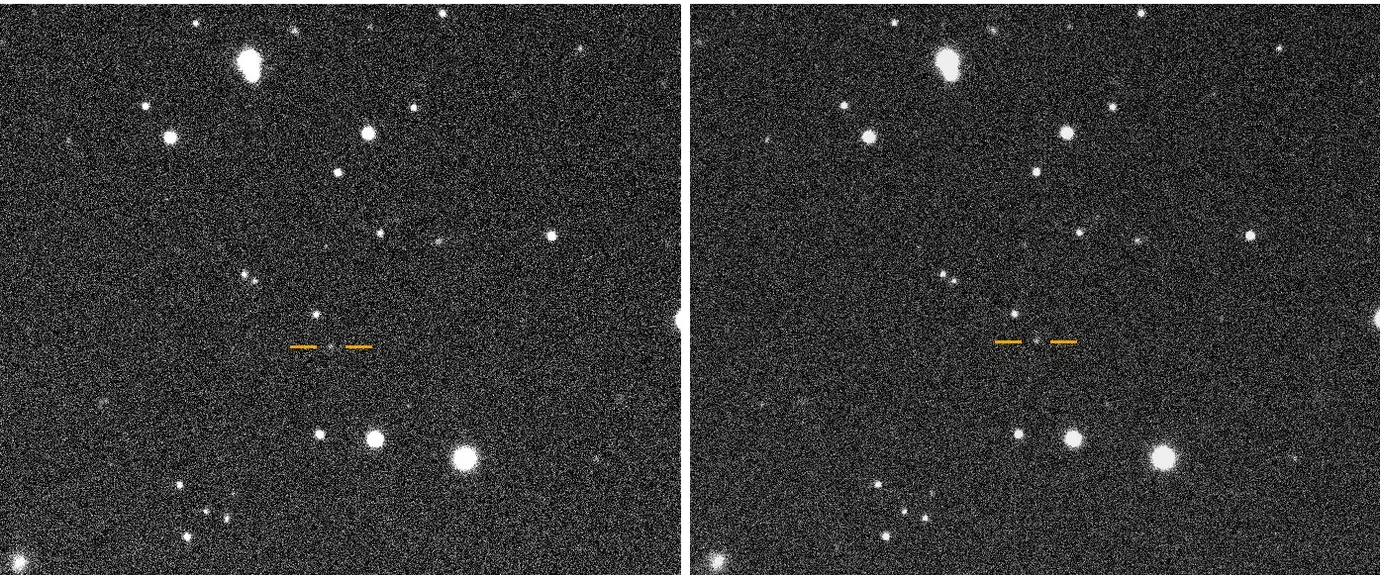
Images captured on the night of discovery, courtesy of Scott S. Sheppard and Carnegie Science, offer a rare glimpse of the asteroid briefly escaping the Sun's glare, marking an important step in exploring some of the solar system's most hidden objects.
- Categories:
- News









0 comments
Sign in to Comment