
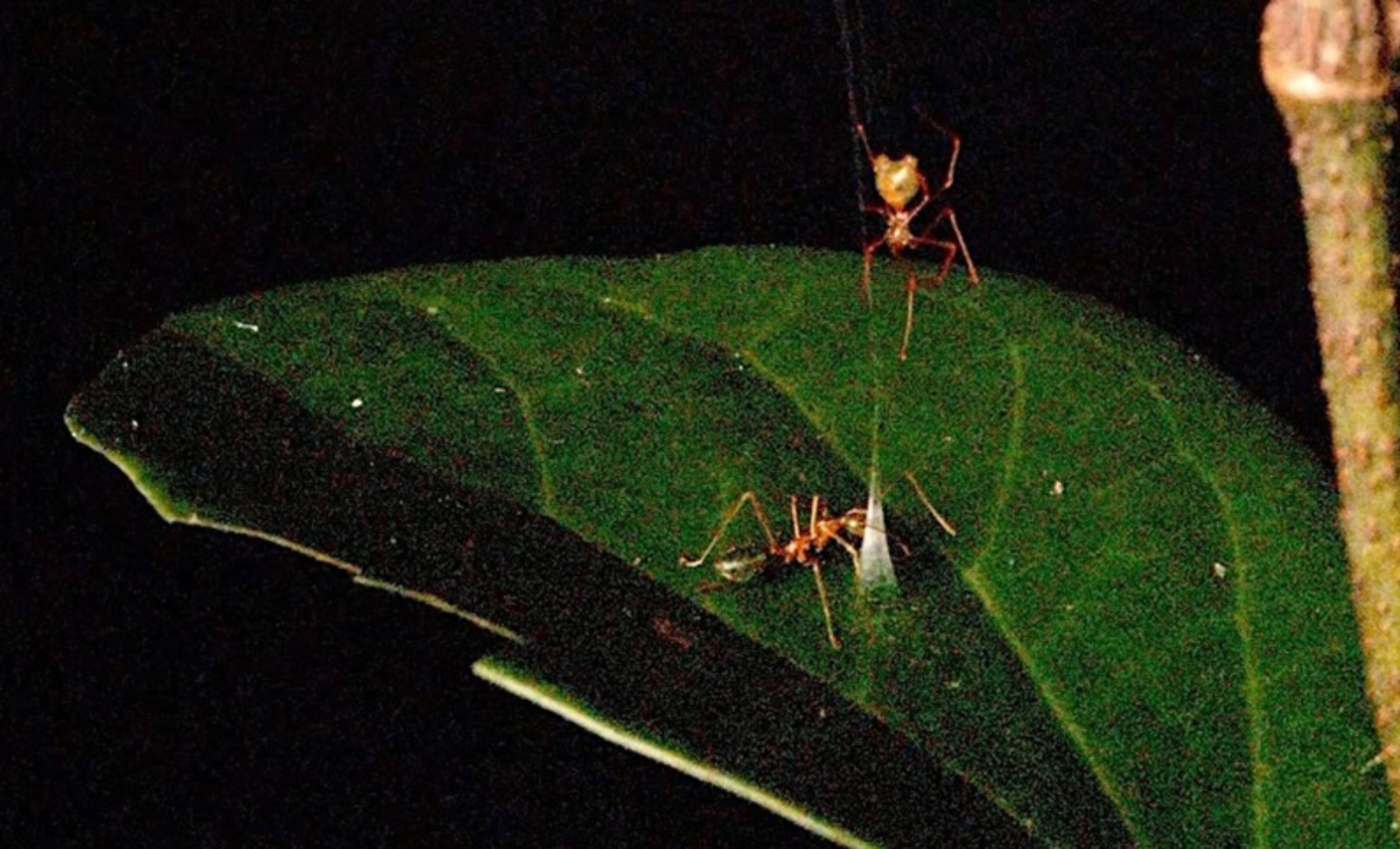
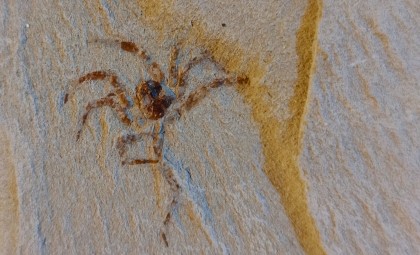
A recently identified spider species native to northern Australia’s tropical rainforests showcases an extraordinary hunting approach. Known as the “ballista spider,” it employs a tension-loaded silk trap that catapults green tree ants into its web with accelerations reaching 140 times Earth's gravity, according to research published in Current Biology.
This discovery took place in Queensland’s Cape York Peninsula, where scientists observed a small, nocturnal spider from the genus Propostira. Although spiders are famous for their wide array of hunting styles, this species uses a unique, highly specialized mechanism seemingly designed for capturing one particular type of prey.
This finding broadens the spectrum of known spider hunting behaviors. While net-casting spiders hurl silk nets over prey and slingshot spiders launch themselves using tensioned webs, the ballista spider’s trap stays inactive until activated by its target.

A Precisely Crafted Silk Launcher
Throughout the day, this spider hides inside a silk shelter attached beneath leaves. When night arrives, it constructs its trap through a sequence of meticulous maneuvers.
As detailed in Current Biology, the spider descends on a silk thread, anchors points, and repeatedly returns to the web’s center. This creates a fan-shaped array of tension lines forming a small, conical framework.
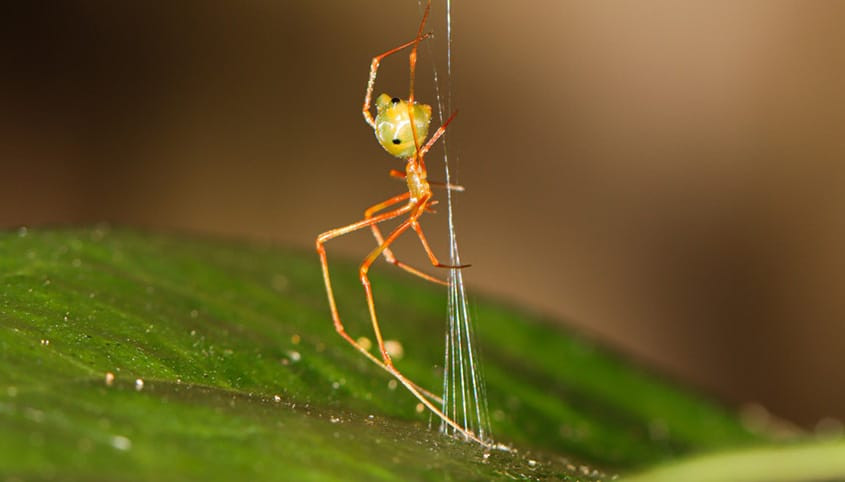
The cone is then enveloped in a finer silk, forming a spring-loaded device capable of storing ample energy. Observations showed the spider carefully replicates this sequence until the trap is complete.
Unlike typical webs that passively catch prey, this device depends on a deliberate interaction with a specific ant species. The trap remains poised until an ant engages with it.
A Targeted Ambush for Green Tree Ants
The ballista spider’s primary prey is the green tree ant (Oecophylla smaragdina), known for aggressive defense tactics and colony strength.
Scientists speculate that the silk coating the trap might contain chemical signals or pheromones that lure ants and provoke attack behavior. Shortly after the trap is completed, worker ants often approach and scrutinize the cone. Instead of avoiding it, they strike. The trap triggers when an ant bites the cone.
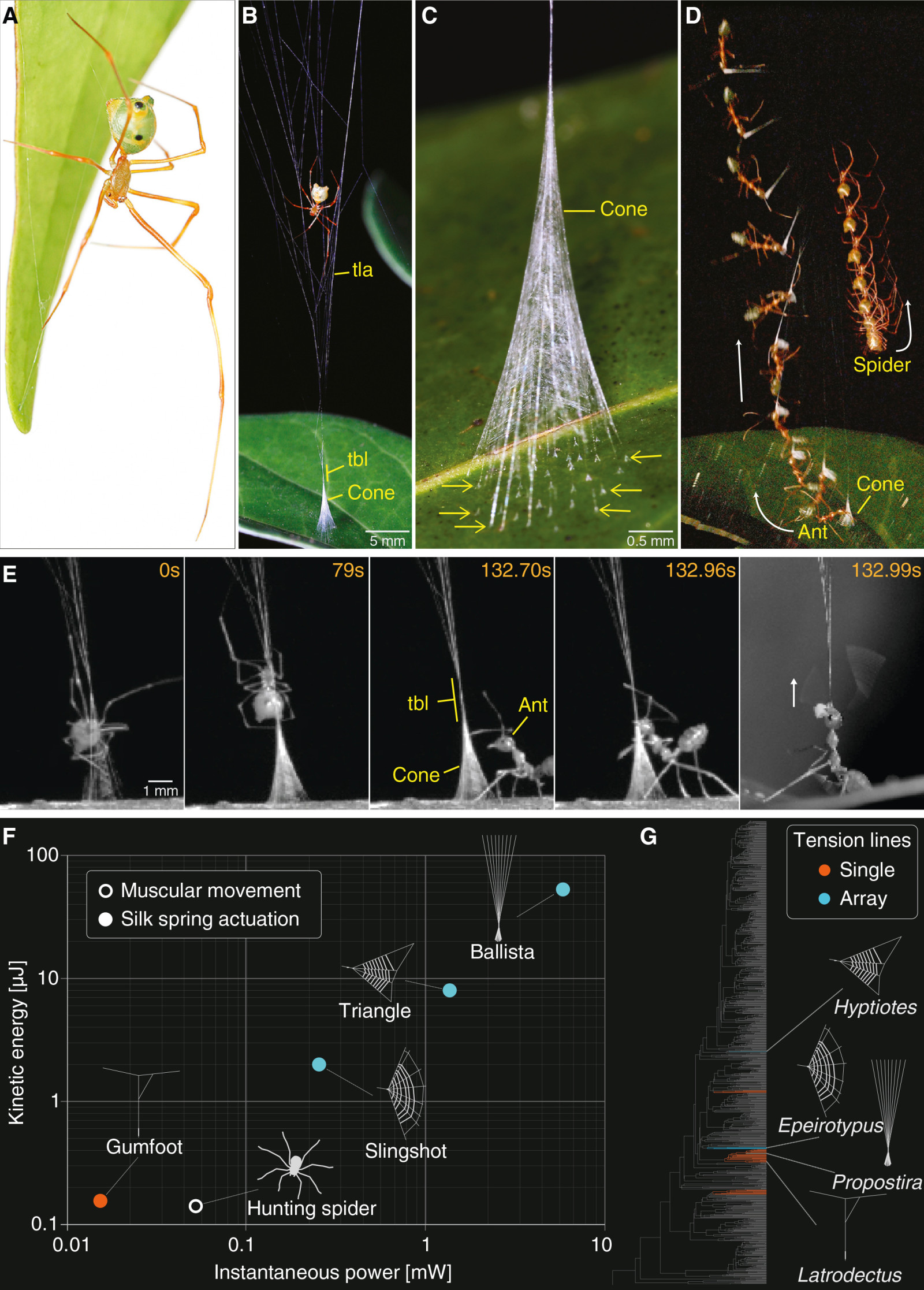
The Macquarie University explains that the bite causes the cone to detach, unleashing the stored tension energy. This action propels the ant upward and into the spider’s densely woven central web in a split second. Only after securing its prey does the spider advance, ensnaring and consuming the ant.
Record-Setting Silk Catapult
Data gathered during experimentation showed the spider’s trap exerted extreme forces, with accelerations reaching up to 1,367 meters per second squared, about 140 times Earth’s gravitational pull.
These accelerations surpass the maximum g-forces endured by jet fighter pilots by roughly 15 times.
The trap outperforms all previously known biological catapults utilizing silk. Findings demonstrate that, by weight, the ballista spider’s silk system stores more energy and delivers greater power than any silk mechanism documented so far.
Calculations suggest one kilogram of this silk could store 78.17 kilojoules of kinetic energy and momentarily generate 11.73 megawatts of power.
Researchers suggest this remarkable power allows the spider to extract ants from nests and pathways before defenders can react. The study also emphasizes the spider’s two unusual traits: specializing on a single prey insect and using prey-initiated triggering to capture it.
- Categories:
- Science






0 comments
Sign in to Comment