

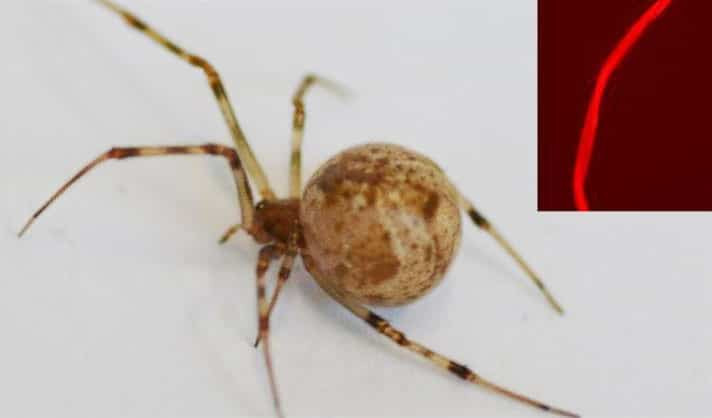
Researchers in Germany have achieved a groundbreaking feat by employing CRISPR-Cas9 technology to engineer spiders that produce silk glowing red under fluorescence. This genetic alteration holds promising implications for innovations in both material science and genetic engineering.
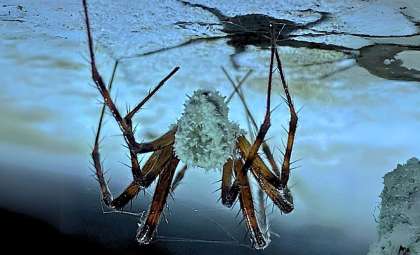
The work focuses on the familiar house spider (Parasteatoda tepidariorum), whose DNA was modified to create silk with new optical properties. The scientists emphasize that this accomplishment not only highlights the precision of CRISPR gene-editing but also introduces new horizons for creating advanced, multifunctional materials that surpass traditional silk.
Introducing Gene Editing to Arachnids
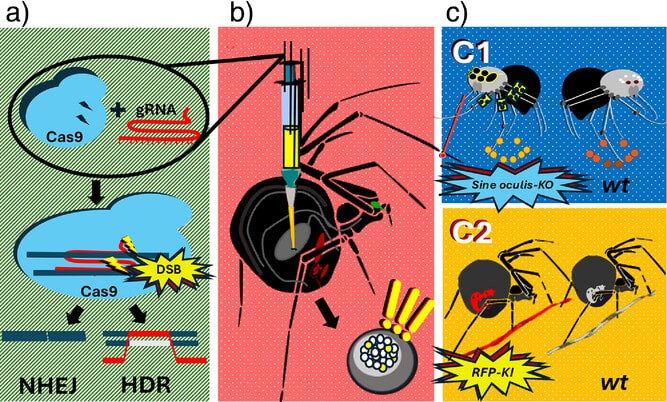
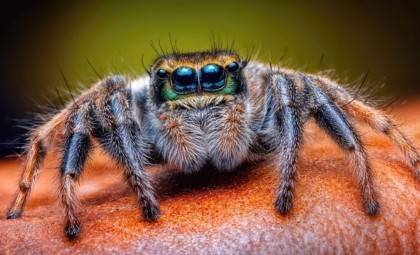
Although CRISPR-Cas9 has transformed biological research in numerous species, this marks the inaugural use of the method on spiders. The initiative, led by biochemist Thomas Scheibel, began by targeting a gene responsible for eye formation.

“Considering the wide range of possible applications, it is surprising that there have been no studies to date using CRISPR-Cas9 in spiders,” remarked Scheibel.
As a result, some spiderlings emerged without eyes, illustrating the ability of CRISPR to enact targeted genetic modifications in these creatures. The research then progressed to inserting a gene coding for a red fluorescent protein into the spiders’ silk glands, yielding descendants that spin silk illuminated in vivid red.
According to a report in Angewandte Chemie, this represents the first direct application of CRISPR-Cas9 to alter the biochemical composition of spider silk, confirming that gene editing can transform not only an organism’s biology but also the characteristics of materials they generate.
The Remarkable Properties of Spider Silk
Spider silk is renowned for its extraordinary combination of strength and elasticity. Certain varieties exceed steel in tensile strength while being significantly lighter, making them ideal for use in surgical sutures, eco-friendly fishing lines, and protective fabrics. However, breeding spiders for silk production is challenging due to their territorial nature, unlike the more manageable silkworm. This is where CRISPR technology could be transformative, enabling the creation of spider silk with enhanced traits such as greater durability or flexibility.
“The ability to apply CRISPR gene-editing to spider silk is very promising for materials science research – for example, it could be used to further increase the already high tensile strength of spider silk,” stated Scheibel.
The team underscores that gene editing could eventually produce custom-designed spider silk for a spectrum of uses, ranging from durable construction materials to medical devices. While this particular study poses no harm to the spiders or their ecosystems, the broader application of CRISPR in wildlife does prompt thoughtful discussion about ecological consequences and biodiversity preservation. Nevertheless, the scope for CRISPR to revolutionize the development of innovative materials remains vast.
- Categories:
- Science








0 comments
Sign in to Comment