
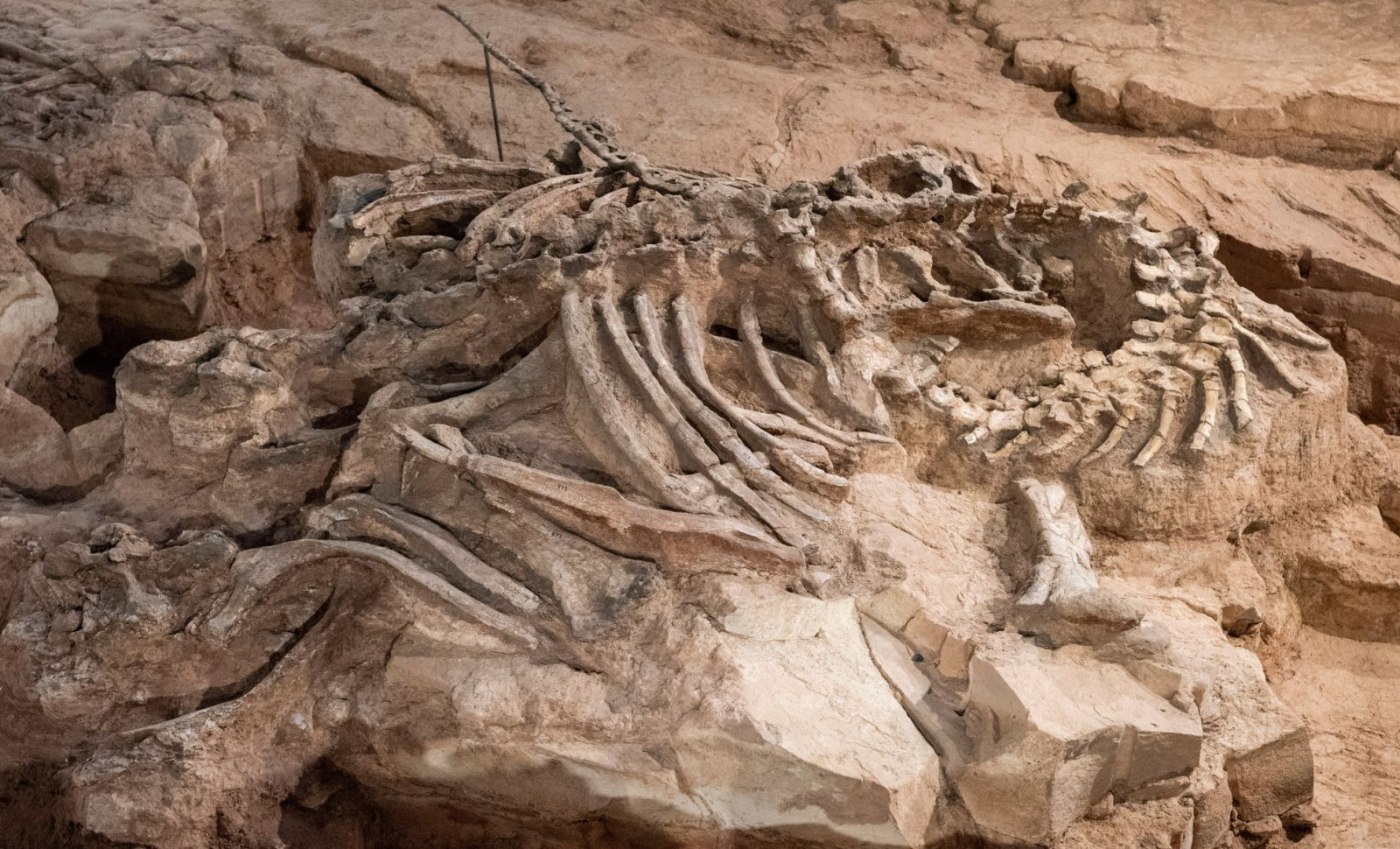
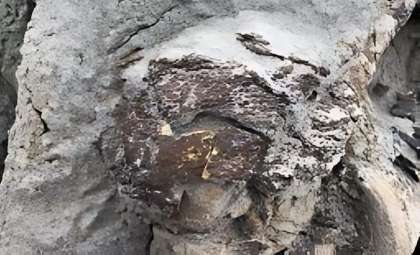
Experts from Winona State University have uncovered a 66-million-year-old Edmontosaurus fossil in the Badlands of North Dakota that astonishingly retains fossilized skin. Dubbed “Medusa,” this find ranks among the most exceptional dinosaur fossils ever discovered due to its remarkable preservation.
This discovery sheds new light on a dinosaur species that coexisted with famed creatures like Triceratops and Tyrannosaurus rex near the close of the Cretaceous period. Its significance goes beyond sheer size, highlighting the rare survival of soft tissues in fossils of this magnitude.
Currently housed in the university’s Science Laboratory Center, the fossil promises to be a vital asset for both scholarly research and educational outreach. The discovery team envisions it as a lasting resource for both scientists and students.

Remarkable Fossil With Skin Intact
The fossil’s articulation combined with its preserved skin makes it a particularly valuable specimen. According to a press release from Winona State University, Dr. Lee Beatty highlighted that such preservation in large dinosaur fossils is exceedingly uncommon.
“This is an extraordinary moment for Winona State and for science,” he said. “ If this fossil contains preserved skin and soft tissues, it could provide unprecedented insights into dinosaur biology, evolution, and appearance — things skeletons alone can’t tell us.”
He added that only a handful of fossils like this exist globally. The Edmontosaurus, a plant-eater, roamed the earth during the late Cretaceous, making this remarkable specimen an important window into that epoch.
Challenging Recovery From Tough Terrain
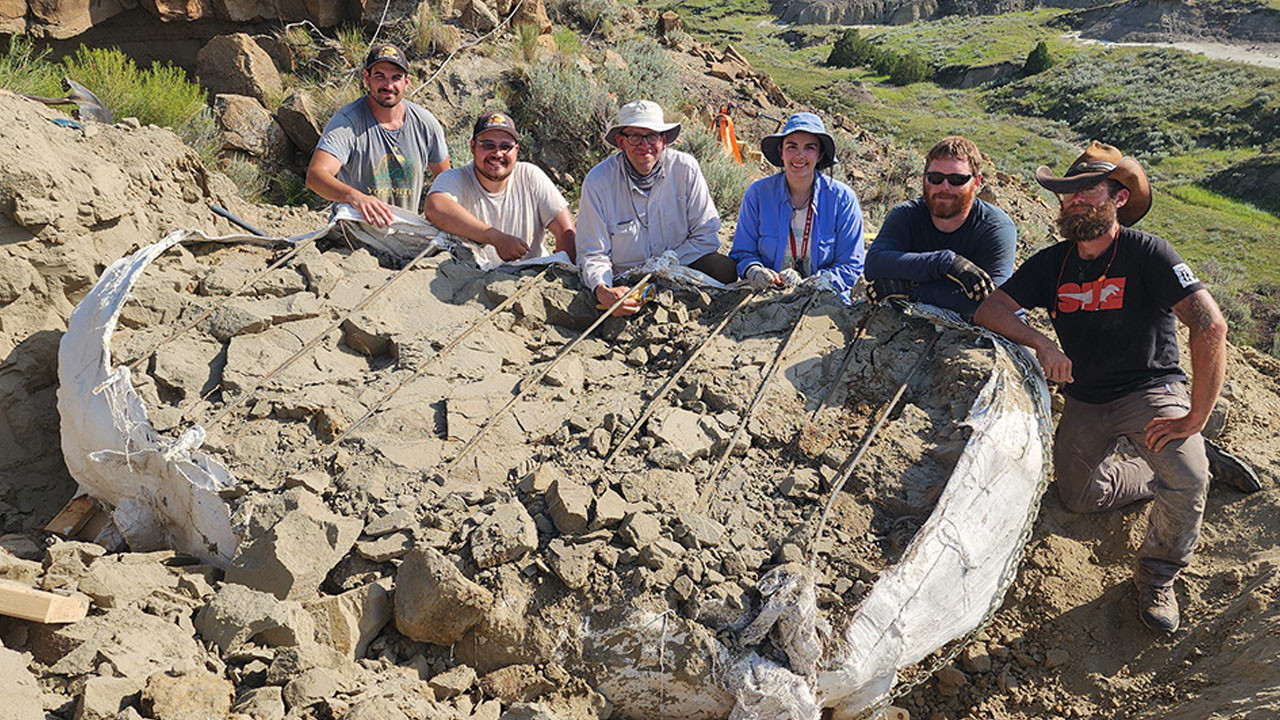
The fossil was found in a rugged region, situated roughly 85 feet high on a cliff. Removing it demanded meticulous planning due to the steep location and limited equipment availability.
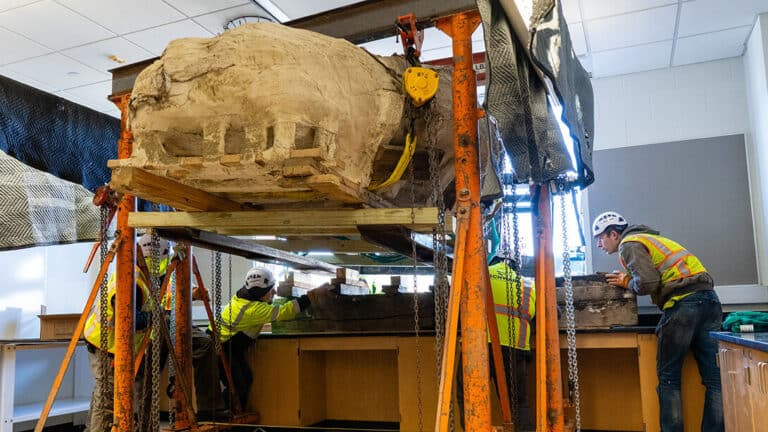
Adam Schroeder, who leads Hell Creek Fossils, described the excavation site as nearly inaccessible to heavy machinery, with budget constraints adding further difficulty. The fossil is roughly 12 feet long and 7 feet wide, weighing over 7,000 pounds, making its extraction a complex endeavor.
“Medusa”: An Extraordinary Discovery Garnering Attention
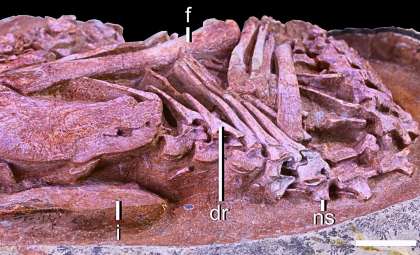
Although the fossil lacks its skull, it remains impressively intact with a conserved vertebral column from shoulders to hips. This type of articulation is rarely seen and enhances its scientific importance.
The nickname “Medusa” refers to both the fossil’s missing head and the snakes observed at the excavation site. Now preserved at Winona State University, the fossil will be accessible for scientific study, educational activities, and public exhibition, aiming to deepen knowledge of prehistoric ecosystems and spark interest in paleontology.
“This discovery is not just about science — it’s about education and opportunity,” Beatty stated. “Our students will gain hands-on experience in fossil preparation and research, and the community will have a chance to engage with a piece of Earth’s history.”
- Categories:
- Science






0 comments
Sign in to Comment