
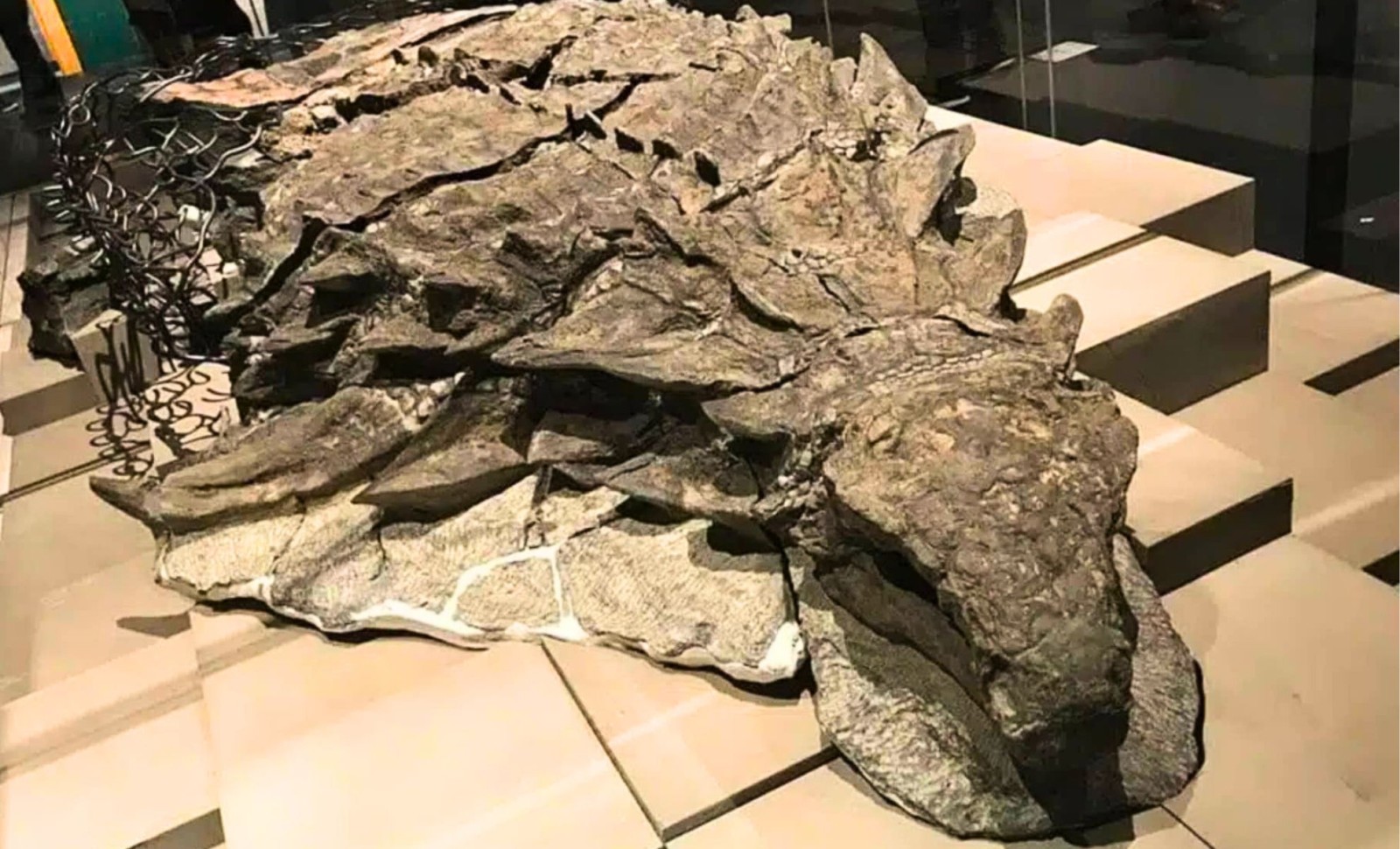
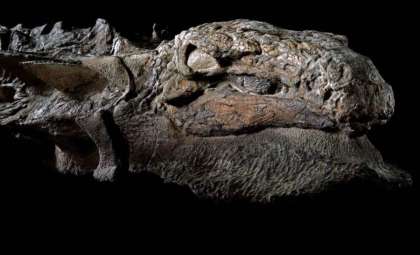
In March 2011, a backhoe operator working at a vast oil sands site near Fort McMurray, Alberta, stumbled upon one of the rarest fossils ever recorded by paleontologists. The excavation revealed more than just skeletal remains; it uncovered a nearly intact dinosaur encased in hard stone.
This specimen preserved in three dimensions includes traces of skin, armor, keratin sheaths, and even remnants of its original pigmentation after 110 million years underground. Named Borealopelta markmitchelli, this dinosaur is hailed as the most exquisitely preserved armored dinosaur to date. Beyond its exceptional preservation, the fossil offers clues that this massive plant-eater used camouflage as a survival adaptation.
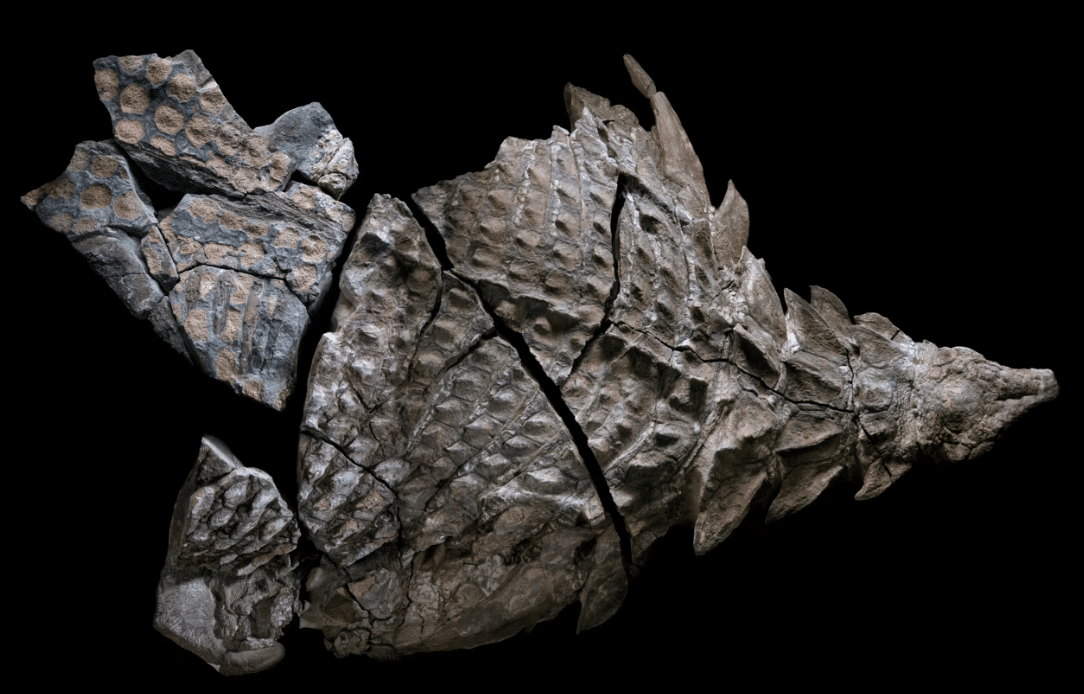
The discovery has profound implications. Not only did Borealopelta maintain its shape, but it also preserved color patterns that suggest it employed countershading, a natural camouflage technique where darker hues cover the top and lighter tones the underside—a pattern still common among many modern animals including deer and sharks. That such a massive, heavily armored herbivore relied on camouflage indicates it faced predators that were both large and visually adept hunters.

A Fossil that Defies Preservation Norms
The findings were detailed in Current Biology by a research team led by Dr. Caleb Brown and Dr. Donald Henderson at the Royal Tyrrell Museum of Palaeontology, alongside chemical paleobiologist Jakob Vinther from the University of Bristol.
The fossil originated from the marine Clearwater Formation, a Cretaceous geological unit once submerged under shallow seas. According to The Atlantic, the dinosaur likely drowned, floated belly-up in the ocean, and sank with enough force to create a depression on the seafloor. Swift burial within fine, dense sediments prevented decomposition and scavenger damage.
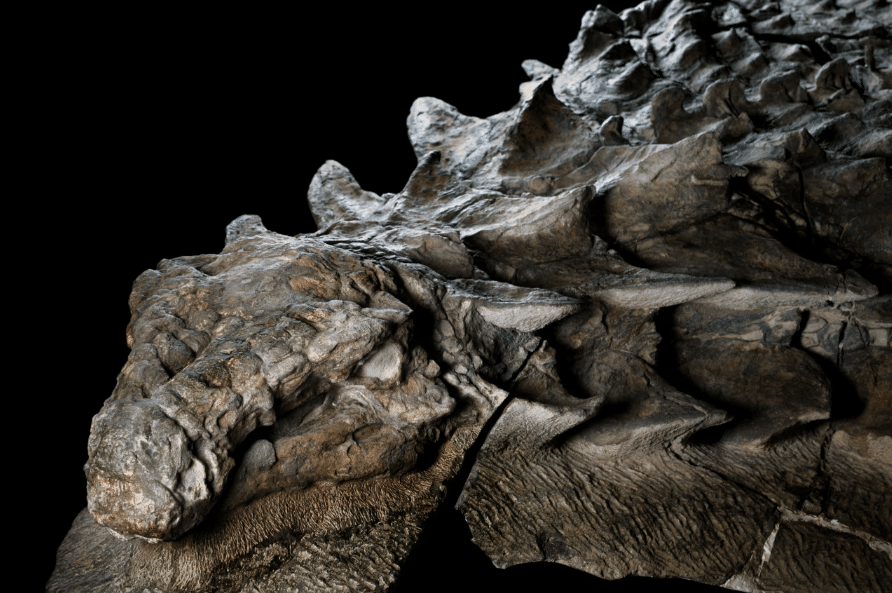
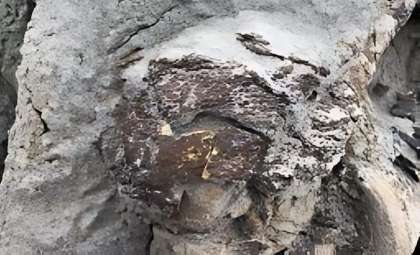
Unlike many fossils compressed into two dimensions, Borealopelta remains fully three-dimensional with armor plates—known as osteoderms—still firmly attached. Its keratin sheaths, rarely seen in fossils, are visible. Chemical tests using pyrolysis-gas chromatography-mass spectrometry identified pheomelanin, a reddish-brown pigment often found in mammals and birds.
“The pigment composition of the skin shows it was reddish-brown due to pheomelanin,” the team concluded. This, combined with its darker dorsal and lighter ventral coloring, solidifies the presence of countershading, a camouflage method that softens visual contours under natural light.
Armored but Still Concealed
What sets this discovery apart is not only its preservation but its biological message: a 1,300-kilogram dinosaur adapted to evade detection. In today's animal kingdom, creatures of this size typically depend on sheer strength and defensive traits rather than camouflage. Species like elephants, rhinos, and bison rely on size and physical defenses. Yet this armored dinosaur, armed with thick body armor and large shoulder spines, still evolved to minimize its visibility.
“The presence of countershading in such a well-armored dinosaur highlights intense visual predation pressures,” the researchers noted. This contrasts with modern ecosystems, where apex predators tend to be mammals with limited color vision.
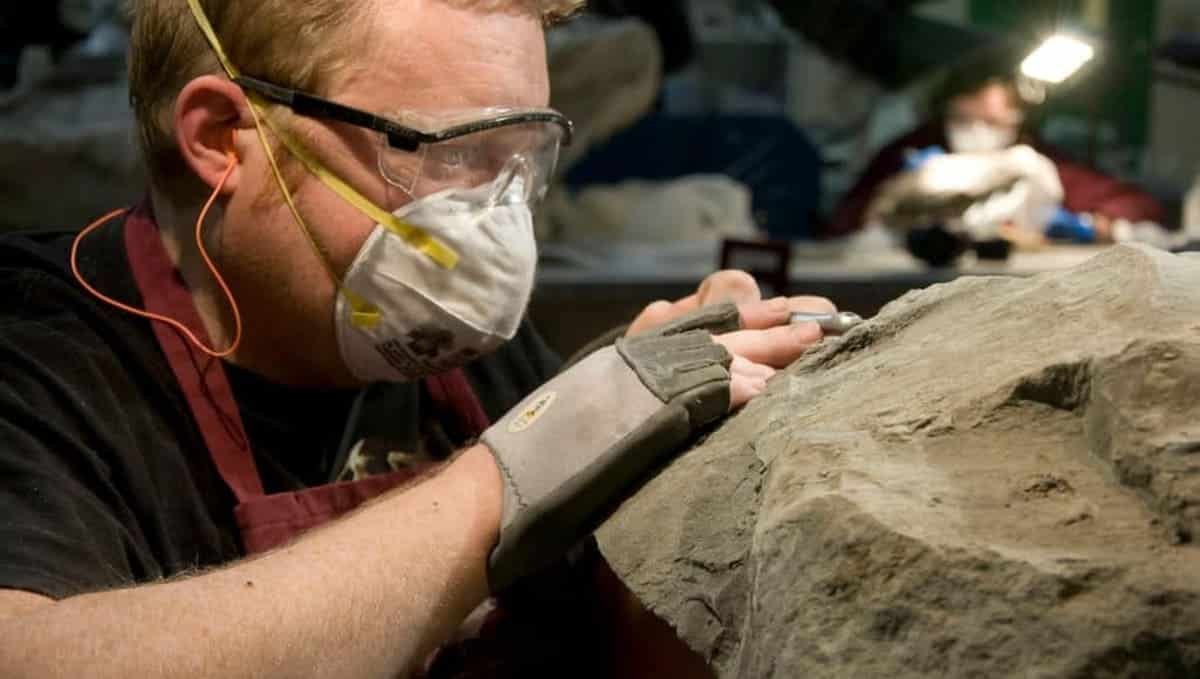
The Cretaceous world appears to have followed different visual hunting strategies. The dinosaur’s potential predators, such as large theropods like Acrocanthosaurus or allosauroids, possessed keen eyesight and color vision—possibly including tetrachromatic or ultraviolet sensitivity—comparable to modern birds and reptiles. This level of visual acuity would have made camouflage essential even for large, armored herbivores.
More Than Just Protection: Visual Signals Embedded in Armor
Not all of Borealopelta’s armored features served concealment. One remarkable example is a pair of large, curved parascapular spines projecting from its shoulders. These spines had distinct pigmentation and exhibited faint fluorescence under UV light, indicating they likely functioned in visual display.
According to the authors, “The unique pigmentation and enhanced keratin sheath on the parascapular spine implies its role was primarily for display.” This observation corresponds with known armored dinosaur behaviors, where spine shapes and coloration likely played roles in communication, mating, or species recognition.
Furthermore, the skin perfectly overlays each osteoderm—matching shape and position—demonstrating a tightly integrated evolutionary system balancing defense with camouflage.
An additional study in Royal Society Open Science by the same group (Henderson et al., 2017) simulated buoyancy and body mass for Borealopelta, supporting the idea that its carcass floated considerable distances before settling on the seabed.
- Categories:
- Science



0 comments
Sign in to Comment