
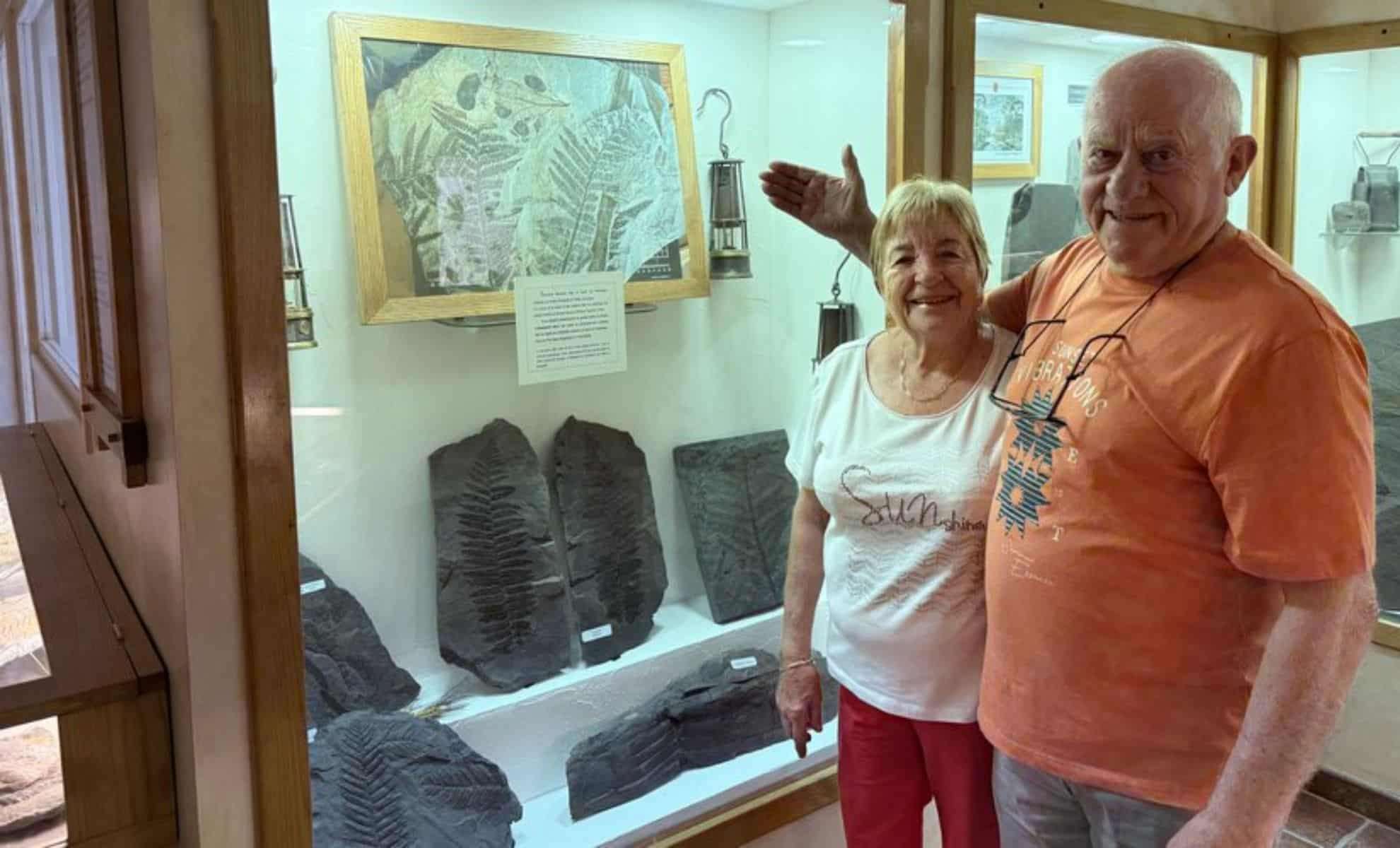
In the quiet village of Berlou, situated in southern France’s Hérault region, a remarkable fossil find has sparked excitement among scientists worldwide. Nearly 15 years after its discovery, a dedicated couple has handed over the fossil to Paris’s Muséum National d’Histoire Naturelle for detailed study, raising hopes it might represent an entirely new species.
Driven by a Shared Love for Fossils
On June 16, 2025, the French news outlet Midi Libre featured Francis and Colette Fernandez, the passionate duo behind the Maison du Cambrien, a community museum dedicated to paleontology. They have long explored the abundant fossil-rich sites nearby, curating a collection of almost 400 examples displayed at their museum, which has welcomed thousands of visitors since it opened in 2010. The museum itself is set in a charming building offering panoramic views of Berlou, nestled amid the scenic Montagne Noire area.
With their enthusiasm clearly evident, the Fernandez couple has devoted themselves to uncovering the secrets of ancient life. Their cozy museum and impressive fossil assortment have drawn interest not only from locals but also from respected researchers globally, including recently from CNRS experts in Toulouse. “When the CNRS team came a few months back, their expressions said it all – they were genuinely amazed,” Colette recalled.

An Intriguing Fossil Specimen
Among the museum’s treasures lies one fossil that stands apart. Found nearly 15 years prior, this specimen remains unidentified. It measures approximately 40 by 30 centimeters and rests upon a large slab, its detailed features stimulating considerable intrigue among paleontologists. Francis noted, “Rather than have it tucked away behind closed doors, it’s better displayed for everyone to appreciate.” The fossil’s distinctive characteristics hint it may represent a previously unknown species, though confirming this has proved difficult.
Leveraging their expertise and passion, the Fernandez couple sent the fossil to the Muséum National d’Histoire Naturelle in Paris, where experts will carefully restore and analyze it. “The restoration process might take several years before we understand its true identity,” Francis explained.
Colette expressed a heartfelt connection to the find, saying, “If it is indeed a new species, it will bear our name.”
Creating a Lasting Impact
The prospect of having a new species named after them is not only a personal triumph for the Fernandez couple but also an important scientific milestone. Such a discovery could provide fresh insights into the diversity of prehistoric life on Earth.
Their commitment to fossil research and preserving the paleontological legacy of their region underscores the vital role that small museums and private collectors play in enriching scientific understanding.
The museum stands as a monument to their dedication and passion, and as the investigation into the fossil progresses, Berlou may soon gain recognition as a key site in the history of paleontology.
- Categories:
- News










0 comments
Sign in to Comment