
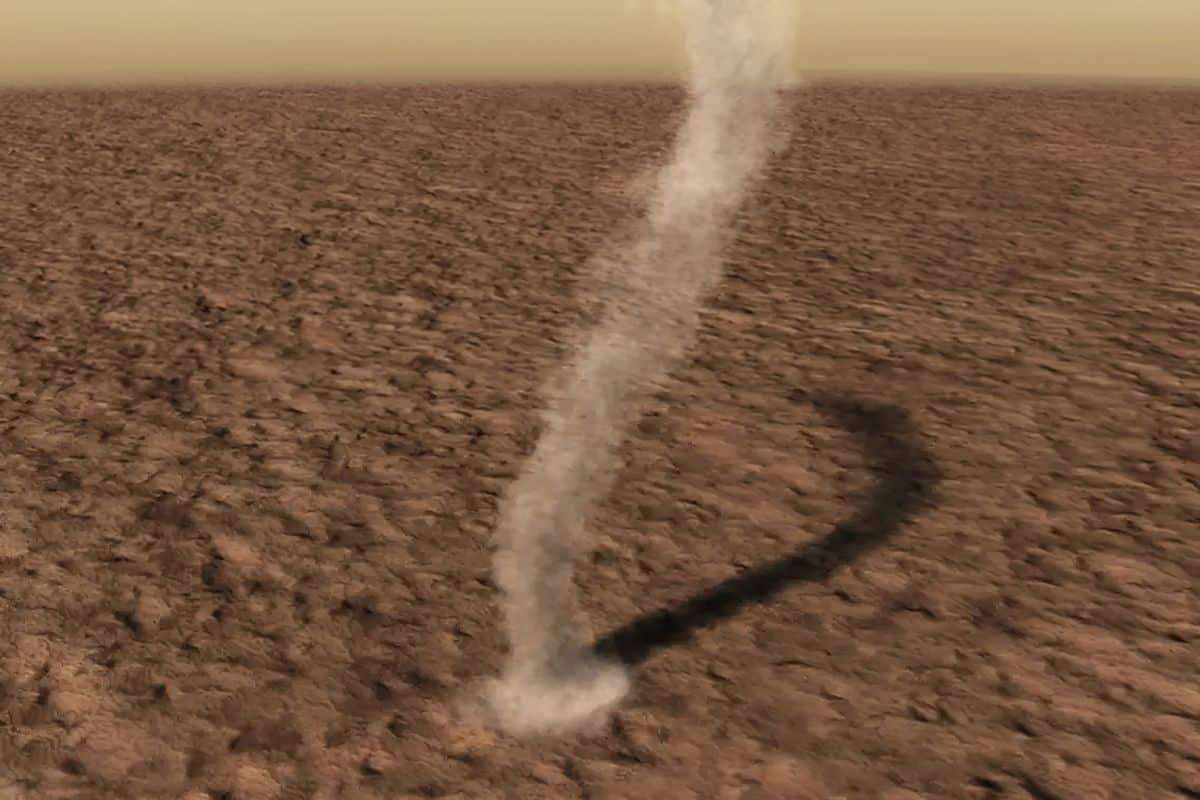
The Perseverance rover from NASA has once more delivered remarkable glimpses into Mars’ atmospheric activity with a striking video showing a rare interaction between two dust devils. On January 25, 2025, the rover recorded an impressive scene where a larger dust devil swallowed a smaller one. This extraordinary footage contributes to Perseverance's mission to unravel the complexities of Martian weather.
One Dust Devil Engulfs Another in Rare Display
The intriguing video, created from images captured by the rover’s navigation camera, depicts a powerful larger dust devil overtaking and absorbing a smaller counterpart. Mark Lemmon, a scientist at the Space Science Institute in Boulder, Colorado, commented, “Convective vortices—commonly known as dust devils—exhibit quite intriguing behavior.”
These miniature whirlwinds traverse the Martian terrain, stirring up dust and reducing visibility nearby. "When two dust devils cross paths, they may either dissipate one another or merge, with the dominant one engulfing the less intense."
Understanding Martian Dust Devils
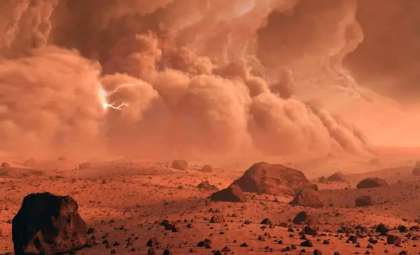
Phys.org explains that dust devils frequently appear on Mars as towering swirling columns made up of air and dust. They develop when heated air rises from the Martian surface and spins as it encounters cooler air at higher altitudes. As the warm air ascends, it accelerates, causing dust to spiral and form a mini-tornado.

These dust vortices come in various sizes and strengths but play an essential role in Mars’ atmospheric processes. In this particular event, the larger dust devil measured about 210 feet (65 meters) in diameter, while the smaller one was roughly 16 feet (5 meters) wide.
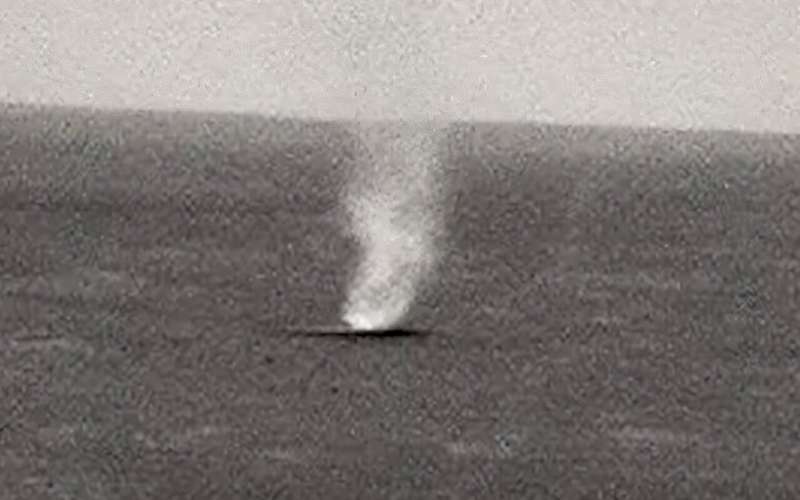
Image credit: NASA / JPL
Why Monitoring Dust Devils Matters
Beyond their visual appeal, dust devils are key to understanding the Red Planet’s atmosphere. Katie Stack Morgan, the project scientist for Perseverance at NASA’s Jet Propulsion Laboratory, shared:
“Dust devil study is important because these phenomena indicate atmospheric conditions, such as prevailing wind directions and speed are responsible for about half the dust in the Martian atmosphere.”
Studying these swirling dust columns offers scientists valuable insights into Martian climate patterns, wind behaviors, and seasonal variations.
NASA’s History Capturing Martian Dust Devils
This captivating footage is just the latest in a long series of dust devil observations by NASA. Since the 1970s, the agency’s Viking missions first photographed these phenomena from orbit.
Subsequently, the Pathfinder mission became the pioneer in capturing dust devils from the surface, even recording one crossing its lander. The twin rovers Spirit and Opportunity also documented Martian whirlwinds, followed by ongoing observations by Curiosity, which operates opposite Perseverance’s location on Mars.
How Dust Devils Shape Mars’ Atmospheric Behavior
Since touching down in 2021, Perseverance has contributed vital reports of dust devil activity, including a swarm photographed within Jezero Crater in September 2021. These studies are crucial for preparing future human missions to Mars.
Although mesmerizing, Martian dust devils typically last only around 10 minutes. Mark Lemmon added a lighter note concerning the recent video: “If you sympathize with the smaller dust devil in the clip, it’s somewhat reassuring that the bigger one probably dissipated shortly afterward.”
- Categories:
- Space




0 comments
Sign in to Comment