
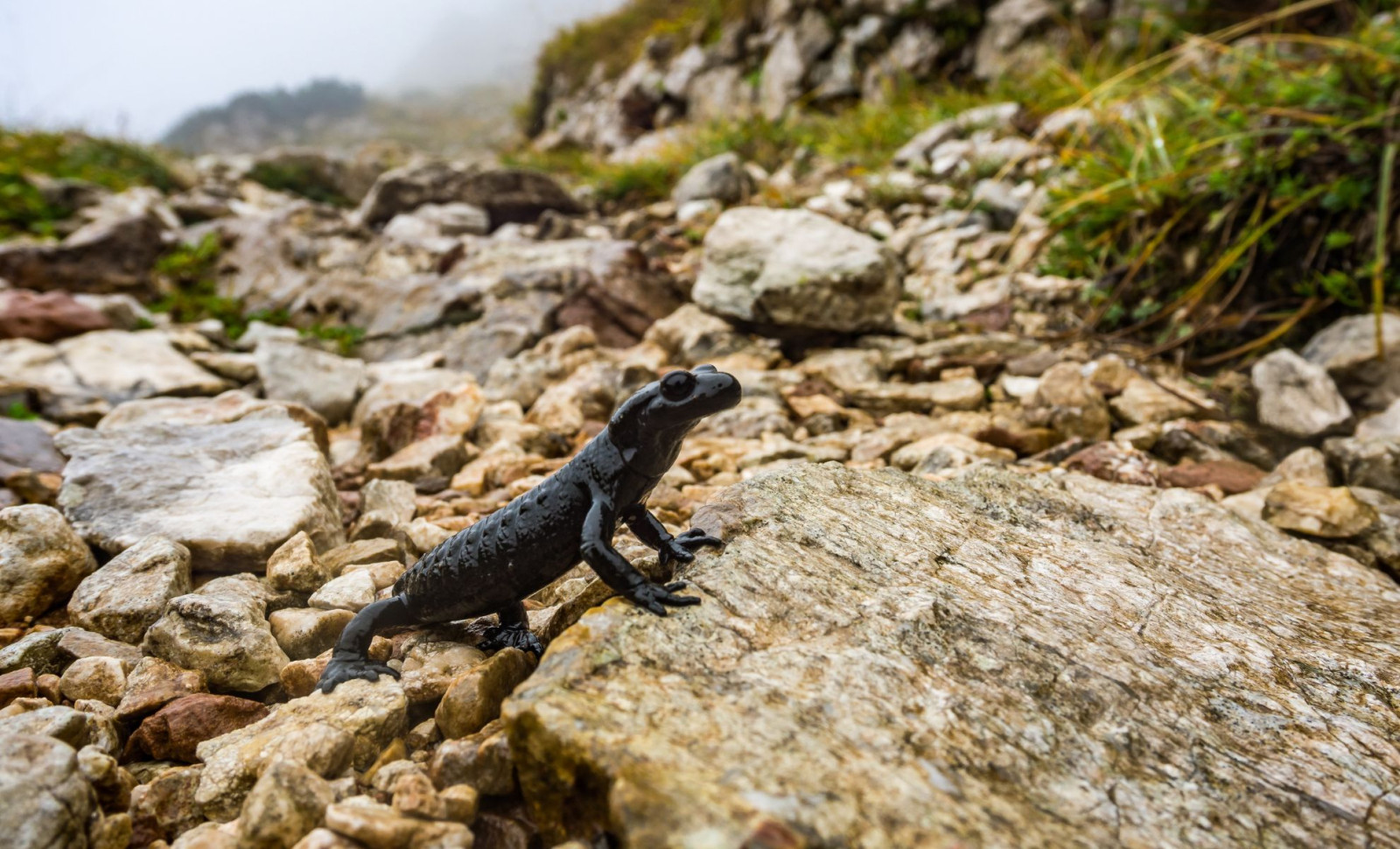
Researchers have uncovered a fossilized jawbone belonging to Tanyka amnicola, an unusual relative of current-day salamanders that lived approximately 275 million years ago. At first, experts assumed the jaw’s strange shape was due to a deformity. Yet, as additional fossils were recovered, it became evident that Tanyka possessed evolutionary traits unlike any other vertebrates from its era.
Discovered by scientists at Chicago’s Field Museum, the fossil showed a jaw with a puzzling design that left researchers intrigued. Its twisted bone and backwards-facing teeth sparked numerous questions about the animal’s ecology and behavior. Over years of study, it became clear that the jaw’s unique form was an intended evolutionary feature, not a malfunction.
A Long-Lost Vertebrate Lineage
Tanyka amnicola emerges from an obscure branch of vertebrate evolution. Tetrapods, the group that encompasses all four-limbed vertebrates, originated around 370 million years ago. This lineage eventually diverged into two key groups: one that developed terrestrial egg-laying species and another that retained aquatic reproduction.

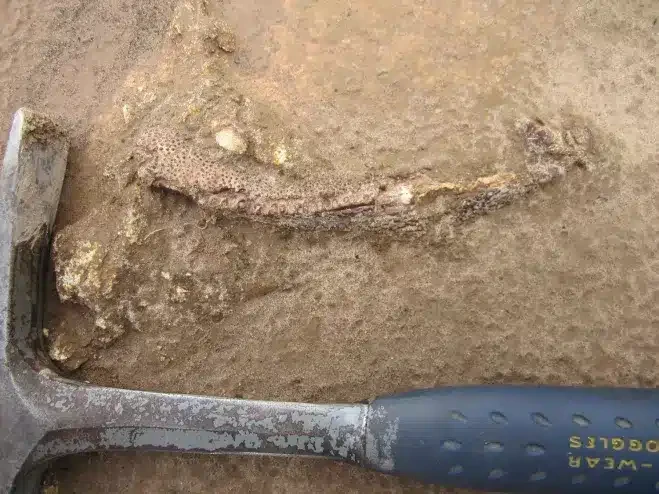
However, Tanyka stayed within the so-called “stem tetrapod” lineage, a group that neither evolved into modern amphibians nor reptiles, charting a separate evolutionary course. Jason Pardo, a paleontologist at the Field Museum, notes that Tanyka represents an ancient vertebrate lineage that lasted far longer than scientists previously assumed.
“The jaw has this weird twist that drove us crazy trying to figure it out. We were scratching our heads over this for years, wondering if it was some kind of deformation,” he added.
Much like the platypus, which retains ancient characteristics, Tanyka held onto traits from a distant evolutionary past, effectively becoming a sort of extinct living fossil.
The Story Behind the Jaw
The newest findings, detailed by the Field Museum, reveal that the team was initially puzzled by the jaw’s unusual design. Its teeth oriented sideways rather than upwards, which is uncommon among early vertebrates. The twisted structure of the jawbone was unprecedented for the time.
“We’ve got nine jaws from this animal, and they all have this twist, including the really, really well-preserved ones. So it’s not a deformation, it’s just the way the animal was made,” explained Pardo.
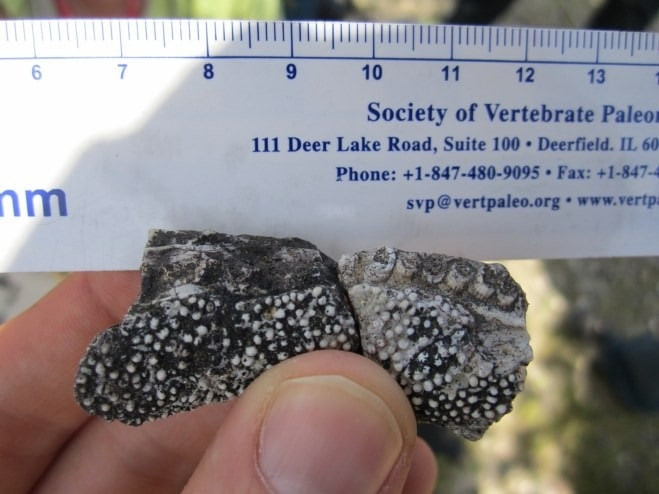
This distinctive structure likely had a functional role. The teeth featured minute denticles that probably served as grinding surfaces, suggesting Tanyka was herbivorous. This contrasts with most other early tetrapods, which were predominantly meat-eaters.
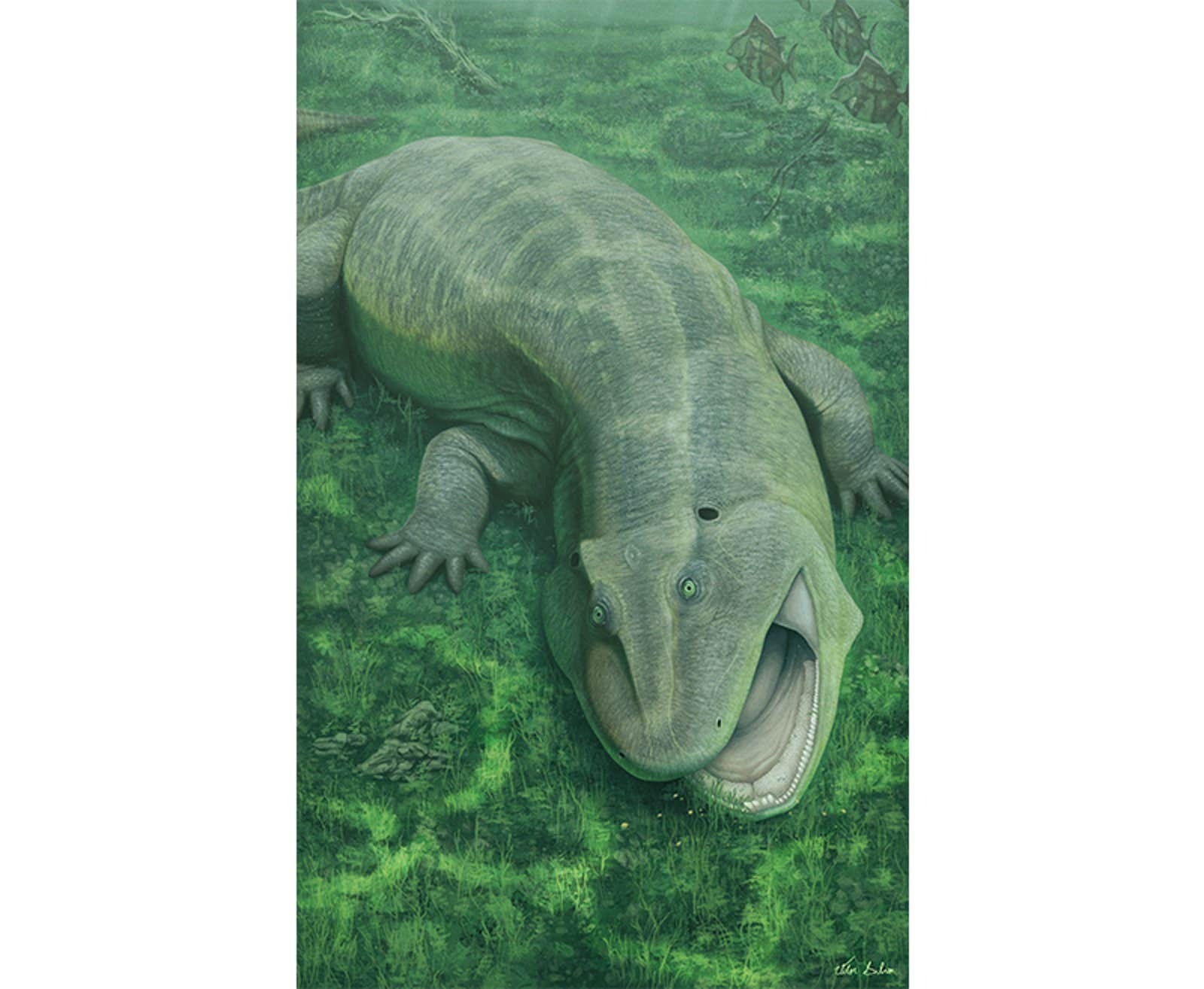
Juan Carlos Cisneros, a co-author of the research from Brazil’s Federal University of Piauí, pointed out that these denticles would have enabled Tanyka to efficiently process vegetation, something uncommon among its contemporaries.
Physical Features Still a Mystery
Scientists estimate that Tanyka measured roughly three feet in length and bore a resemblance to modern salamanders, featuring an elongated snout. However, with only the jawbone recovered, its entire anatomy remains speculative.
“We found these jaws in isolation, and they’re really weird, and they’re very distinctive,” said Ken Angielczyk, another co-author. “But until we find one of those jaws attached to a skull or other bones that are definitively associated with the jaw, we can’t say for sure that the other bones we find near it belong to Tanyka.”
Without additional fossils, the full look of Tanyka remains uncertain. Nevertheless, the fossilized jaw offers important insights into the diverse early vertebrates that inhabited Earth long before the emergence of today’s species.
- Categories:
- Science







0 comments
Sign in to Comment