
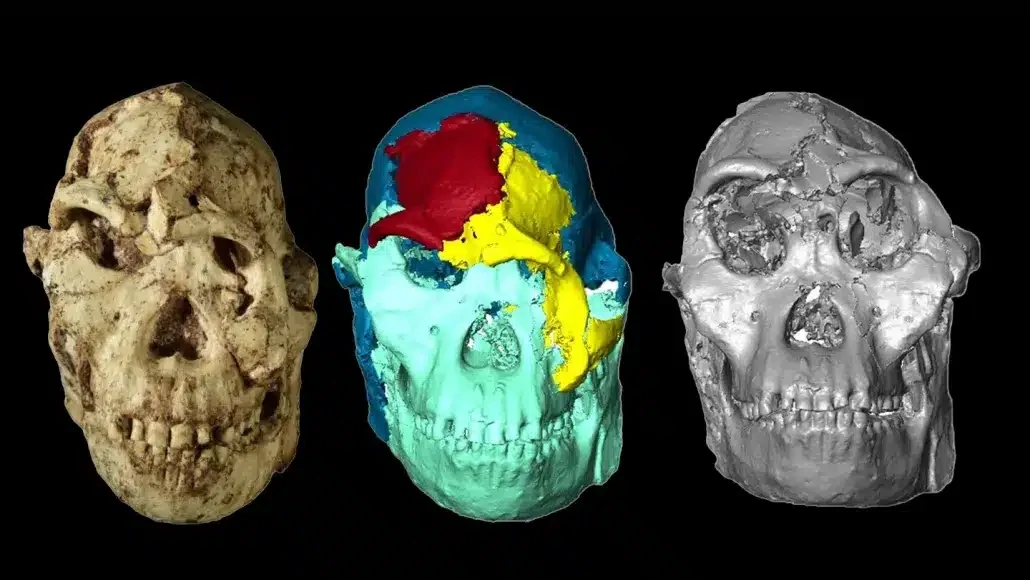
A recent digital facial reconstruction of 'Little Foot,' one of the earliest known human ancestors, provides researchers with remarkable insight into what this ancient hominin may have looked like.
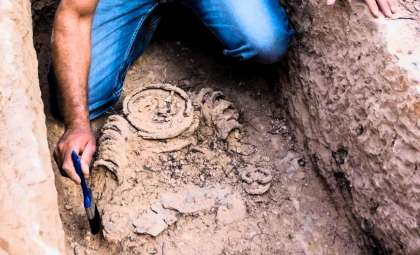
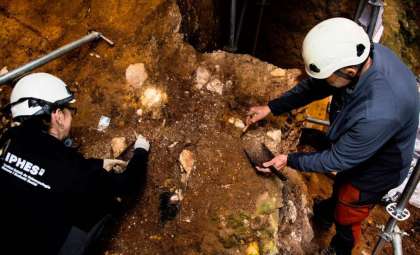
Discovered in the 1990s, Little Foot quickly captured the attention of paleoanthropologists. This almost intact skeleton was excavated from the Sterkfontein Caves in South Africa, although the skull and several other bones suffered crushing damage over millennia. Utilizing advanced technology, scientists have now managed to digitally rebuild Little Foot’s face, unveiling details previously hidden by its damaged condition.
Advanced Imaging Resurrects Little Foot’s Appearance
Featured in the March 2 issue of Comptes Rendus Palevol, the research reveals that the team used high-resolution scans from 2019, created employing synchrotron X-ray technology, to capture minute details of the fossilized skull. These scans enabled the creation of precise 3D bone models that were digitally manipulated for anatomical reconstruction.

The updated facial model offers a sharper, more faithful representation of Little Foot’s traits. Notably, the reconstruction highlights wide-set eye sockets and a reduced jaw size, features characteristic of the Australopithecus genus. This updated visualization is an important asset for experts examining how early hominins might have appeared and interacted with their world.
Signs of East African Ancestry?
One unexpected aspect of Little Foot’s reconstructed visage is its resemblance to fossil specimens typically associated with East Africa, rather than the South African area where the skeleton originated.
Lead researcher Beaudet and colleagues observed that the facial structures—especially the broad eye sockets—align more closely with East African ancestral traits than those common locally. This observation raises the possibility that Little Foot’s lineage could represent early hominins migrating from East Africa to southern regions over 3.5 million years ago.
If supported by further findings, this theory could challenge the long-held view that early human relatives evolved in isolation across Africa. Although researchers remain cautious, these similarities encourage reconsideration of migration’s significance in shaping early hominin diversity.
Future Research Unlocking Little Foot’s Evolutionary Story
While the recent digital reconstruction marks a substantial advancement, much remains to be discovered about Little Foot. Upcoming studies aim to analyze the teeth and cranial cavity to better understand this species’ diet and neurological growth.
Insights from these features could clarify how members of the Australopithecus genus contributed to the evolutionary emergence of the Homo lineage, the group that eventually gave rise to modern humans.
“We have only a few specimens, so we need to be really careful.” She explained, “That’s the only way, I think, for us to understand … why we evolved the way we did.”
As Beaudet emphasized, examining Little Foot’s dental and cranial anatomy will shed light on how early hominins adjusted to their surroundings and how such adaptations laid the groundwork for human evolution.
- Categories:
- Science







0 comments
Sign in to Comment