
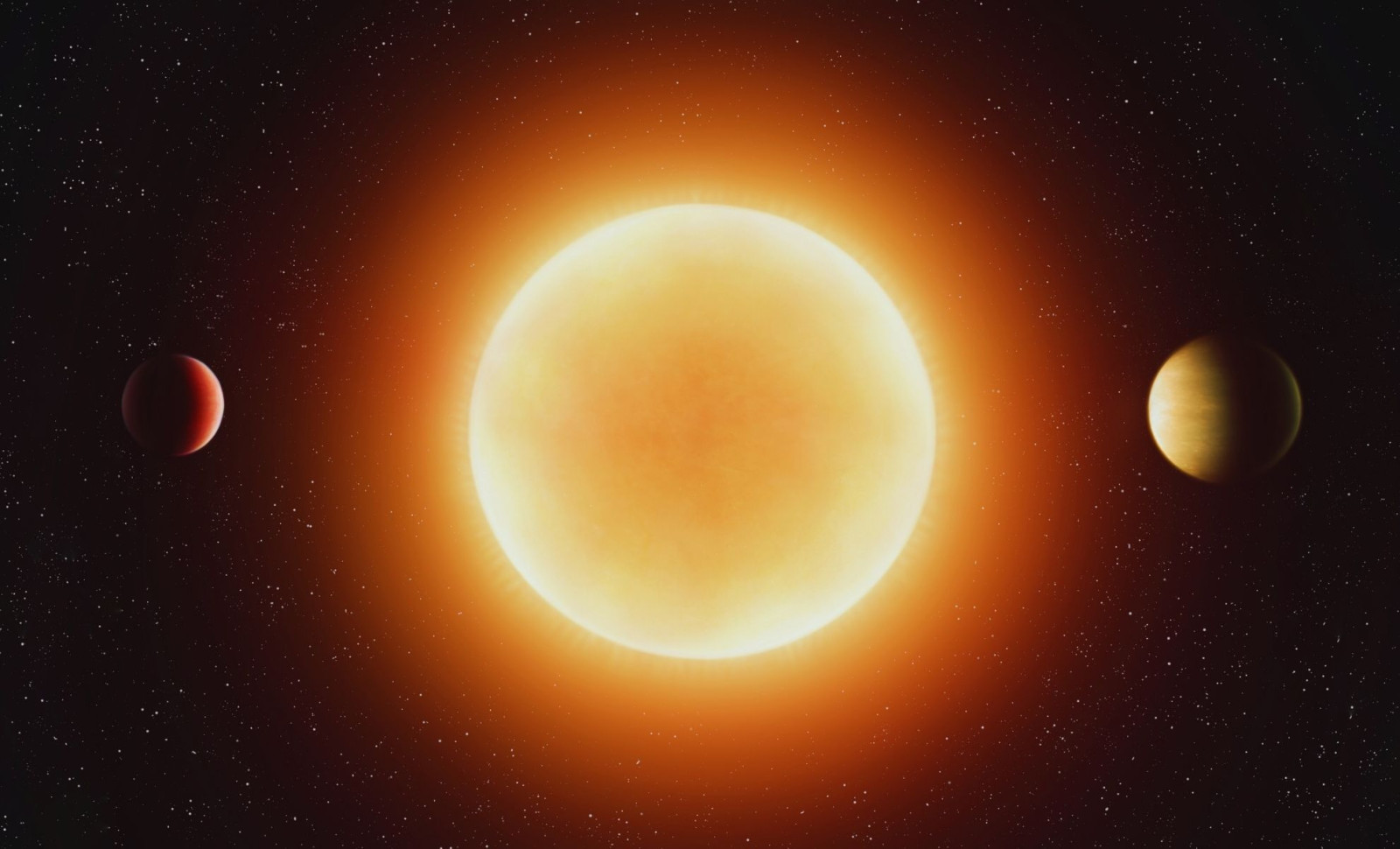
An exceptionally uncommon event featuring the simultaneous alignment of two exoplanets crossing their star, known as an exosyzygy, is predicted to take place. However, this extraordinary celestial phenomenon could go unnoticed due to the lack of allocated telescope observation time.
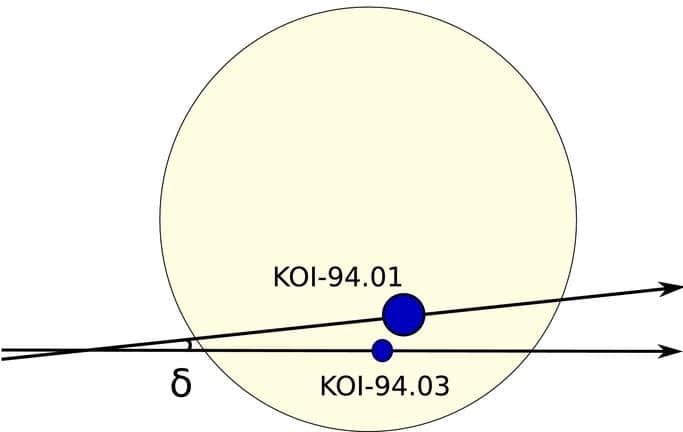
The upcoming event involves two planets transiting their host star from Earth's perspective, replicating a similar occurrence discovered in 2010. At that time, the alignment went undetected until Teruyuki Hirano from the Tokyo Institute of Technology identified it in archival data from NASA’s Kepler telescope. This time, while researchers are aware of the event, live observation might not be possible.
Understanding Exosyzygies and Their Scientific Importance
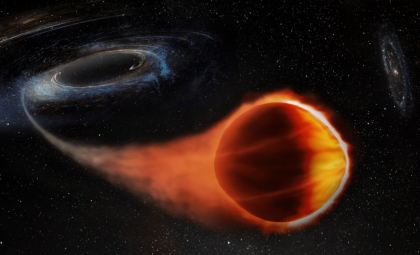
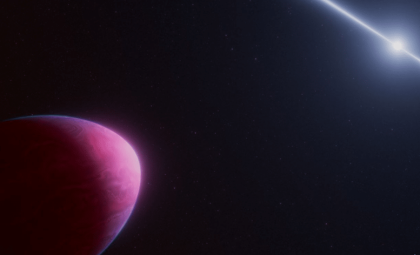
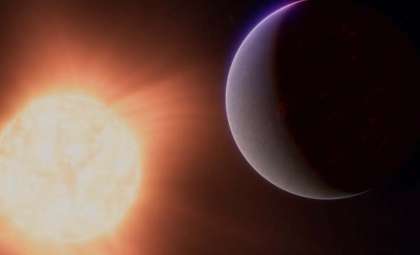
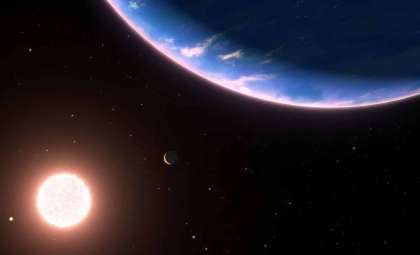
An exosyzygy describes a rare alignment of three celestial bodies—two planets and their star—occurring outside our solar system. The term derives from the combination of “exoplanet” and “syzygy,” which describes the lining up of astronomical bodies. When seen from Earth, this configuration shows two planets crossing their star simultaneously, which can be captured by space telescopes.

Such triple alignments are extremely rare. As noted by the Graduate University for Advanced Studies (SOKENDAI), only one exosyzygy has been confirmed so far, first spotted retrospectively in 2010. These alignments are valuable for scientists as they help refine measurements of planetary orbits, reveal gravitational influences among planets, and may expose additional unseen planets in the system.
“We found that the event would likely happen in 2026, but it would depend on many factors, including the true planet masses, dynamical interactions among planets, and presence [or] absence of outer, additional planets in the system,” explained Teruyuki Hirano. “Our latest calculation still suggests that there is a good chance of the event happening in 2026.”
Missed Observation Opportunities Amid Telescope Scheduling Constraints
Although astronomers are aware of this rare event, securing telescope time for monitoring remains a challenge. Scheduling for major telescopes, both ground-based and in space, is extremely competitive and usually assigned years ahead. Consequently, events like this can be impossible to accommodate despite their significant scientific value.
According to New Scientist, no observational programs or missions have been officially designated to capture the 2026 alignment. This highlights a recurring issue in astronomy: even well-known, potentially groundbreaking events can be overlooked due to operational and systemic limitations.
“Since Kepler was forced to end its original mission, it became difficult for us to refine the system parameters and to search for another unknown planet,” explained Hirano, who has already circled the date. “I hope to observe, but I am not sure that I can get an observing time with an appropriate telescope for the whole event.”
Highlighting Challenges in Astronomical Observation Infrastructure
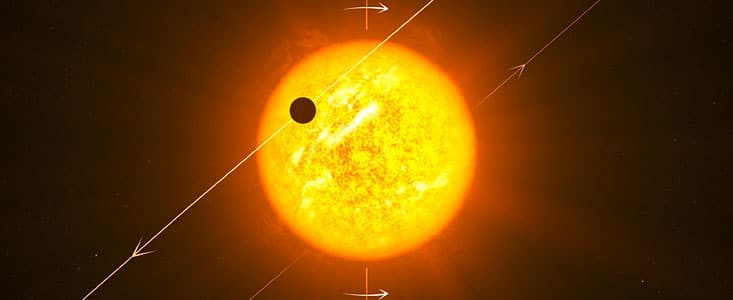
The anticipated event on April 1, 2026, may be missed in real time, preventing the collection of critical transit data. Observing these transits as they happen enables measurement of transit timing variations, which is crucial for understanding gravitational effects within planetary systems. Without direct monitoring, astronomers lose access to precise data that could improve planetary motion models.
Failing to record rare exosyzygies live also weakens long-term studies, as missed events make it difficult to compile continuous datasets that reveal broader planetary system behaviors. Reporting suggests that rigid telescope management continues to hamper observations of phenomena that do not conform to preplanned observation schedules.
- Categories:
- Astronomy






0 comments
Sign in to Comment