
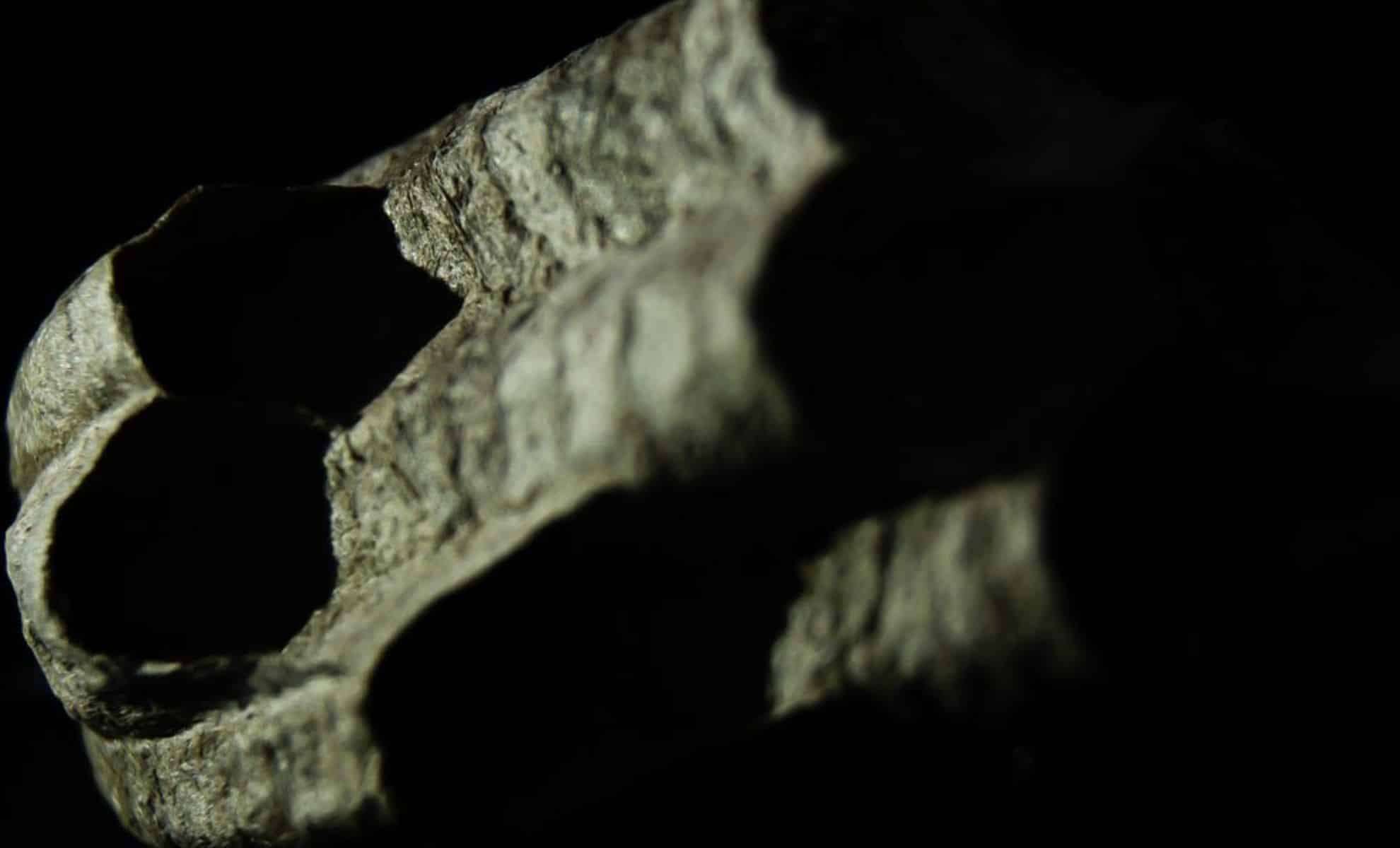
A unique fossil find has challenged existing scientific views and sparked fresh debates about the diversity of ancient life. Known as Prototaxites, this fossil was historically categorized as either a tree or a fungus, but new evidence suggests it does not align with any established group of organisms.
Unraveling the Enigma of Prototaxites
For more than 100 years, Prototaxites was broadly accepted as an ancient fungus, mainly because its appearance resembled giant prehistoric tree-like forms preserved in fossils.
Existing around 420 million years ago, this organism grew to immense proportions. Recent advances in scientific methods enabled researchers to revisit the specimens and reveal features implying it might belong to an entirely distinct domain of life.
The latest investigation, conducted by a team at the University of Edinburgh, employed cutting-edge imaging and genetic testing to shed light on its evolutionary origins.
They discovered that Prototaxites lacked the hallmark traits associated with fungi.

Rethinking Life’s Classification
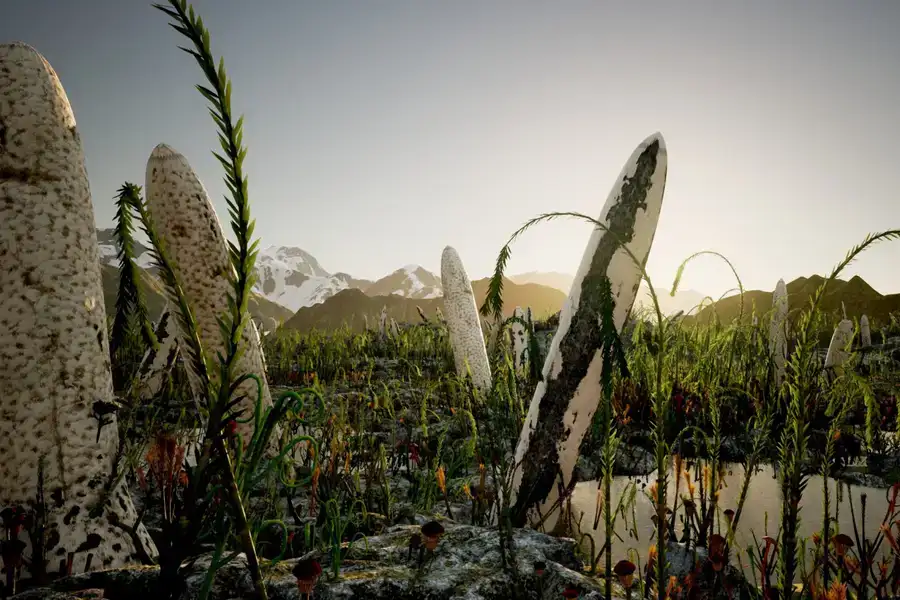
What makes Prototaxites particularly fascinating is its colossal size and structural intricacy. Fossil records reveal specimens reaching heights of up to 26 feet. Initially, it was thought to be a giant mushroom or tree.
However, recent findings indicate that it does not possess defining features that would place it within the known tree, fungus, or any other recognized life forms today.
The internal make-up of Prototaxites diverges significantly from that of fungi, which generally develop as interconnected networks of thread-like filaments called hyphae.
Instead, Prototaxites shows growth characteristics somewhat akin to plants, with a complexity surpassing any current plant species. Although its exact classification remains uncertain, experts now propose it may represent a previously undiscovered lineage that occupied a distinct ecological niche.
“No living groups match all of Prototaxites’ defining biological features,” stated Corentin Loron, a paleobiologist involved in the research. “It is best described as part of an entirely extinct group of eukaryotes without modern analogues.”
Is Prototaxites an Evolutionary Missing Link?
Researchers are exploring whether Prototaxites might have been an ancestral life form later overtaken by more familiar plants and fungi. It could have performed ecological functions similar to those of present-day trees or fungi, only to vanish as new species evolved to fill those roles more effectively.
The absence of any known direct descendants raises questions about how early life developed on Earth.
Some scientists propose that Prototaxites played a major role in its ecosystem and may have influenced the evolution of other organisms in ways yet to be fully deciphered.
The Future of Fossil Analysis
This revelation highlights the vast potential for future paleontological breakthroughs. As research tools become increasingly sophisticated, experts are gaining new insights into ancient organisms once overlooked as insignificant.
This study exemplifies how state-of-the-art imaging and molecular approaches are transforming our understanding of prehistoric ecosystems.
- Categories:
- News






0 comments
Sign in to Comment