

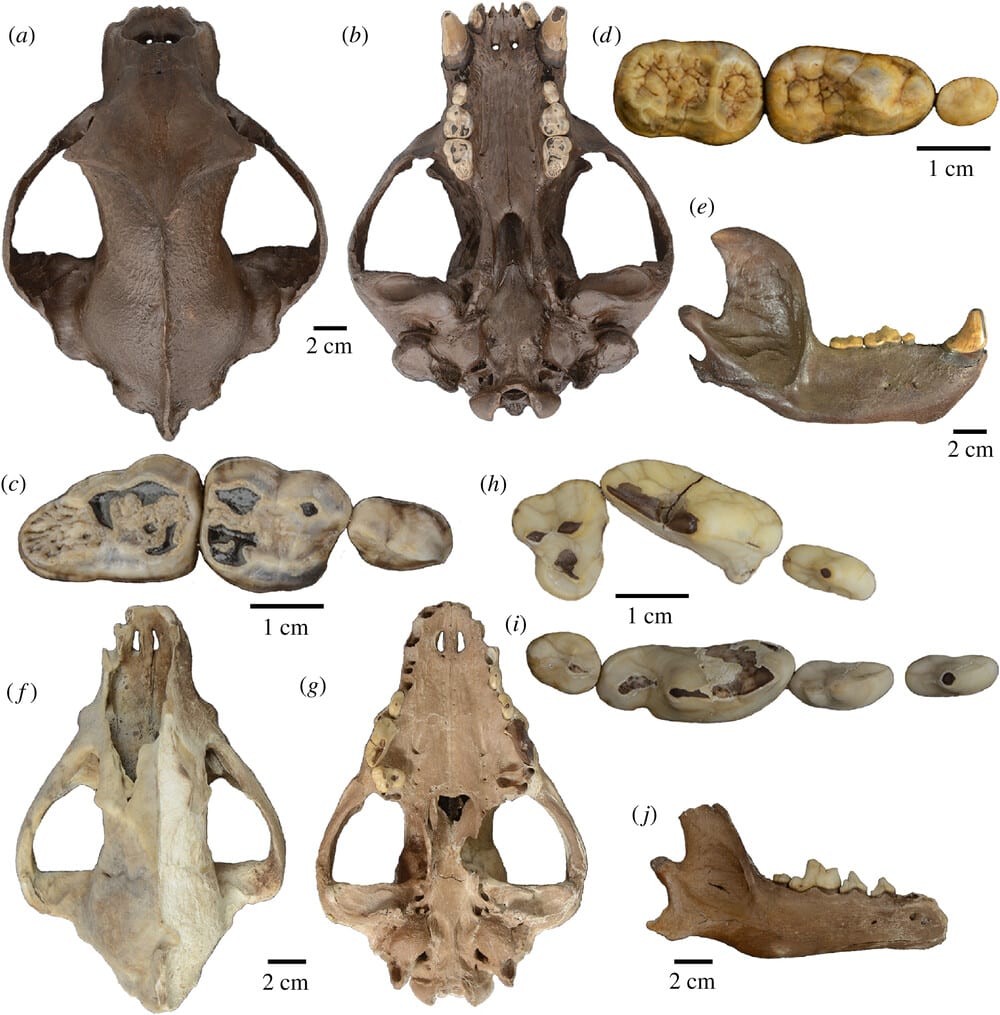
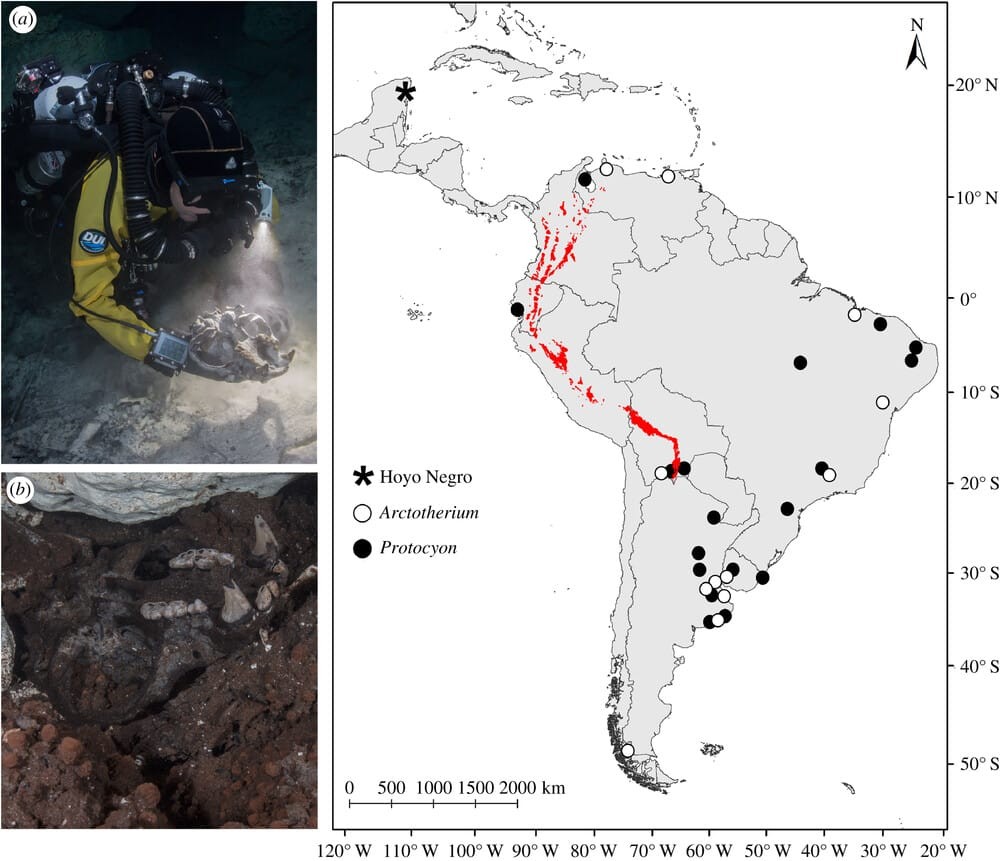
Deep within Mexico's Yucatán Peninsula, divers have uncovered exceptional fossil remains belonging to two Ice Age creatures: the short-faced bear (Arctotherium wingei) and the wolf-like Protocyon troglodytes. Documented in Biology Letters, these fossils emerged from the submerged Hoyo Negro sinkhole, resting 180 feet beneath the water in the Sac Actun cave system.
Hoyo Negro has been a key archaeological location, previously revealing a teenage girl's skeleton dating back about 12,000 years. The recent discovery includes bones from species that once inhabited this region. The cave's underwater environment, shaped by rising sea levels, has preserved the fossils in near-perfect condition.
An Exceptional Underwater Discovery
Submerged at the end of the last Ice Age, the Hoyo Negro pit has become an unexpected repository for ancient skeletal remains. In 2019, researchers retrieved bones from the short-faced bear, a large predator previously known only in South America, alongside remains of Protocyon, a wolf-like species that once roamed this area. These fossils, combined with others found in the cave, provide new insights.

Blaine Schubert, the lead paleontologist on the project, explains that this site has yielded the most thorough fossil collection for these species discovered outside South America, offering fresh perspectives on their migration habits.
“The whole previous record of this particular type of bear is just known from a few localities in South America, and those are fragmentary remains.” he added, “So, we went from not having any of this type of bear outside of South America to now having the best record of this type of bear from the Yucatán of Mexico.”
The cave’s environment—characterized by minimal oxygen and elevated humidity—has contributed to the exceptional preservation of these ancient bones, a rarity for specimens of this age.
Tracking Ice Age Species’ Movements
The research highlights that these animals were once believed confined solely to South America, with their northern presence previously unconfirmed. These discoveries prove that they lived alongside humans in this locale.
This evidence supports the Great American Biotic Interchange, a phenomenon occurring roughly 2.5 million years ago, during which fauna from North and South America migrated across a newly established land connection.
An Ancient Ecosystem Frozen in Time
Hoyo Negro continues to reveal a rich biosphere from long ago. Expeditions dating back to 2007 uncovered remains of tapirs, saber-toothed cats, cougars, and ancient elephants. These fossils illustrate a diverse habitat where large mammals coexisted with early humans during the Ice Age.
These findings enable researchers to better understand the interactions between prehistoric animals and humans in a time defined by glacial conditions. As Ross MacPhee, mammalogy and vertebrate zoology curator at the American Museum of Natural History, notes:
“You can get a probe into the past that you don’t ordinarily expect to get, and that’s the great thing about these caves in the Yucatán.”
The remarkable preservation found in the Hoyo Negro cave system marks it as a crucial site for enriching our knowledge of prehistoric life.
- Categories:
- Science


0 comments
Sign in to Comment