
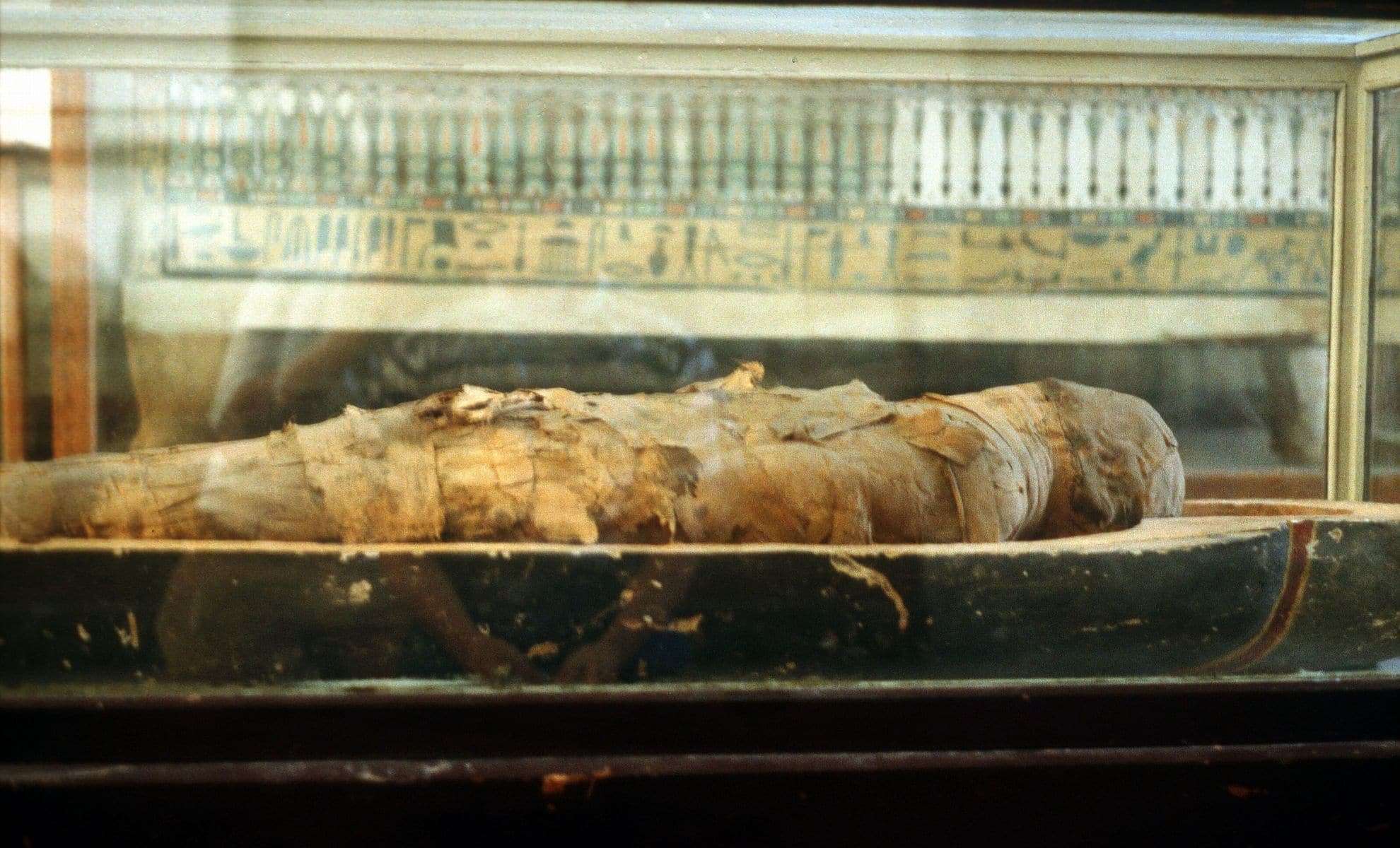
Researchers have uncovered a fascinating set of remarkably preserved mummies in China's Xinjiang Uyghur Autonomous Region desert. These remains, dating back to approximately 2000 BCE, exhibit unusual traits in terms of their attire, burial rituals, and physical characteristics, distinguishing them from traditional Egyptian mummification styles and sparking new questions about their background.
A Mysterious Ancient Find
These mummies were interred in distinctive boat-shaped coffins draped with cow hides, accompanied by domesticated animals such as cattle, sheep, and goats, plus an assortment of food items including wheat, barley, and cheese. The burial offerings point to an advanced agricultural lifestyle, yet the colorful wool garments worn by the individuals and their Western-like features suggest connections to remote populations. This combination has perplexed scholars and inspired investigations into the origins and cultural ties of these ancient inhabitants.
Although the exact lineage of these mummies remained a mystery for some time, recent DNA analysis has illuminated new aspects of their heritage. Published in Nature, the research centered on 13 of the earliest burials from the Tarim Basin, dating from about 2100 to 1700 BCE. Findings revealed that these individuals descended directly from Ancient North Eurasians, a hunter-gatherer group inhabiting the Eurasian steppe and Siberia thousands of years ago. Though this population vanished roughly 10,000 years back, their genetic imprint endures in populations across Siberia and the Americas.

Reevaluating Ancient Origins
This genetic evidence contradicts previous hypotheses suggesting that the Tarim mummies had origins tied to southern Russian herders near the Black Sea, early farmers from the Iranian Plateau, or migrants from Central Asia. Instead, it indicates a largely indigenous ancestry, pointing to a population established locally for millennia. These insights enhance our understanding of ancient human migration, highlighting the complex demographic history and challenging earlier assumptions about population movements in Central Asia.
Professor Christina Warinner of Harvard University, a co-author of the study, described the results: “Although genetically isolated, the Bronze Age inhabitants of the Tarim Basin embraced a rich cultural tapestry – their diet included wheat and dairy from West Asia, millet from East Asia, and medicinal plants such as Ephedra from Central Asia.”
A Nexus of Ancient Cultures
The discovery and genetic study of these mummies shed light on the intricate cultural dynamics that shaped life in the Tarim Basin during the Bronze Age. Despite their remote location, these communities engaged with diverse cultural influences across vast geographic areas. The presence of agricultural products and medicinal flora from different regions showcases their extensive cultural interactions.
Moreover, the burial customs, particularly the use of boat-shaped coffins, demonstrate an intriguing synthesis of traditions, hinting at connections with various Eurasian cultural zones.
By synthesizing genetic data and archaeological evidence, scientists are gradually reconstructing a more detailed narrative of the ancient populations that inhabited the Tarim Basin thousands of years ago.
- Categories:
- News






0 comments
Sign in to Comment