
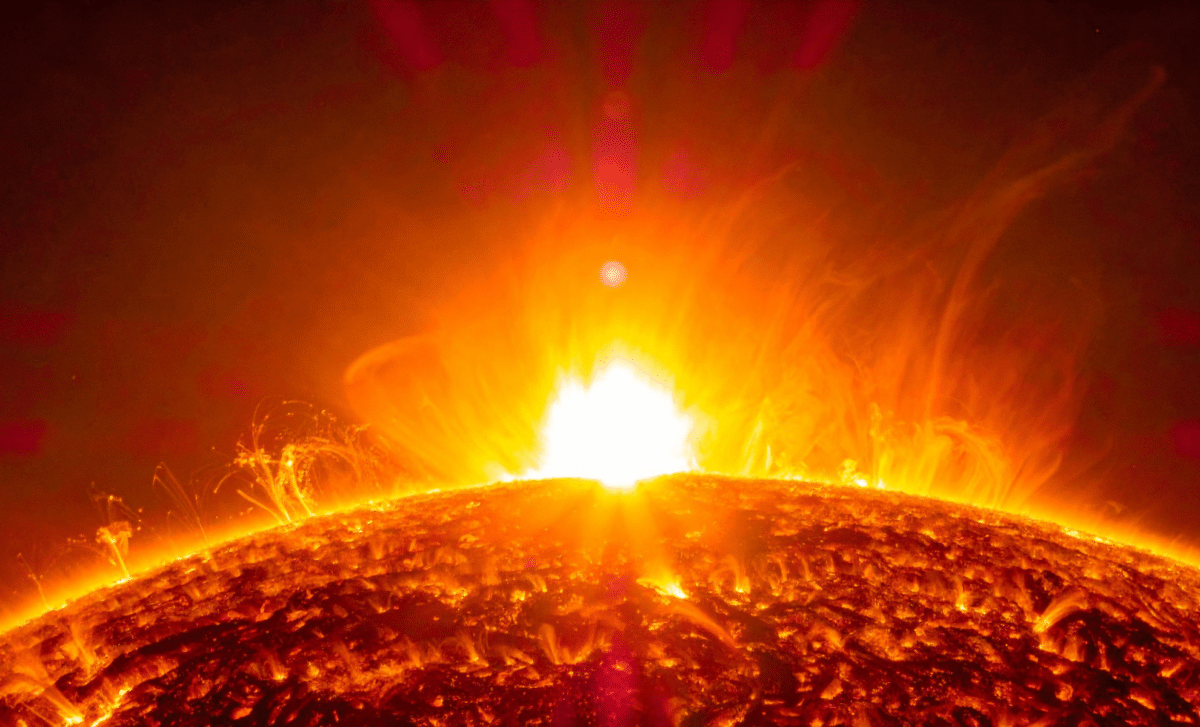
Scientists from NYU Abu Dhabi have uncovered a previously unknown class of large-scale waves located deep inside the Sun. This discovery offers a novel approach to examining the Sun’s concealed magnetic interior, as detailed in a recent publication in Nature Astronomy.
A New Perspective on the Sun’s Hidden Inner Layers
For many years, direct observation of the Sun’s inner structure has been a significant challenge for astronomers. While sunspots and solar flares dominate the visible surface, the underlying magnetic mechanisms driving these events have largely remained elusive. The latest findings change the landscape by identifying waves influenced by magnetic fields far beneath the Sun’s surface.
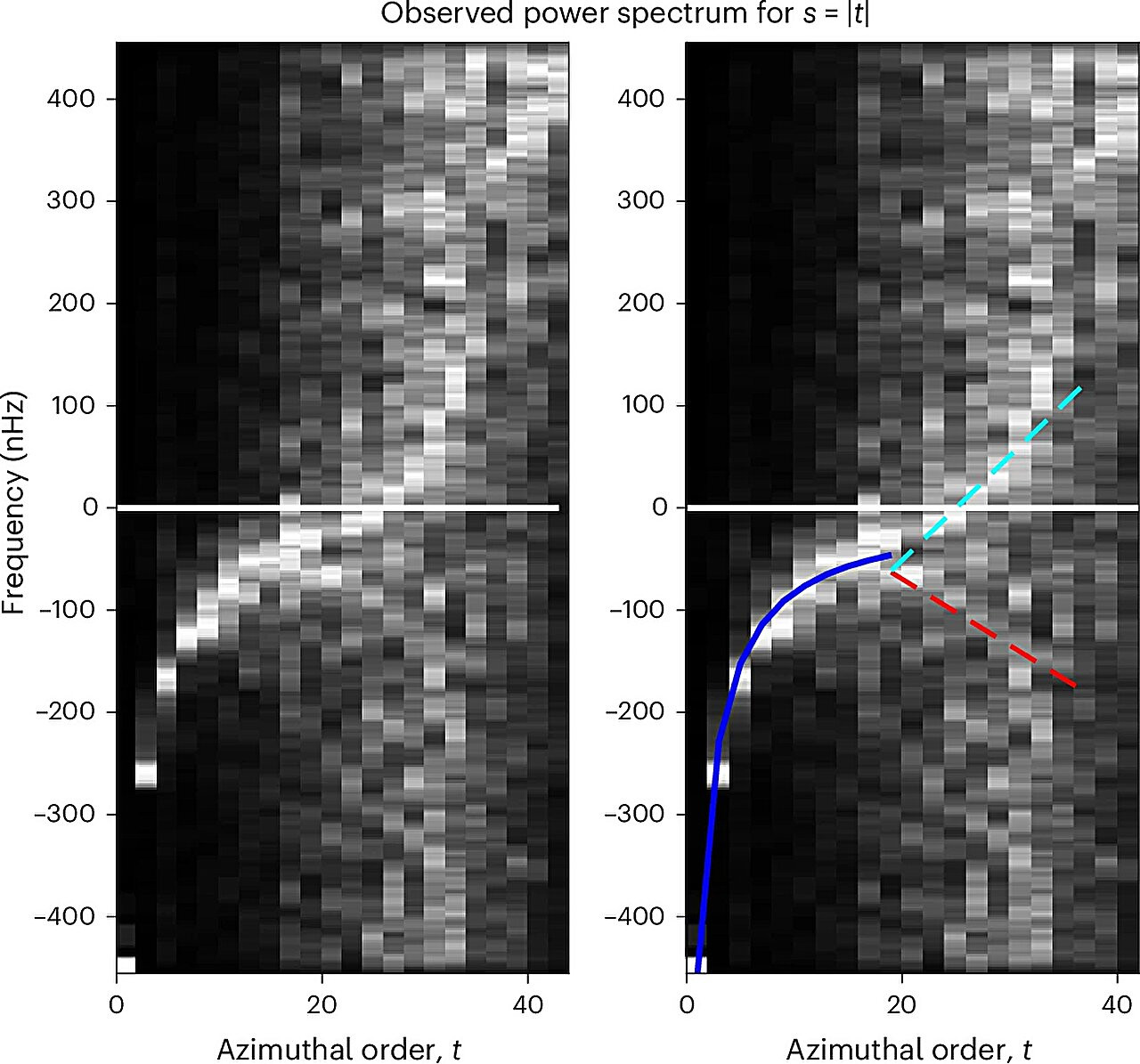
By analyzing over a decade’s worth of solar oscillation data, the research team tracked faint vibrations passing through the Sun’s inner layers. These waves serve as seismic probes, conveying information about areas inaccessible by direct observation. Through their analysis, the scientists have achieved improved insights into the intensity and arrangement of internal magnetic fields.

Published in Nature Astronomy, this research represents a significant advancement in solar studies. It enables researchers to investigate the Sun’s magnetic core more directly, paving the way to comprehend how magnetic energy accumulates and evolves to trigger impactful solar phenomena throughout the solar system.
The Influence of Magnetism on Solar Behavior
The Sun is a dynamic, constantly changing system governed by its rotational forces, heat flow, and electromagnetic phenomena. Beneath its visible surface, plasma flows generate magnetic fields that continuously twist and reconnect. These magnetic structures are key drivers of the solar cycle, affecting sunspot patterns and eruptions.
The recently identified waves reveal that magnetic forces extend deeply within the Sun, influencing large-scale flows beyond near-surface layers. This challenges earlier simplified models and highlights a more interconnected magnetic framework regulating solar dynamics.
“These waves give us a unique look at the Sun’s hidden magnetic system,” said Shravan Hanasoge, co-PI at the Center for Astrophysics and Space Science at NYU Abu Dhabi and lead author of the study. “Understanding these internal processes is crucial for predicting solar activity, which can impact satellites, communications, and power systems on Earth.”
By connecting these internal magnetic patterns to observable wave behaviors, scientists now possess a powerful method to trace the movement of energy within the Sun. This advancement may improve our ability to model how solar storms develop and propagate toward Earth.
Enhancing Forecasts of Solar Storms
Solar eruptions can have serious repercussions for modern infrastructure, disrupting GPS, damaging satellites, and affecting power grids. Forecasting these eruptions has long posed a formidable obstacle for space weather specialists.
The discovery of magnetic-linked wave signals introduces promising new predictive capabilities. Continuous monitoring of these internal waves could reveal shifts in the Sun’s magnetic alignment before eruptions become visible, potentially providing earlier alerts and better preparation for space weather threats.
Moreover, since magnetic activity is common among various stars, this technique could extend beyond our Sun. It offers a valuable framework for studying the magnetic cycles and flare activity of stars throughout the galaxy.
Broadening Our Understanding of Stellar Mechanics
This breakthrough not only enhances solar storm prediction but also marks progress toward unraveling stellar interiors. Until now, much of the understanding of internal stellar processes was speculative. The integration of observational data with sophisticated modeling provides new opportunities to chart phenomena once deemed inaccessible.
The success of this research underscores the importance of long-term observational campaigns. A decade of data was crucial to detecting these subtle wave signatures, which would have otherwise been lost amid noise. The outcome is both a notable find and an innovative methodology for exploring the cores of stars.
As observational instruments improve and datasets expand, the ability to detect these faint internal signals will grow. The Sun, despite being closely studied for centuries, continues to unveil deeper secrets that are poised to transform our comprehension of magnetic activity in the cosmos.
- Categories:
- News







0 comments
Sign in to Comment