
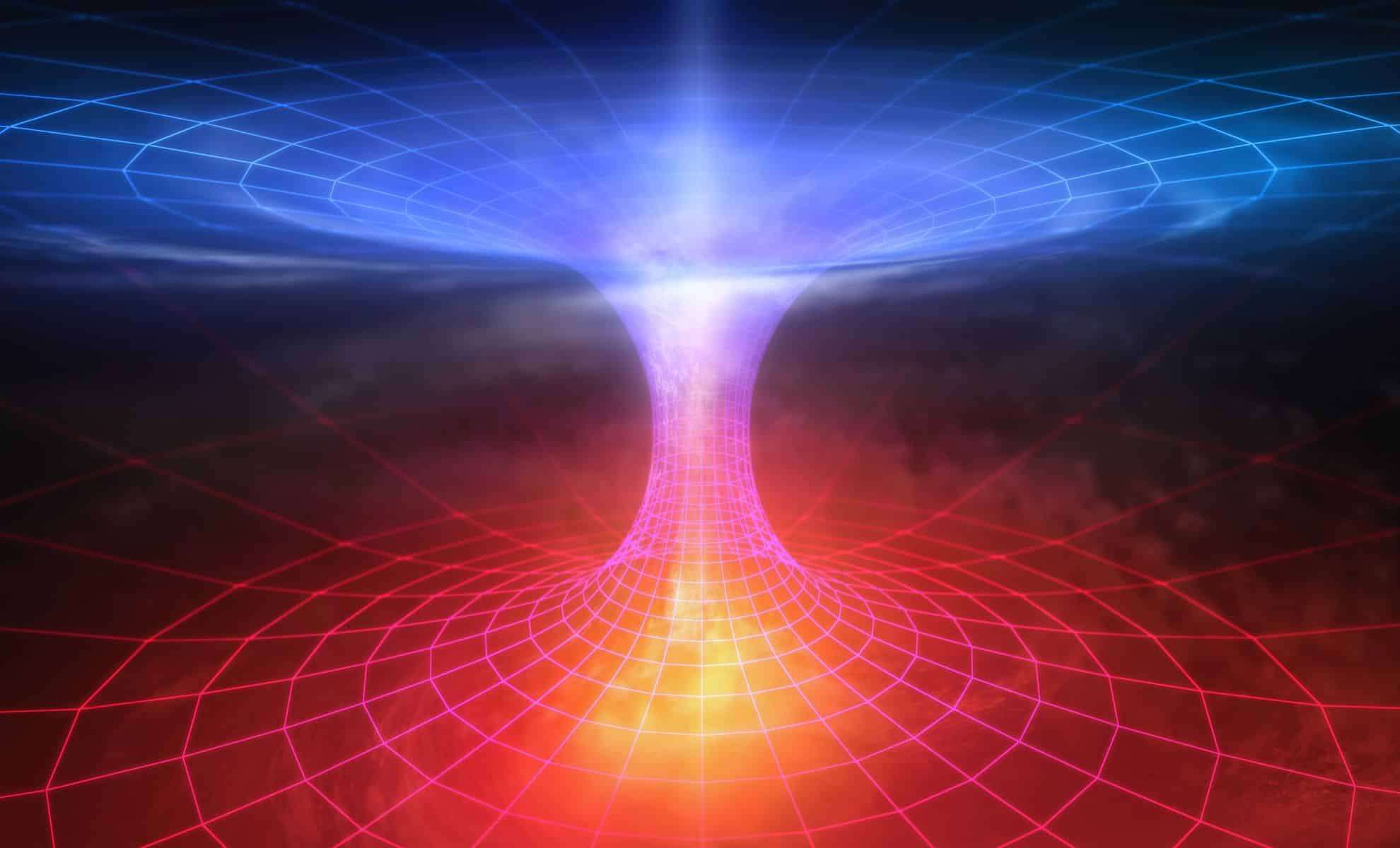
A pioneering investigation featured in Physical Review Letters by Professor Dong Eon Kim and his team at POSTECH’s Department of Physics has resolved a quantum mystery lingering for over a century. Collaborating with the Max Planck Institute for Nuclear Physics, the researchers explored the elusive behavior of electrons navigating a quantum tunnel. Their work offers unprecedented insight into the intricate interactions within the tunnel, unveiling a novel collision event that challenges established quantum theories. This breakthrough promises to revolutionize our grasp of electron motion and accelerate advancements in quantum computing, semiconductor technology, and ultrafast laser systems.
Decoding Quantum Tunneling: The Intriguing Electron Passage
Quantum tunneling captivates scientists as it enables particles like electrons to traverse energy barriers without possessing sufficient energy by classical standards. Imagine this as a hidden route piercing through an otherwise impermeable boundary. Though it may seem fantastical, quantum tunneling underpins vital processes such as modern electronics’ semiconductor operation and the nuclear fusion reactions powering stars.
Despite its importance, the exact mechanisms within the tunnel itself have remained elusive. Researchers could detect electrons at entry and exit points but never fully captured the complex events taking place inside. This latest research marks a significant leap, shedding light not only on a fundamental quantum question but also opening pathways for technologies reliant on refined control of electron dynamics.

A Historic Insight: Discovering Electron Collisions Inside the Tunnel
For the first time, the internal phenomena of quantum tunneling have been directly observed. This milestone could reshape the future direction of quantum physics research. Using powerful laser pulses, the team led by Professors Kim Dong Eon and C.H. Keitel stimulated electron tunneling within atoms. Their observations revealed an unexpected effect: electrons actually collide with the atomic nucleus while still situated within the tunnel.
This newly identified event, named under-the-barrier recollision (UBR), fundamentally redefines assumptions about the tunneling process. Previously, it was believed that electrons interact with nuclei only after tunnel exit. The discovery that such interactions happen inside the barrier introduces a fresh dimension to quantum tunneling models.
Unveiling a Unique Energy Gain During Tunneling
Even more fascinating is how electrons acquire energy amid their tunneling passage. The researchers found electrons not only traversing the barrier but also experiencing a notable energy increase inside it. This energy boost corresponds to Freeman resonance—an ionization mechanism more pronounced than earlier known methods. Remarkably, this ionization remained stable regardless of varying laser intensities, indicating a fundamental process occurring within the quantum barrier.
The observation of under-the-barrier recollision contradicts traditional tunneling models that anticipated negligible electron-nucleus interactions during tunneling. Detecting collisions that energize electrons and amplify ionization bears significant consequences for future quantum tech, potentially enabling advancements in higher efficiency lasers and improved semiconductor performance.
Advancing Quantum Manipulation and Control
The implications extend beyond theoretical physics. As Professor Kim Dong Eon stated, “Through this study, we were able to find clues about how electrons behave when they pass through the atomic wall.” He added, “Now, we can finally understand tunneling more deeply and control it as we wish.” This enhanced ability to manipulate electron behavior during tunneling could revolutionize quantum-dependent industries such as quantum computing, semiconductor engineering, and the development of ultrafast laser technologies.
For instance, deeper insight into electron interactions inside quantum barriers may lead to novel materials that facilitate more efficient electron transport, enabling faster computing hardware. Similarly, mastering tunneling dynamics could result in more precise semiconductor devices, catalyzing the next generation of electronic innovation.
- Categories:
- News








0 comments
Sign in to Comment