
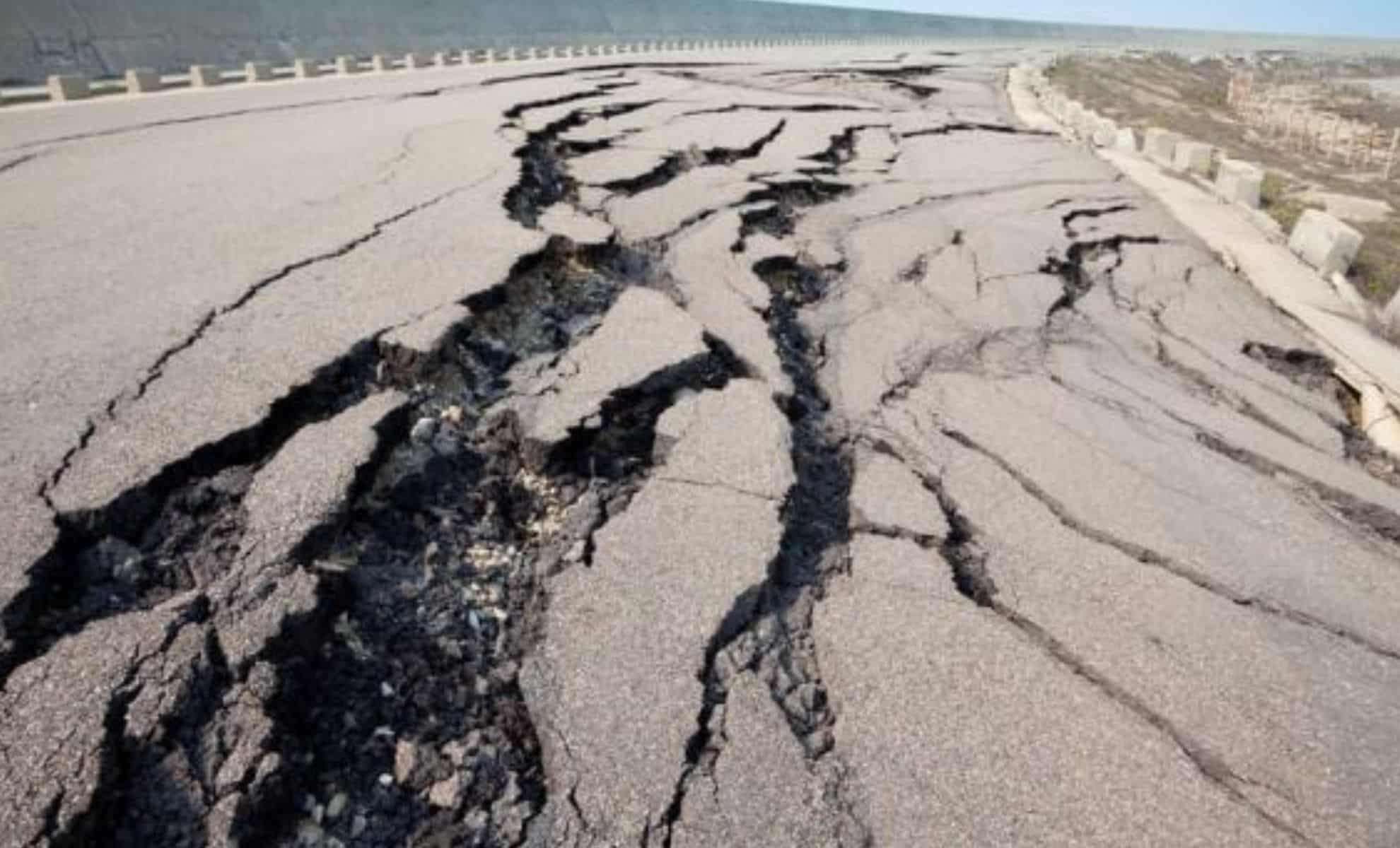
Scientists have unveiled a novel insight into the subtle processes preceding earthquakes, offering fresh prospects for forecasting these natural catastrophes. At The Hebrew University of Jerusalem, physicist Jay Fineberg and his team have uncovered a previously hidden phenomenon that explains how stress gradually intensifies along fault lines before triggering sudden seismic ruptures. Their findings emphasize the pivotal role of slow, silent fault slippage—known as aseismic creep—that acts as a precursor to significant seismic events, revealing the crucial transition phase from gradual stress build-up to rapid energy release. This advancement enhances our grasp of quake mechanics and could pave the way for early warning technologies that minimize casualties and damage. Capturing these intricate fault behaviors in unprecedented detail, this work represents a major stride toward anticipating and managing earthquake risks.
Understanding the Unseen Stages Before Shaking Begins
Earthquakes occur when tectonic plates slide past one another along faults. These plates become locked by friction, causing stress to accumulate in the brittle regions of the fault over time. Fineberg describes this as a sensitive equilibrium: “The plates are increasingly stressed by the forces trying to move them, but are stuck at the brittle part of the interface that separates them.”
The key challenge has been pinpointing how an earthquake rupture initiates. Fineberg explains, “The fracture process doesn’t happen all at once. First, a crack needs to be created.” This initial crack emerges in a zone called the nucleation area, where the fault's strength weakens. As this crack expands, it transforms into a rapidly moving rupture that liberates accumulated stress in a powerful burst of energy, which we sense as an earthquake.

Laboratory Simulations Shed Light on Earthquake Initiation
To decode the ignition of earthquakes, Fineberg's group conducted controlled experiments replicating fault conditions. They used sheets of plexiglass to simulate tectonic plate interactions, applying shear forces to imitate the stresses within faults. “The material composing the contacting plates will not matter,” Fineberg noted. “The same physical process will take place in both cases—the explosive spring of the bent plates will release in the same way.”
During these tests, the team observed aseismic creep, a slow movement propagating stress without generating seismic waves. This creeping phase precedes quakes, but the shift from quiet creep to abrupt rupture remained unclear. Their investigation revealed that the initial crack grows as a two-dimensional patch, contrary to the conventional one-dimensional line model. As the patch enlarges, expanding it demands more energy, which delays the rupture event.
Eventually, the patch amasses sufficient energy leading to an “explosive motion of the crack,” as Fineberg described. This critical transition initiates the seismic rupture, causing rapid stress release and the shaking linked to earthquakes.
Capturing Fault Line Behavior in Real Time
This research stands out by offering direct observation of fault line dynamics in a lab setting. “In the lab, we can watch this thing unfold and we can listen to the noises that it makes,” Fineberg explained. By closely analyzing these silent movements and their progression into rupture, scientists aim to identify predictive markers preceding earthquakes.
Such detailed monitoring is nearly impossible at natural faults, which change slowly over extensive periods. “The question is how does nature create the crack which then becomes an earthquake?” Fineberg said. The laboratory experiments provide a unique window into these processes, which could eventually inform real-world earthquake forecasting.
The Potential Impact on Earthquake Warning Systems
Identifying this silent fault activity reveals promising avenues for improving earthquake detection. A deeper grasp of aseismic creep and rupture triggers may lead to early warning systems capable of providing valuable time to protect lives and infrastructure.
Fineberg notes the complexities involved in applying these findings to natural settings since many faults experience aseismic slip without causing earthquakes. Distinguishing innocuous movements from dangerous ones remains a challenge, but this work significantly advances our fundamental understanding of earthquake mechanics.
Opening New Frontiers in Seismology
Published in Nature, this study ushers in a new chapter in how researchers explore earthquake prediction. By focusing on the subtle pre-rupture phase, Fineberg and collaborators have uncovered a vital mechanism unlocking potential forecasting breakthroughs.
Beyond earthquakes, the insights gained into fracture dynamics could influence engineering disciplines, informing the design of safer buildings and aircraft by enhancing our knowledge of stress and failure mechanisms.
This discovery enhances our comprehension of earthquake phenomena while opening pathways to mitigate their destructive consequences. As Fineberg summarizes, “Maybe we can uncover what you can’t really do in a real fault, because you have no detailed information on what an earthquake is doing until it explodes.”
- Categories:
- News











0 comments
Sign in to Comment