
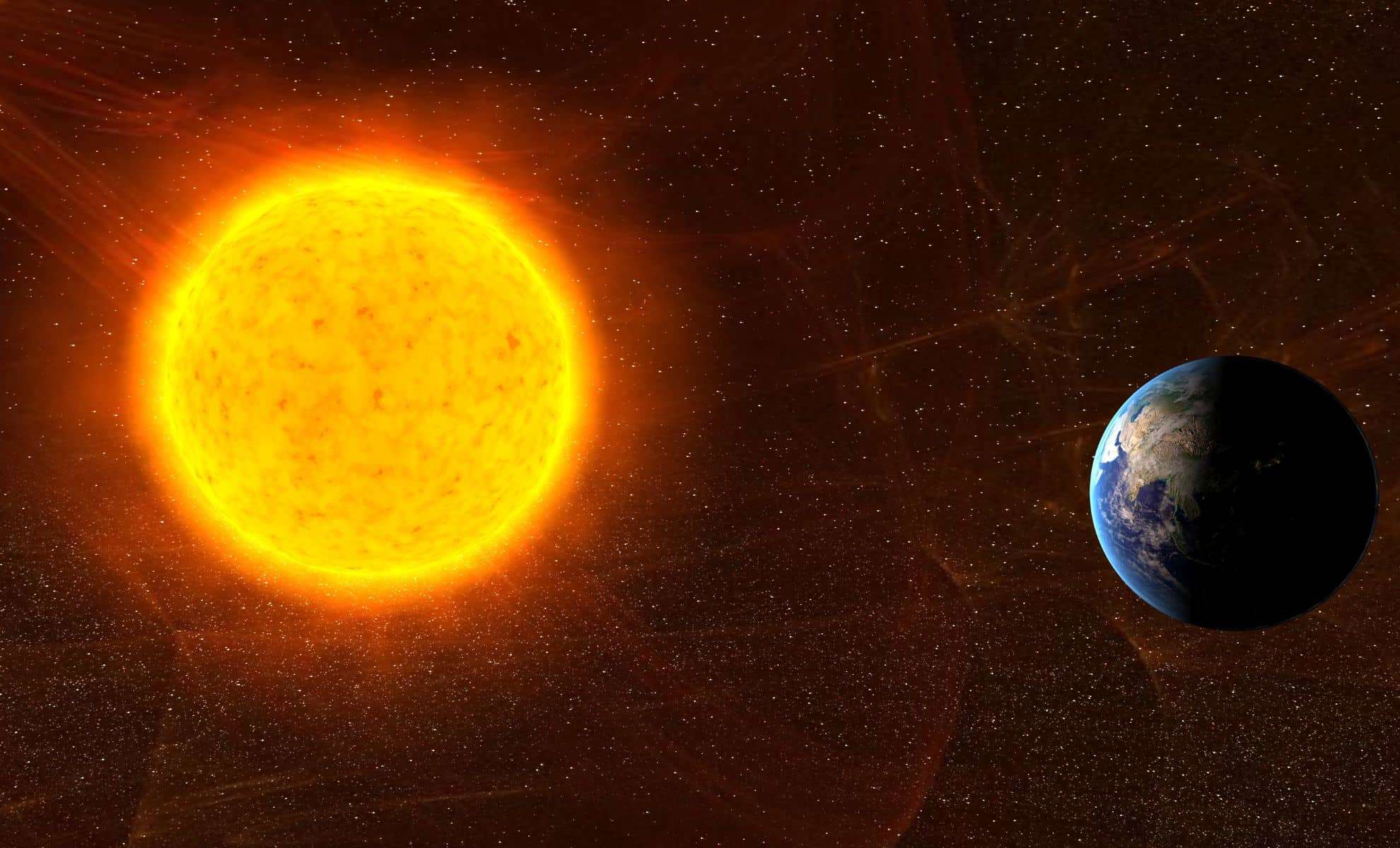
Far above Earth, where our planet’s magnetosphere meets the vastness of space, a fierce interaction unfolds. Charged particles streaming from the solar wind relentlessly approach Earth, only to be deflected by its protective magnetic bubble. This magnetic shield protects vital technology such as satellites, GPS systems, and astronauts from harmful cosmic radiation.
However, this shield is sometimes breached. When magnetic field lines break and reconnect through a process called magnetic reconnection, surges of energy erupt into space. These phenomena have the potential to harm satellites and disrupt communication networks, prompting researchers to find innovative ways to forecast these hazardous events before they impact Earth.
New Horizons in Tracking Magnetic Reconnection
Tracking the strength and velocity of magnetic reconnection has challenged scientists for years. Conventional techniques relied heavily on spacecraft navigating through narrow spatial regions or limited observational points. Now, a team from Japan, led by Yosuke Matsumoto at Chiba University’s Institute for Advanced Academic Research, proposes a novel technique: utilizing soft X-ray imaging to bring these elusive cosmic interactions into view.

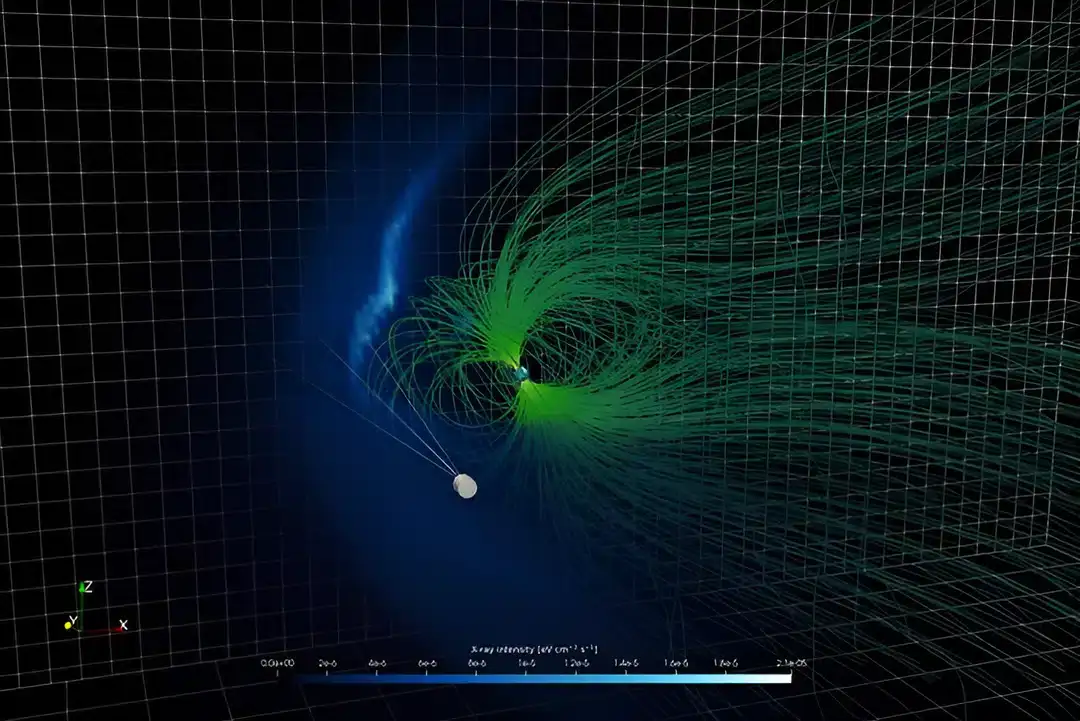
This cutting-edge method leverages the solar wind charge exchange (SWCX) effect, where ions from the solar wind collide with neutral hydrogen atoms near Earth, producing faint X-ray emissions. Using the immense computational power of Japan’s Fugaku supercomputer, Matsumoto’s team modeled these X-ray signals during a coronal mass ejection, an intense solar eruption that sends a flood of high-velocity particles into space. Their simulation unveiled how X-ray patterns could be observed from as far away as the Moon, the proposed site for future satellites like GEO-X, designed to monitor the sun-facing front of Earth’s magnetic barrier.
The results showed distinctive V-shaped X-ray patterns tracing the pathways of reconnected magnetic field lines. By measuring the angles of these patterns, the researchers determined a global reconnection rate of 0.13, consistent with theoretical and experimental expectations. As Matsumoto explained, “Soft X-ray imaging at the sunward edge of the magnetosphere now offers a promising new means to quantify the transfer of solar wind energy into Earth’s magnetic environment, introducing X-rays as a powerful diagnostic tool for space weather.”
Connecting Local Measurements to a Global Perspective
Space weather studies have long faced a disconnect: spacecraft provide detailed but localized data, while the broader picture of energy transfer across the magnetosphere remains elusive. By aligning their soft X-ray simulations with magnetohydrodynamic (MHD) modeling, Matsumoto’s team showed that these X-ray observations could expose both the locations and speeds of magnetic reconnection across a wide area.
This breakthrough merges global imaging capabilities with in-situ spacecraft readings, offering a comprehensive view of how solar wind energizes and shapes our magnetic environment. Combining X-ray satellite data with existing localized measurements promises to transform monitoring techniques, potentially enabling scientists to track space weather events with precision akin to terrestrial meteorology.
Transforming Space Weather Prediction
The significance of this discovery extends well beyond scientific curiosity. Magnetic reconnection triggers can jeopardize critical infrastructure. Severe solar storms may disrupt satellite systems, threaten astronauts’ safety, and even cause power outages on Earth. Future satellites equipped with X-ray imaging sensors could act as early warning systems, similar to meteorological radars forecasting storms on Earth.
This technology’s importance goes beyond Earth’s vicinity. Magnetic reconnection governs plasma behaviors in contexts ranging from stellar atmospheres to black holes and fusion reactors. As Matsumoto highlighted, “Magnetic reconnection not only compromises Earth’s magnetic protection but also drives explosive phenomena in plasma devices, the Sun, and black holes.”
- Categories:
- News








0 comments
Sign in to Comment