
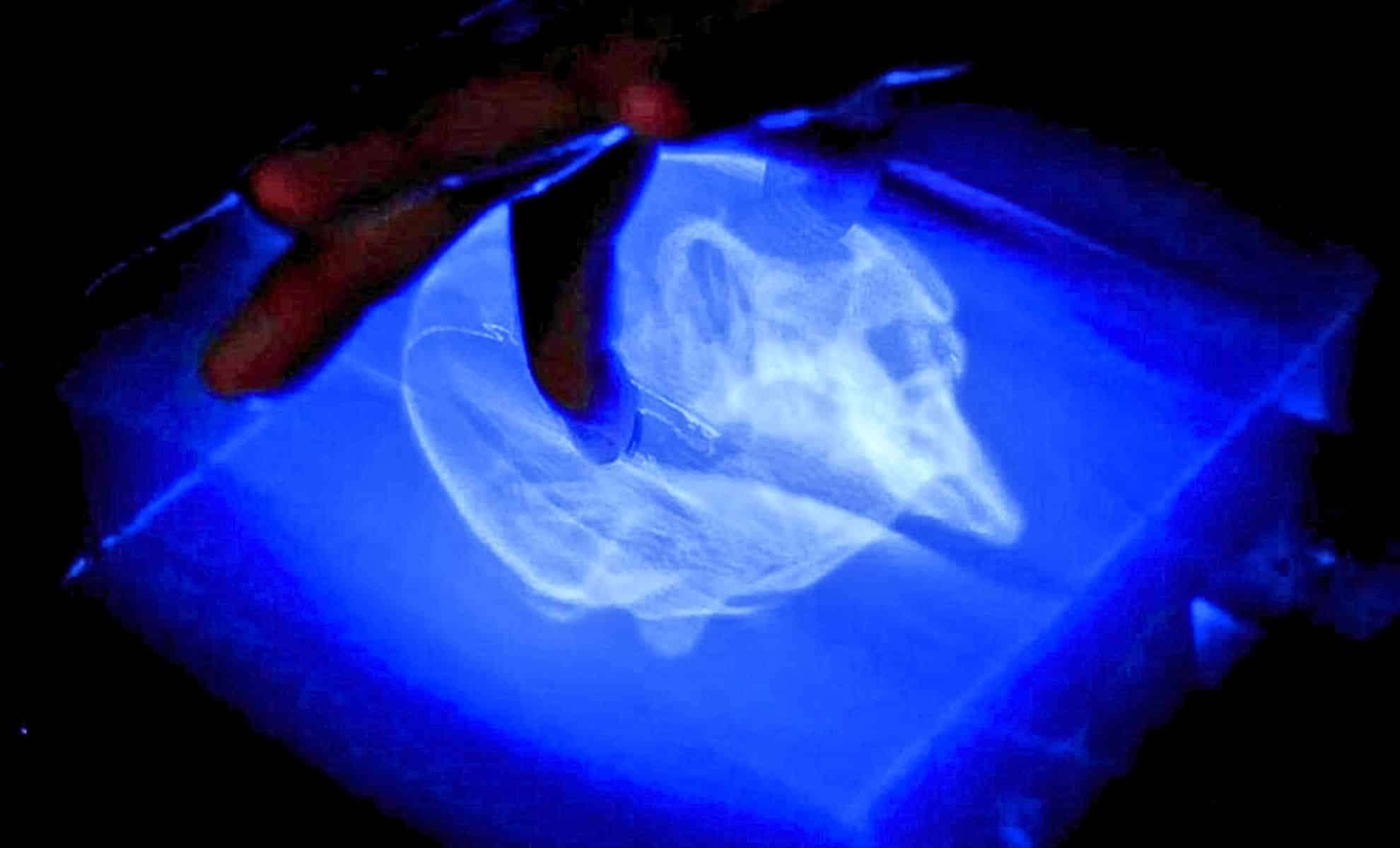
A team of scientists at the Public University of Navarra (UPNA) has developed the first-ever holograms that users can physically touch.
This innovation represents a major advancement in volumetric display systems, enabling people to interact with 3D virtual items floating freely in space using just their hands.
By integrating ultra-fast projection technology with a specially designed flexible diffuser, the researchers have overcome prior obstacles to deliver a seamless and tactile 3D holographic experience.

How These Holograms Differ from Previous Versions
While conventional holograms are generally viewed through devices like glasses or screens, these novel 3D holograms are visible and manipulable directly in the air.
The breakthrough centers on the capacity for users to physically engage with objects suspended mid-air, similar to handling tangible items.
“What we see in films and call holograms are typically volumetric displays,” explains Dr. Elodie Bouzbib, the lead researcher of the project. “These are graphics that appear in mid-air and can be viewed from various angles without the need for wearing virtual reality glasses.”
The team’s latest accomplishment takes this further by allowing users to actually touch and manipulate these virtual holograms, a capability once limited to science fiction.
The Mechanism Behind Touchable Holograms
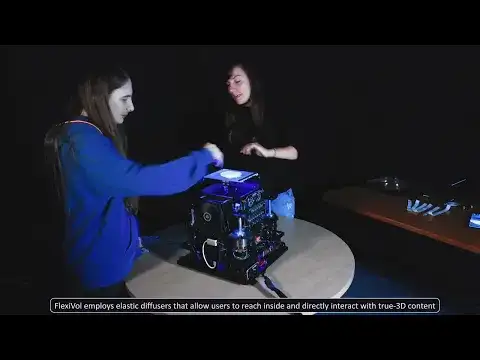
The system employs a rapidly oscillating elastic diffuser that projects images at an ultra-high rate of 2,880 frames per second.
This rapid projection produces a convincing illusion of stable three-dimensional forms in the air. Traditional volumetric displays often rely on rigid diffusers, which can cause harm if touched.
To eliminate such risks, the scientists experimented with different materials to find an elastic diffuser that combines both optical transparency and mechanical stretchability.
The final device offers a secure, interactive platform that simulates the sensation of physically handling objects.
Potential Uses of Touchable 3D Holograms
The authors of the study, published in HALScience, highlight numerous applications. In the realm of education, learners could explore interactive 3D models, such as dissecting engines or studying human anatomy in a hands-on way.
Museums might utilize this approach to create immersive exhibitions where visitors engage with artifacts virtually, without needing any wearable devices. The system’s hand-gesture control makes interactions natural and intuitive.
Lead investigator Asier Marzo remarks, “Similar to how we interact directly with touchscreens, this technology extends that ease to 3D objects – making virtual experiences more realistic and engaging.”
Collaborations and Future Developments
Touchable holograms also facilitate multi-user interactions, enabling several participants to manipulate the same virtual item simultaneously for enhanced teamwork and learning.
This project is a part of the InteVol initiative, financially supported by the European Research Council. Their findings are set to be showcased at the CHI 2025 conference in Yokohama, Japan, joining the forefront of emerging technologies.
This advancement marks an important step forward in refining human-computer interfaces and promises transformative impacts on the future of immersive tech.













0 comments
Sign in to Comment