
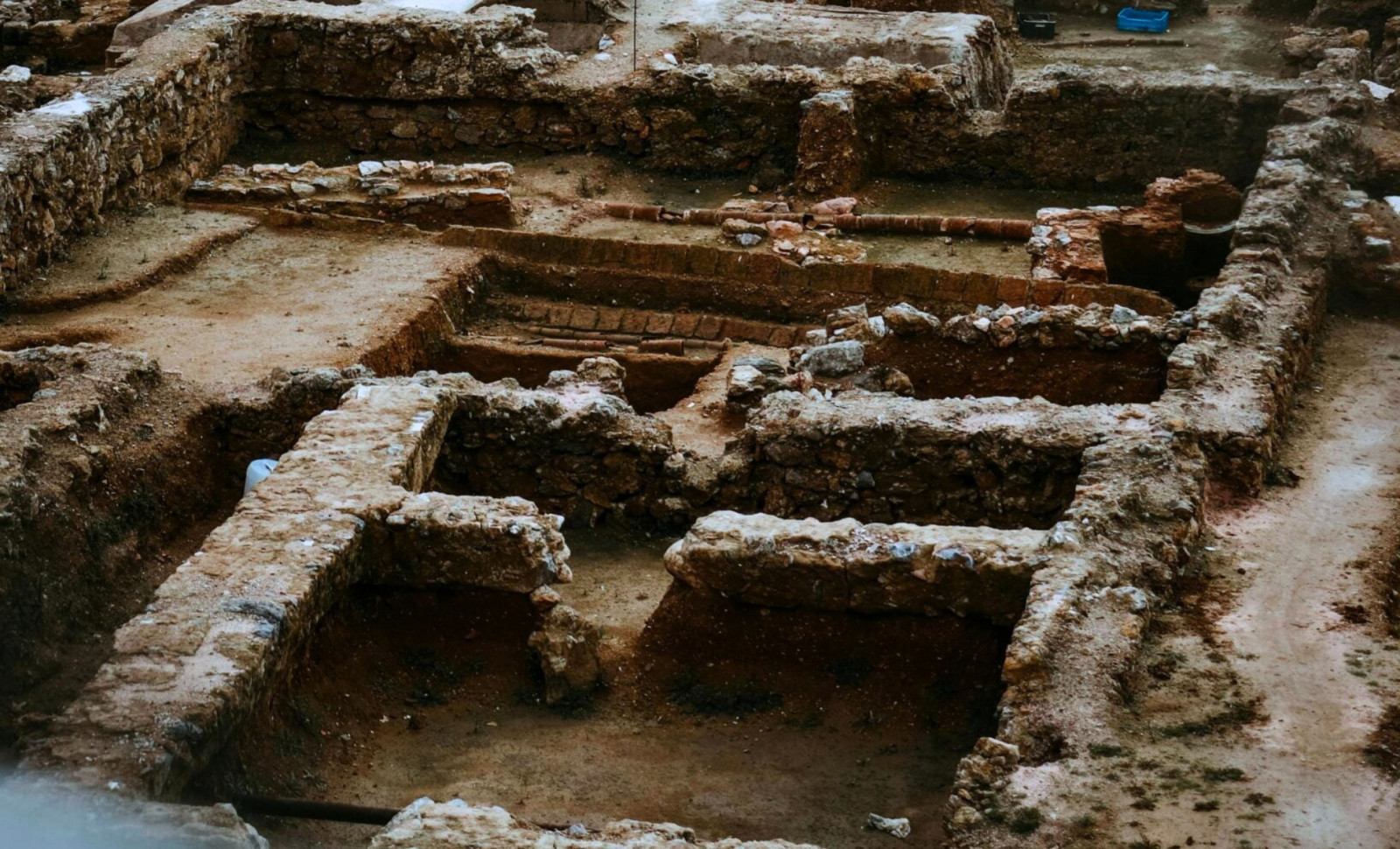
Archaeologists have uncovered over 800 hidden features ahead of a new road bypass near Mirow, Germany, transforming a routine infrastructure project into a significant archaeological endeavor.
The discoveries occurred during the development of the B198 bypass in Mecklenburg-Vorpommern, where specialists surveyed roughly 15,637 square meters—an area comparable to two football fields. The excavation report highlighted this considerable scale of investigation around Mirow.
Initially, many of the findings were subtle, manifesting as faint dark patches in the soil. But collectively, these traces suggest a densely occupied prehistoric locale potentially much larger than initially anticipated by researchers.

Situated near Mirow, between Schulzensee and Mirower See within the Mecklenburg Lake District, the site revealed hearths, cooking pits, pottery shards, metal artifacts, a probable oven or heating installation, as well as a pit filled with shells. According to Arkeonews, most findings date back to the Late Bronze Age (circa 1100 to 550 BC), alongside indications of later usage during the Pre-Roman Iron Age.
Roadworks Lead to Unexpected Prehistoric Discoveries
This discovery was incidental, arising not from a planned archaeological hunt but as a requirement before road construction could proceed.
This aspect is noteworthy because road projects usually affect narrow land strips. Finding over 800 buried features in this tight corridor implies that additional artifacts might lie undisturbed beyond the excavation boundaries.
The remains near Mirow include proof of fire use, food preparation, pottery production, and repeated occupation. Archaeologist Martin Wagner of AIM-V Archäologie identified hearth sites and cooking pits along with intricately designed pottery fragments from domestic vessels.
These ceramics helped assign much of the site’s activity to the Bronze Age. While it’s not definitive evidence for a single large settlement, it certainly reveals the area was a hub for prehistoric human activity, including living, working, cooking, and material disposal over time.
Reports cautiously frame the site as potentially among the largest Bronze Age settlements in the region, though further digs are necessary to determine if the scattered zones actually represent one unified settlement.
Determining If Mirow Represents a Unified Settlement
The key question centers on the relationship between the discovered features across the landscape.
Two excavation sites between Schulzensee and Mirower See yielded similar archaeological evidence. Researchers are now debating whether these represent distinct communities or components of a single expansive settlement. This interpretation remains open.
This uncertainty adds an intriguing dimension: the road construction may have only exposed a fraction of a broader prehistoric community. If continuous archaeological remains are found linking the two sectors, it would suggest the Mirow settlement is much larger than the current road corridor reveals.
Greek Reporter also framed the discoveries as evidence of a prehistoric community in northern Germany, emphasizing the scale implied by the numerous buried features. The careful, yet compelling narrative posits that roadworks have uncovered traces of a Bronze Age settlement possibly larger than previously understood.
This measured interpretation avoids exaggeration, asserting that over 800 features have been recorded and assessments are ongoing to determine if they represent one extensive prehistoric settlement.
A Pit Filled with Shells Adds Personal Context
One particularly notable discovery was a shell-filled pit, which connects the site to daily life near the region’s lakes.
The shell deposit surprised archaeologists, although its exact use remains uncertain—whether as discarded food waste or associated with other lake resource activities.
Nonetheless, the pit anchors the site in its lacustrine environment. Mirow occupies a landscape rich with lakes, vegetation, clay, forests, and arable land, offering resources likely utilized for fishing, cooking, construction, pottery making, and small-scale farming.
Additional finds reinforce this picture, with hearths and cooking pits indicating frequent fire use. Pottery shards suggest domestic life, while charcoal, ash, and potential heating structures point to food or material processing. Metal artifacts, including a ring from an adjacent sector, demonstrate occupation beyond a single era.
The later findings belong to the Pre-Roman Iron Age (approximately 300 to 0 BC), hinting that this area remained significant well after the Bronze Age.
Local Archaeological Authorities Provide Context and Caution
Responsibility for cultural heritage in Mecklenburg-Vorpommern lies with local archaeological authorities. The official Landesarchäologie Mecklenburg-Vorpommern website outlines their role, while AIM-V’s platform, Archäologie in Mecklenburg-Vorpommern, supports the regional archaeological framework. However, no detailed official press release on the Mirow excavation has been made available through these sources.
At this stage, the Mirow site is best understood as a significant prehistoric discovery revealed through road construction activities. Confirmed finds include more than 800 buried features, Bronze Age ceramics, hearths, cooking pits, metal objects, shell deposits, and artifacts from the Iron Age. The unresolved issue remains whether the excavated sections represent separate settlements or pieces of one extensive Bronze Age community.
- Categories:
- News










0 comments
Sign in to Comment