
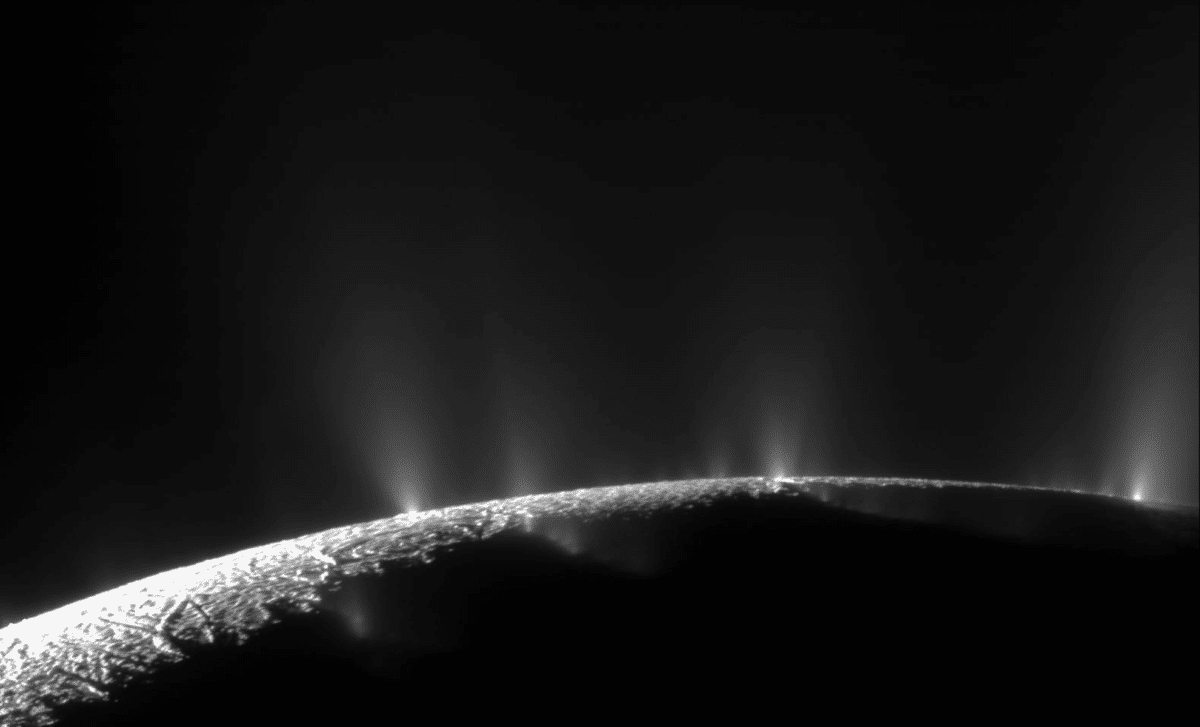
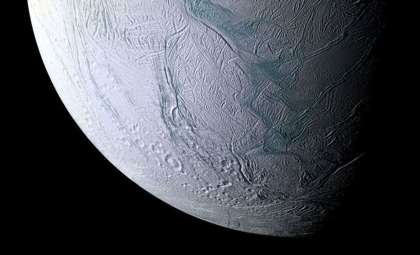
A recent investigation by NASA’s Cassini mission has unveiled fresh insights into the organic chemistry present on Enceladus, Saturn’s intriguing moon. Released in Nature Astronomy and further explored in a NASA report, the study highlights newly detected particles from the moon’s subsurface ocean that may offer important clues about life beyond Earth. This research strengthens the notion that Enceladus possesses conditions favorable to biological activity.
Newly Identified Organic Molecules from Enceladus’ Ocean
NASA’s Cassini probe, which conducted over a decade of detailed Saturnian system observations, has once again provided compelling data about potential habitats for life far from our planet. The findings published in Nature Astronomy and summarized by NASA concentrate on organic molecules contained in material expelled from Enceladus’ icy geysers. These plumes arise from the moon’s hidden ocean and have long fascinated researchers due to their potential to contain life-supporting chemistry.
The study’s standout discovery involves organic compounds that were less than minutes old when captured by Cassini, a stark contrast to previously detected organics which were much older and subjected to space radiation changes. Nozair Khawaja, the study’s lead researcher from Freie Universität Berlin, states:

“Previously, we detected organics in ice grains that were years old and potentially altered by the intense radiation environment surrounding them. These new organic compounds were just minutes old, found in ice that was fresh from the ocean below Enceladus’ surface.”
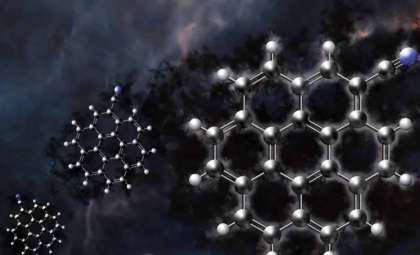
This up-to-date data offers a deeper understanding of the chemical constituents of Enceladus’ ocean and its life-supporting potential. The newly identified molecules belong to a complex group of organics that could be essential precursors for biochemical systems — the very kind of chemistry astrobiologists are keen to investigate on distant icy worlds.
Advancing Our Understanding of Enceladus’ Habitability
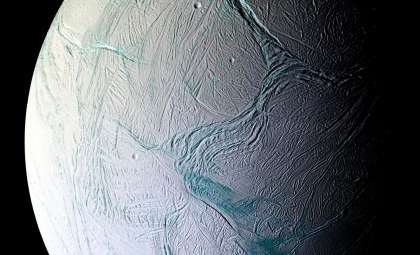
Enceladus remains a leading candidate in the quest to find extraterrestrial life. Beneath its frozen crust lies a global ocean, warmed by tidal interactions with Saturn. The availability of water, chemical ingredients, and an energy source in this subsurface ocean marks Enceladus as a compelling location for astrobiologists aiming to explore the origins of life.
Frank Postberg, a coauthor of the paper, highlights the significance:
“These molecules we found in the freshly ejected material prove that the complex organic molecules Cassini detected in Saturn’s E ring are not just a product of long exposure to space, but are readily available in Enceladus’ ocean.”
This implies that key organic compounds vital for life are naturally present in Enceladus’ ocean and don’t require prolonged exposure to outer space conditions to form. The current challenge lies in deciphering how these molecules interact chemically within the ocean environment, which could reveal pathways to life beyond Earth.
Insights from Cassini’s Groundbreaking Encounters
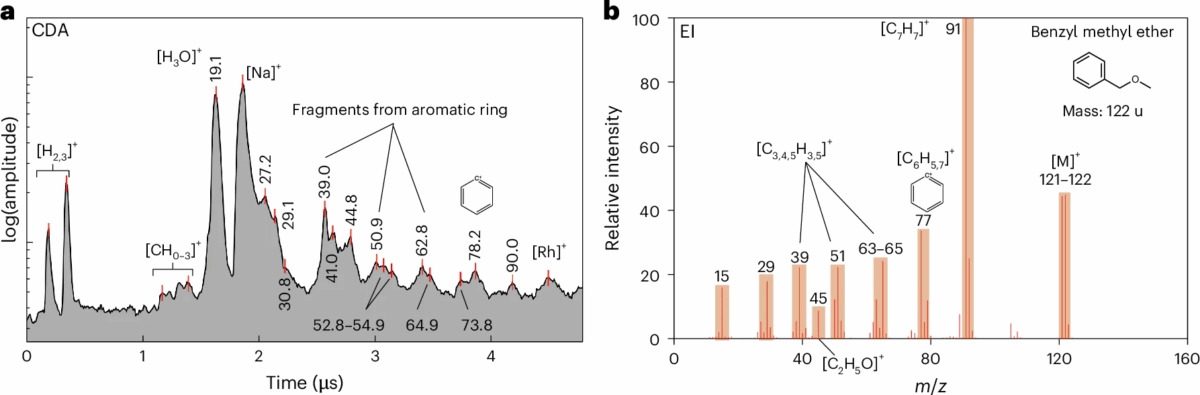
The Cassini mission is celebrated for its daring flybys, especially its 2008 pass through Enceladus’ icy vents at speeds nearly reaching 11 miles per second (18 km/s). This swift transit enabled the spacecraft to collect pristine ice particle samples, unaltered by space radiation, granting a rare glimpse of Enceladus’ internal chemistry.
During this encounter, the kinetic energy caused ice grains to vaporize and ionize, enabling analysis via Cassini’s mass spectrometer. This cutting-edge technique yielded detailed molecular data, illuminating the chemical dynamics taking place beneath the moon’s surface.
By studying these fresh organic compounds, scientists have gained critical evidence that Enceladus’ ocean chemistry is active and capable of producing complex molecules needed for life.
Enceladus in the Quest for Extraterrestrial Life
Detecting organic molecules on Enceladus strengthens its role as a key site for finding life beyond Earth. Organics are the molecular foundation of life as we know it, and Enceladus’ ocean environment offers a diverse chemical system that could potentially nurture life.
With ongoing investigations into plume chemistry, researchers hope to better understand how life might originate under extreme planetary conditions. The identification of recently formed organics emphasizes that Enceladus may harbor chemical processes fundamental to biology, inspiring plans for future missions.
Continuing Legacy of the Cassini Exploration
The Cassini spacecraft has fundamentally changed our perception of Saturn and its moons, providing vital data about Enceladus, Titan, and the planet’s ring system. Launched in 1997 through an international collaboration involving NASA, ESA, and ASI, Cassini’s daring maneuvers — including its flythroughs of Enceladus’ plumes — have generated information that will shape planetary science and the search for life for decades.
Although the mission concluded in 2017, the wealth of data it amassed continues to power breakthroughs in astrobiology and planetary exploration. The knowledge gained about Enceladus’ ocean chemistry is instrumental in guiding future endeavors seeking answers to humanity’s profound question: are we alone in the cosmos?
- Categories:
- News








0 comments
Sign in to Comment