

In an unprecedented scientific breakthrough, a team from the Chinese Academy of Sciences (CAS) has engineered a mouse with two male progenitors. This pioneering achievement marks the first instance of a mammal born from dual paternal lineage that has thrived into adulthood. Detailed in Cell Stem Cell on January 28, the research introduces an innovative genome editing technique that overcomes longstanding obstacles in single-sex reproduction.
Challenges in Same-Sex Mammalian Reproduction
Efforts to generate mammals from two fathers or two mothers have long been hindered by fundamental genetic mechanisms. Central to these challenges is genomic imprinting, which controls gene activation based on parental origin.
In typical embryonic development, this imprinting ensures correct gene expression patterns. When both chromosome sets come from the same sex, this regulatory balance collapses, leading to serious developmental issues.

Earlier strategies attempted to create bi-paternal mice by transforming male-derived stem cells into egg-like structures for fertilization by sperm. Unfortunately, these embryos often failed to progress normally or suffered significant abnormalities.

CRISPR Unlocks New Pathway
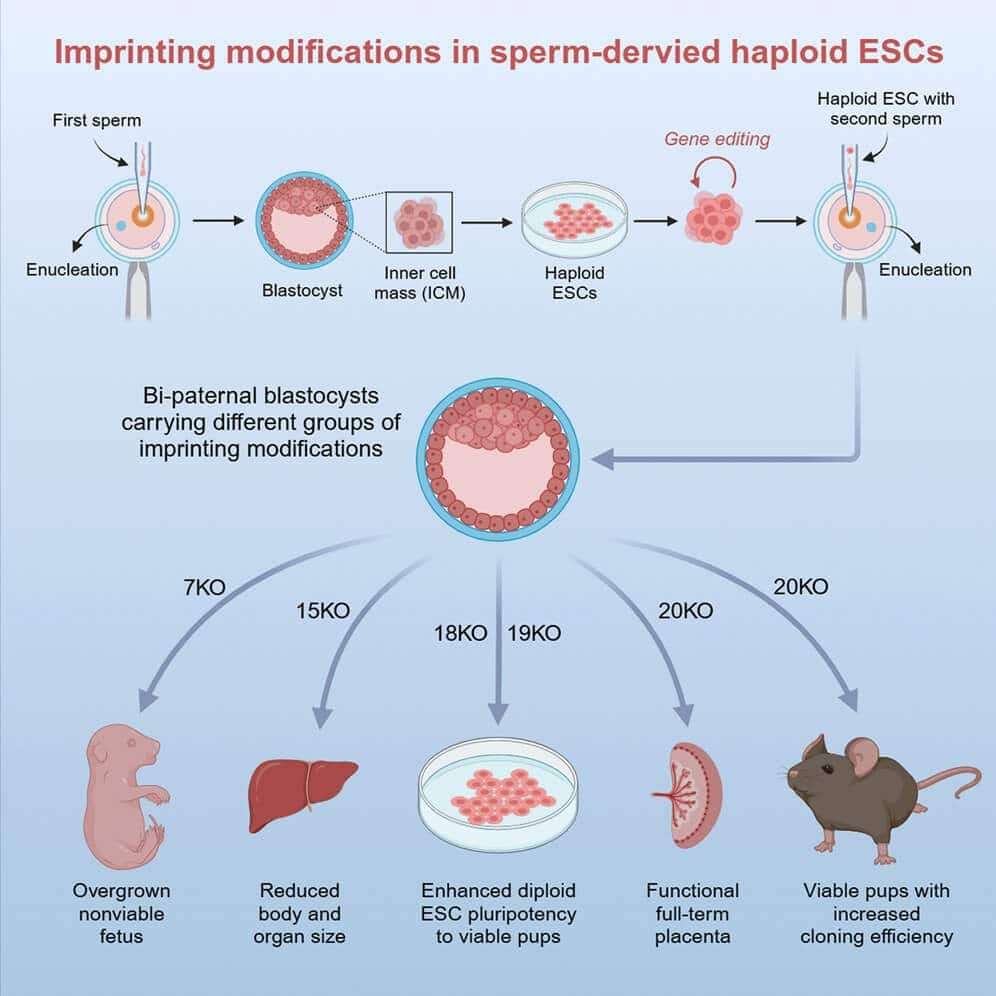
Shifting away from mimicking egg cells, the researchers targeted 20 key imprinting genes obstructing bi-paternal development. Using CRISPR gene editing, these roadblocks were selectively altered.
The procedure involved:
- Extracting stem cells from one male mouse and genetically editing the imprinting genes.
- Merging these reprogrammed cells with sperm from another male.
- Introducing this combined genetic material into an enucleated egg.
- Implanting the resulting embryos into a surrogate mother mouse.
The outcome was remarkable: a number of embryos developed into healthy adult mice, challenging previously accepted biological constraints.
Newfound Life, Yet Imperfections Remain
Though successful, the birth rate was low, with just 11.8% of embryos surviving to birth. Among those reaching adulthood, abnormalities in growth and lifespan were evident.
A 2004 investigation found that bi-maternal mice (offspring from two mothers) tended to be smaller yet enjoyed extended longevity. Conversely, these bi-paternal mice were larger but exhibited reduced lifespans, highlighting distinct roles of paternal versus maternal genes in growth and aging regulation.
Implications and Next Steps in Mammalian Reproduction
This breakthrough, while still distant from practical applications in human same-sex reproduction, provides crucial knowledge about embryogenesis, imprinting patterns, and cloning. Developers intend to refine the approach and explore its viability in larger mammals such as primates to assess translational potential.
Beyond reproduction, controlling imprinting genes could revolutionize stem cell treatment strategies, enhance cloning fidelity, and expand the frontiers of synthetic biology.
For the moment, these pioneering bi-paternal mice exemplify the extraordinary results achievable when biology is pushed beyond its traditional boundaries.
Source: Nature
- Categories:
- Science











0 comments
Sign in to Comment