
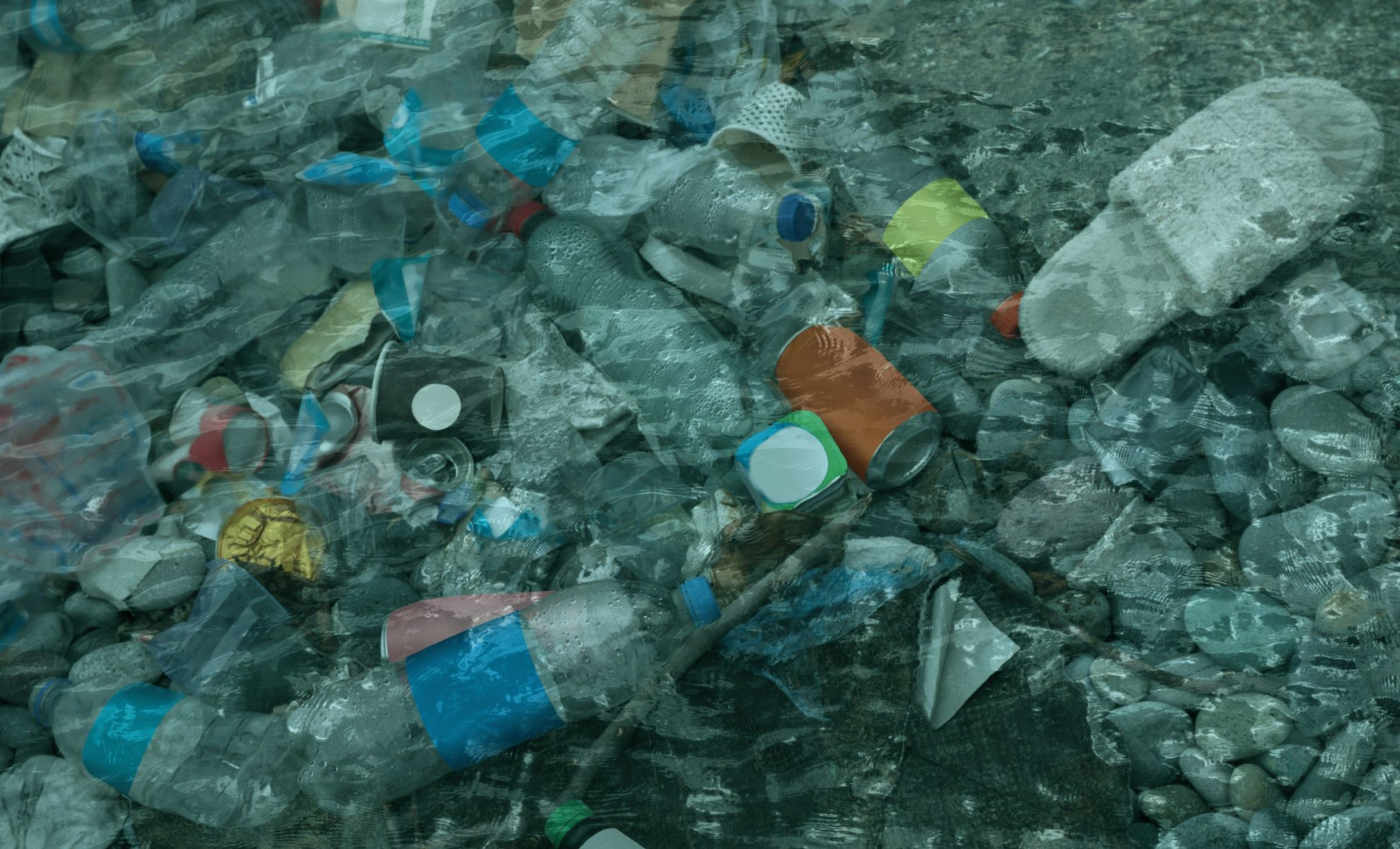
Scientists have achieved a significant advancement in plastic innovation aimed at addressing one of the largest environmental threats: plastic pollution. They have engineered a novel plastic capable of programmed self-decomposition. This material incorporates inactive bacterial spores and enzymes that facilitate its breakdown, enabling it to fully degrade within six days without releasing damaging microplastics.
This so-called “living plastic” tackles the persistent issue of plastic resilience. While plastics serve critical roles in packaging, healthcare, and other industries, their long-lasting nature has created an ecological burden. Disposable plastics, intended for brief use, can endure in ecosystems for centuries.
Innovative Dual-Enzyme Mechanism Reshapes Plastic Degradation
Attempts to utilize enzymes for dismantling synthetic plastics have historically encountered limited success. However, this latest research adopts a sophisticated two-enzyme system. As detailed by the authors:

“To address this challenge, we engineered a consortia-embedded living plastic.” They continued, explaining the technical approach. “Bacillus subtilis are separately programmed with an inducible gene circuit capable of secreting two complementary plastic-degrading enzymes: Candida antarctica lipase, responsible for random-chain scission, and Burkholderia cepacia lipase, responsible for processive depolymerization and is stressed to sporulation.”
When combined with polycaprolactone—a plastic commonly used in 3D printing and medical devices—the bacterial spores remained inactive initially. Upon introducing a nutrient medium heated to 50°C, these spores became activated, triggering rapid enzymatic breakdown.
“By embedding these microbes, plastics could effectively ‘come alive’ and self-destruct on command, turning durability from a problem into a programmable feature,” as Zhuojun Dai, a corresponding author on the paper, put it.
Within six days, the material fully decomposed without generating microplastic fragments, a persistent issue with conventional degradation techniques.
Real-World Application: Wearable Biodegradable Electrode
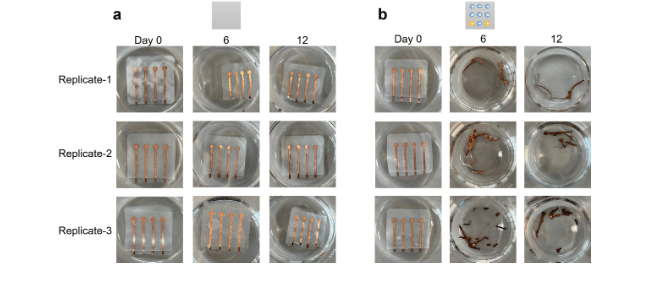
To demonstrate practical use, the researchers fabricated a wearable plastic electrode powered by their living plastic system. Published in ACS Applied Polymer Materials, the device was designed to capture human electromyography (EMG) signals and functioned normally while the plastic remained inactive.
Once activated, the electrode biodegraded entirely within two weeks, confirming its ability to perform during use and then biodegrade after disposal.
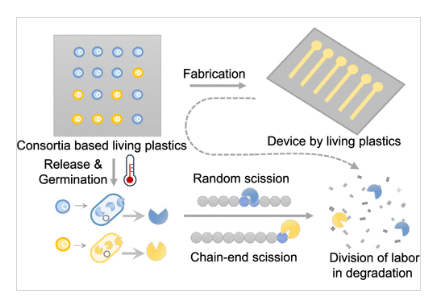
The electrode’s capacity to endure during functional periods and then disintegrate emphasizes the potential of programmable durability as a design paradigm shift in materials science.
Implications for Tackling Plastic Pollution Globally
Given plastics’ ubiquitous presence and their resistance to natural breakdown, they have become a global ecological threat. The research team highlights that cutting-edge synthetic biology makes it feasible to build plastics that biodegrade in controlled, environmentally friendly ways previously unattainable.
Though this initial model focuses on polycaprolactone, the concepts may extend to other plastics, especially single-use varieties that dominate global pollution.
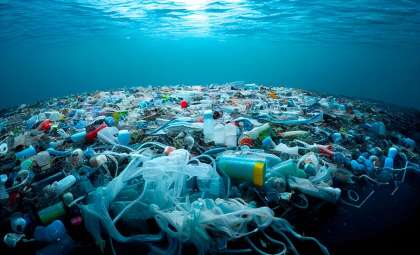
This innovation could be pivotal for oceanic environments, where plastic waste accumulates and persists for decades. Plastics that can naturally disintegrate in aquatic ecosystems would mark a meaningful leap forward in combating marine pollution.
By transforming plastic’s longevity from a fixed challenge into an adjustable trait, this breakthrough provides a hopeful solution for reducing the environmental footprint of plastic materials.
- Categories:
- Science












0 comments
Sign in to Comment