
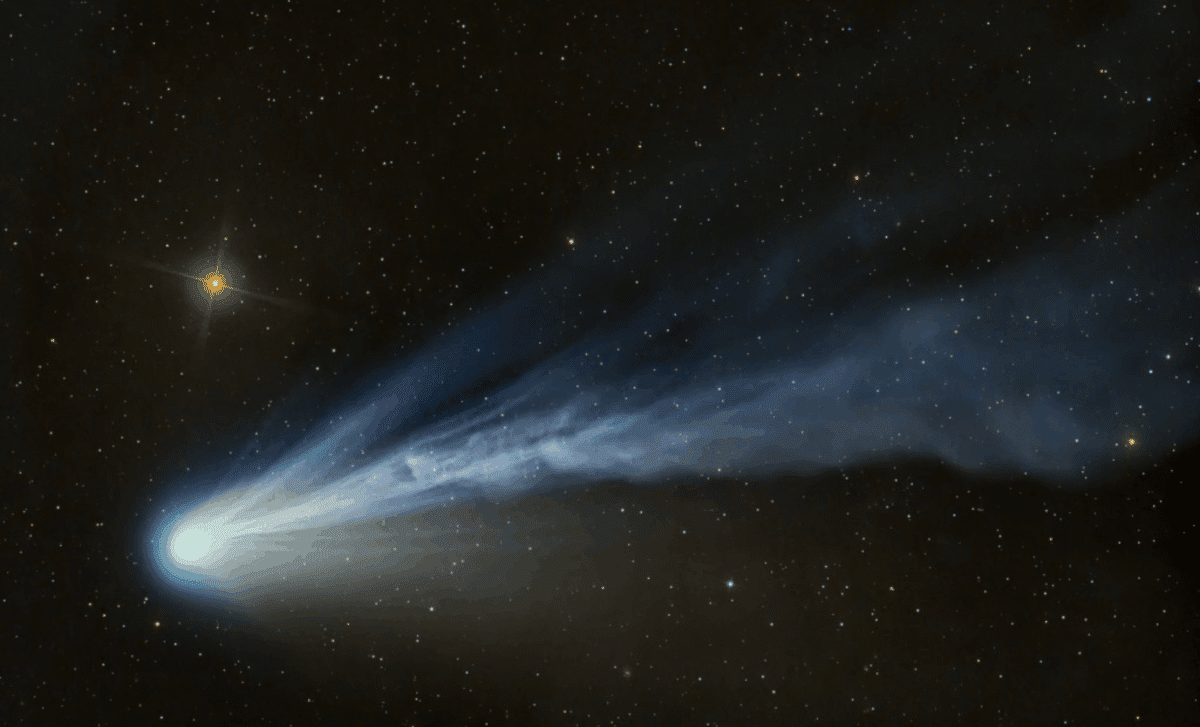
Researchers in China have uncovered uncommon radio signals emitted by the comet 12P/Pons-Brooks, offering fresh perspectives on the processes occurring within this active visitor from the distant reaches of our Solar System. Utilizing the Tianma Radio Telescope, they detected bursts of water vapor and ammonia as the comet journeyed closer toward the Sun.
The observations were conducted during the comet's peak activity period in late 2023 continuing into early 2024, just before it reached perihelion.
This innovative research, featured in Astronomy & Astrophysics, reveals crucial details about what drives the comet’s powerful outgassing events.
An Uncommon Halley-Type Comet Exhibiting Dynamic Activity
12P/Pons-Brooks stands out among comets. Initially discovered in 1812, it belongs to the unusual class of Halley-type comets, which return to the Sun approximately every 70 years. Renowned for its sudden and intense eruptions, 12P has developed a history of frequent outbursts—rapid releases of gas and dust that cause its brightness to surge. These events reoccurred in 2024, presenting an ideal chance for scientists to investigate their triggers. The team from China took advantage of this, directing the high-sensitivity Tianma Radio Telescope at the comet to gather valuable radio data. Their results offer new understanding into the behavior of these icy wanderers as they revive after long periods in deep space.
Observing Water From Afar Through Radio Waves
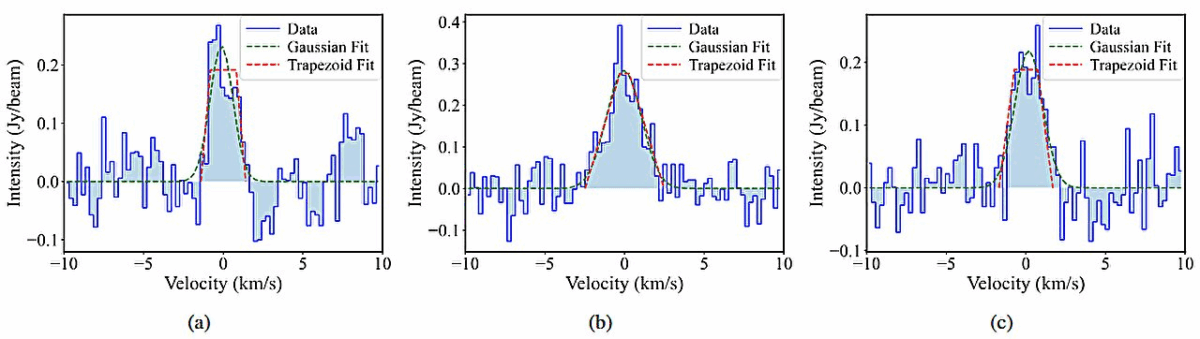
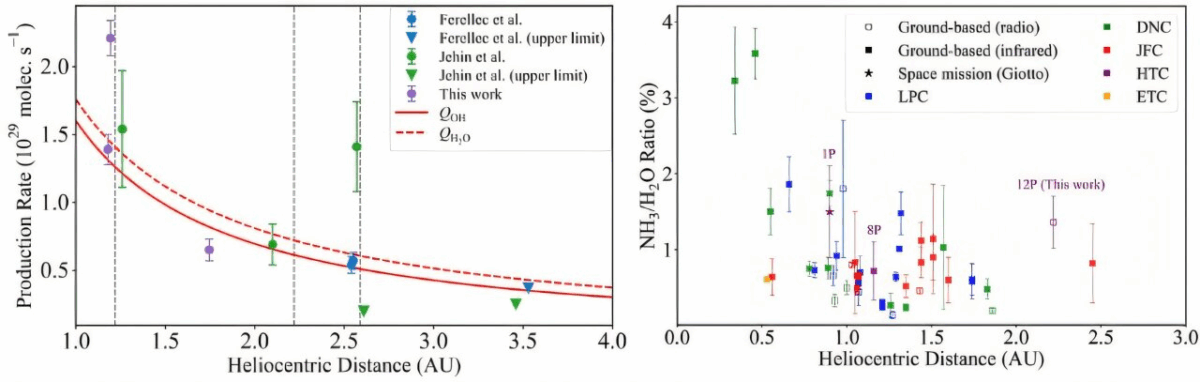
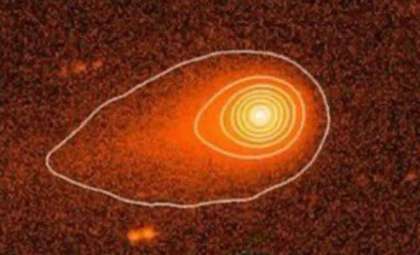
Scientists concentrated on detecting the comet’s hydroxyl (OH) patterns, molecules that form when solar radiation decomposes water vapor. Using L-band radio frequencies, they tracked how these signals changed in relation to outburst events. Analyzing these variations enabled estimates of the water release rate and the velocity of the expanding gas cloud around the comet. At its height, 12P was expelling more than 5 tons of water each second, a figure exceeding that of many other comets with both short and long orbital periods. During active outbursts, the water emission doubled, confirming a strong link between these explosive episodes and volatile emissions. This dramatic water output and its fluctuations underscore 12P’s notably extreme nature.

First-Ever Ammonia Detection in Halley-Type Comet by Radio Methods
In a distinct radio frequency range, the researchers achieved a groundbreaking detection: ammonia (NH₃) molecules were identified at K-band frequencies for the first time via radio astronomy in a Halley-type comet. Observed with 3σ confidence, these molecules were linked to one of 12P’s active phases. Ammonia is particularly interesting because it sublimates at colder temperatures compared to water, indicating it may play a crucial role in initiating early comet eruptions. Since short-period comets like 12P often show reduced levels of more volatile substances such as CO and CO₂, the detection of ammonia provides a fresh explanation for their dynamic activity. This discovery was also detailed in the study published in Astronomy & Astrophysics, which explores ammonia’s importance in cometary chemistry.
Insights Into Cometary Origins and Evolution
These radio signal detections extend beyond monitoring a single comet—they provide a valuable glimpse into our Solar System’s formation era. Comets like 12P harbor pristine materials dating back to the birth of the planets. Their ices have remained largely unchanged over billions of years, serving as time capsules revealing the chemical makeup of the early solar nebula. By analyzing how these ices vaporize and which gases are released, astronomers can reconstruct the thermal and chemical evolution of the Solar System’s outer regions. This research confirms that even comets once considered depleted still possess complex layered interiors, with different volatiles driving distinct phases of outburst behavior. This knowledge will enhance predictions about how other comets act as they near the Sun.
- Categories:
- News










0 comments
Sign in to Comment