
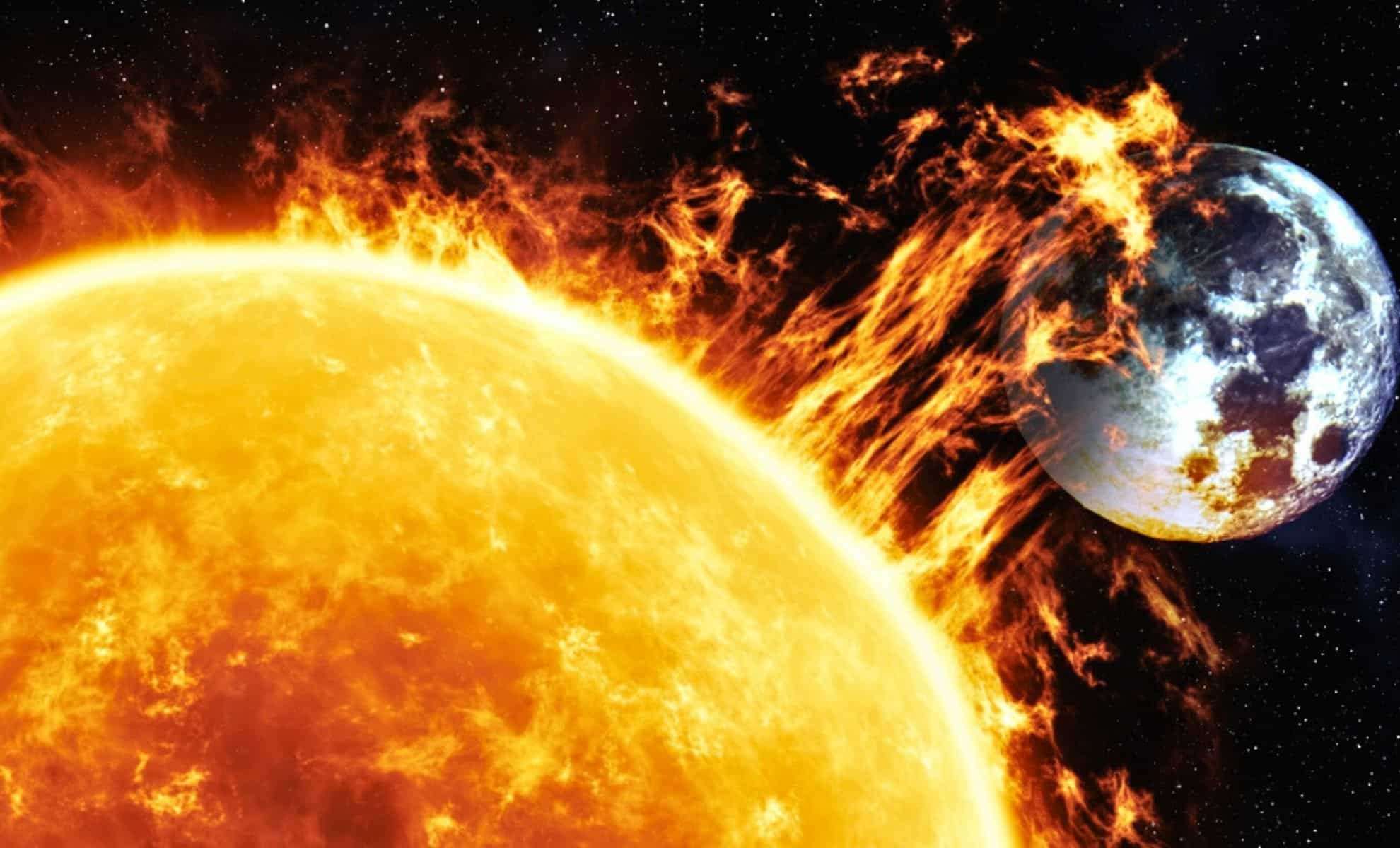
The Sun is currently experiencing an unanticipated surge in activity, advancing well ahead of predicted timelines and baffling researchers who are working to decode the causes of this sudden escalation. According to a recent paper in The Astrophysical Journal Letters, the solar wind—a continuous flow of charged particles from the Sun—has been gradually strengthening since 2008, potentially fueling a much more vigorous Solar Cycle 25 than anticipated.
This revelation overturns previous expectations of another quiet solar cycle. Instead, the Sun is exhibiting a sharp increase in sunspots, solar flares, and coronal mass ejections (CMEs), astonishing experts at NASA’s Jet Propulsion Laboratory.
“We were anticipating a relatively calm cycle,” says Jamie Jasinski, a plasma physicist with JPL. “However, the Sun is behaving unpredictably, showing activity far beyond what our models had forecasted.”

Solar Predictions Miss the Mark as Activity Rapidly Escalates
In 2019, both NASA and the National Oceanic and Atmospheric Administration (NOAA) projected a mild Solar Cycle 25, comparable in intensity to the relatively subdued Cycles 23 (1996–2008) and 24 (2009–2020). These estimates were grounded in thorough studies of solar activity, magnetic field measurements, and patterns from the past.
Yet, shortly after the cycle's official start in December 2019, unexpected changes became evident. Sunspot numbers surged faster than expected, along with a rise in geomagnetic storms and radio blackouts triggered by solar flares. A notable event occurred in July 2023, when an X-class flare—the highest intensity level—temporarily impaired high-frequency radio communications worldwide.
A possible reason for this unexpected activity is the persistent strength of the solar wind. The investigation led by Jasinski and Marco Velli analyzed extensive data dating back to 2008, discovering steady rises in vital parameters including solar wind velocity, particle concentration, thermal pressure, and magnetic field strength. These trends suggest that the heliosphere—the vast bubble around the solar system influenced by the Sun's magnetic field and radiation—is more energized than previously known.

The Hale Cycle Could Be the Missing Piece
Could it be that predictive models fell short because they focused on an incomplete solar timeline? Jasinski and Velli propose that solar activity might be better understood over the course of the 22-year Hale magnetic cycle, which encompasses the full magnetic polarity reversal and restoration of the Sun's poles, rather than just the 11-year sunspot cycle.
They argue that the current surge may be the result of magnetic dynamics accumulating over a decade. Although Cycle 24 was considered weak, it operated in an environment with a comparatively strong solar wind, setting the stage for more pronounced activity in its successor.
“It's like distinguishing short-term weather from long-term climate,” Jasinski explains. “While one cycle might appear subdued, examining a longer timeline reveals deeper, impactful trends.”
This perspective echoes early 20th-century research by George Ellery Hale, who first correlated sunspot magnetic polarity with larger-scale magnetic reversals. If the Hale cycle governs solar behavior, today's heightened activity may represent a natural adjustment rather than an anomaly.
Broader Consequences Reach Beyond Astronomy
Deciphering solar dynamics has practical implications well beyond pure science. Enhanced solar activity poses growing threats to satellites, GPS networks, communications systems, and even power grids here on Earth. Severe geomagnetic storms have historically induced damaging currents in electrical infrastructure, such as the widespread blackout experienced in Quebec in 1989.
The European Space Agency’s Space Weather Service Network, together with NASA and global partners, is closely tracking solar fluctuations, updating their forecasts, and preparing for more frequent disturbances in the near future. The anticipated solar maximum around 2025 might rank among the most intense in recent history if current trends continue.
Experts remind us that while this cycle is unusual, the Sun has shown unexpected behavior before, from the Maunder Minimum during the 1600s to the colossal Carrington Event solar storm of 1859.
- Categories:
- Science







0 comments
Sign in to Comment