
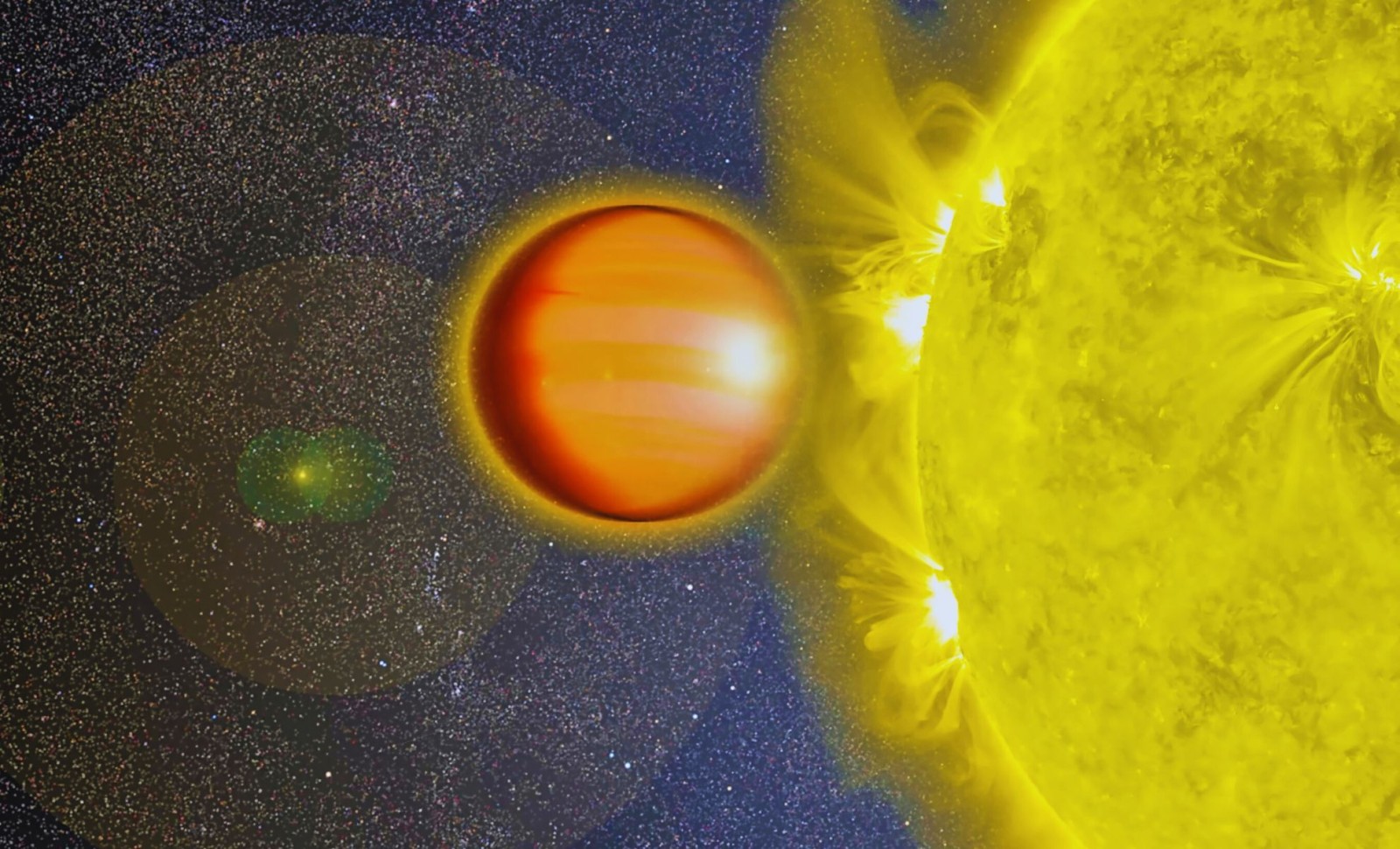
Researchers have, for the first time, created a three-dimensional temperature map of the extremely hot exoplanet WASP-18b, a massive gas giant with temperatures high enough to disintegrate water molecules. Utilizing observations from NASA’s James Webb Space Telescope, this innovative mapping exposes dramatic temperature variations across the planet, highlighting blazing hot areas and cooler zones where water vapor still survives.
WASP-18b, about ten times the mass of Jupiter, races around its star with an incredibly rapid rotation completing a full spin every 23 hours. Located a mere 400 light years from Earth, this exoplanet’s dayside is so extraordinarily hot that it breaks apart water vapor, offering astronomers an exceptional opportunity to study how extreme heat influences planetary atmospheres.
Breaking New Ground: Detailed Thermal Mapping Advances Exoplanet Science
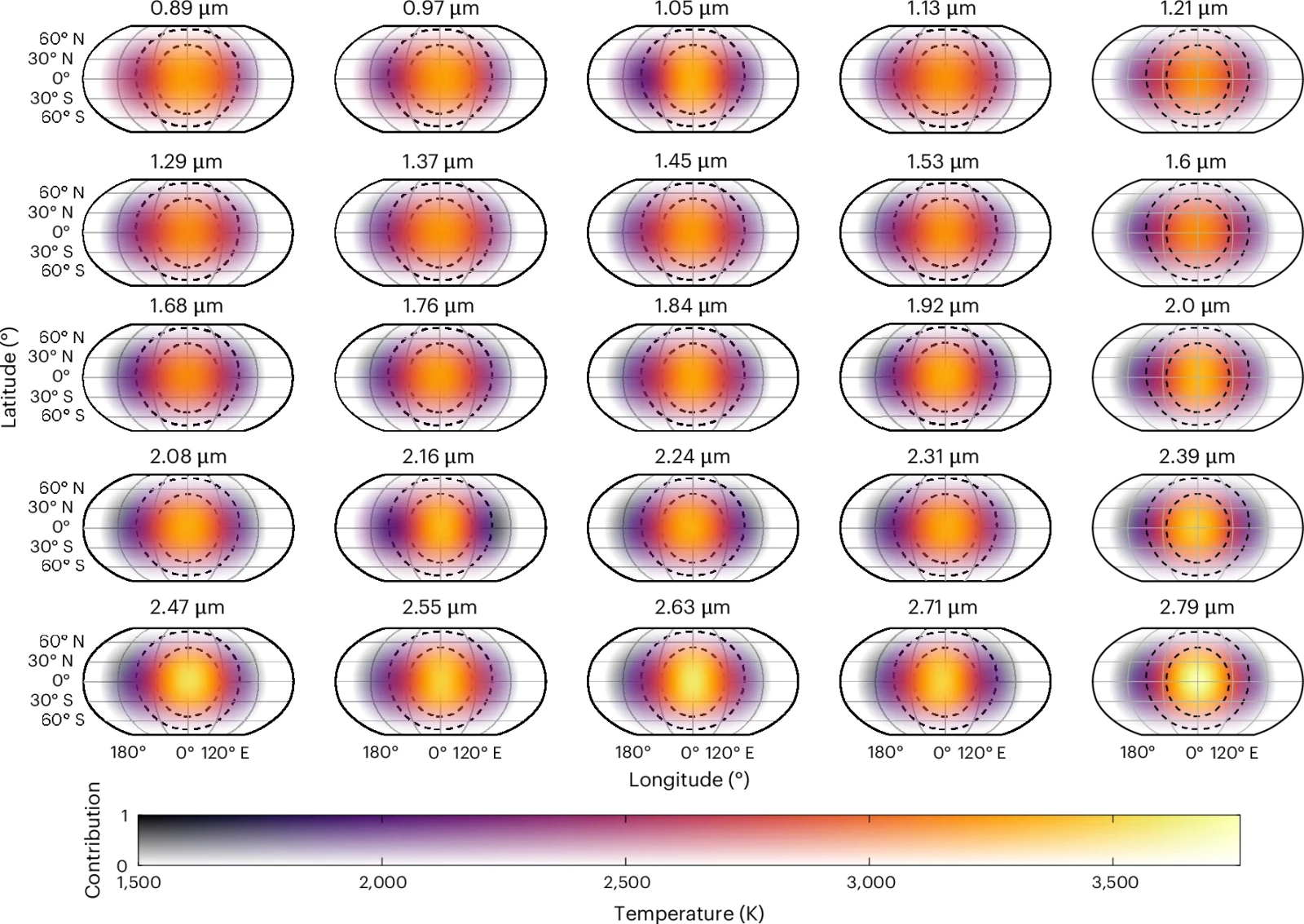
The generation of a 3D temperature profile of WASP-18b represents a major advance in planetary science. Previously, scientists could only estimate average temperatures on distant planets, but this sophisticated technique reveals how heat is distributed globally, covering areas from poles to equator and from the upper to lower atmosphere.

This breakthrough was made possible by a technique called “eclipse mapping,” which ” allows us to image exoplanets that we can’t see directly, because their host stars are too bright,” said Ryan Challener, a postdoctoral associate at Cornell University.
The comprehensive research published in Nature Astronomy outlines how this innovative approach effectively differentiates between planet regions where water vapor endures and where it’s obliterated by searing heat, allowing for a precise three-dimensional thermal map to be constructed.
An Exoplanet Too Hot for Water to Survive
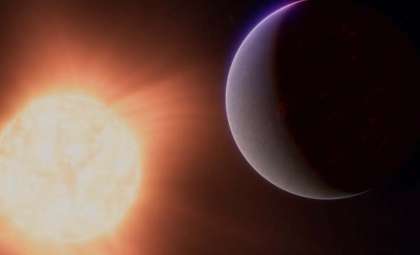
Nicknamed an “ultra-hot Jupiter”, WASP-18b’s temperature on its star-facing side approaches a blistering 5,000°F, sufficient to dissociate water vapor molecules. Although theoretical predictions suggested such extreme heat would obliterate water, this landmark map offers direct evidence of this phenomenon occurring on a planetary scale.
The thermal survey identified a superheated region directly beneath the star’s glare, encircled by comparatively cooler areas where traces of water vapor remain detectable. This supports long-standing theories that intense heat zones would be devoid of water, while milder regions could sustain it.
Megan Weiner Mansfield, assistant professor of astronomy at the University of Maryland, highlighted that this is the first observation of the temperature gradient clearly illustrating this effect across a single exoplanet’s atmosphere.
New Possibilities for Exploring Alien Atmospheres
Thanks to WASP-18b’s intense heat, scientists found it an excellent candidate to validate this pioneering mapping method. The success paves the way for applying these techniques to smaller rocky planets and even airless bodies. Detailed temperature profiles could unveil crucial information about composition and climate on these distant worlds.
“It’s very exciting to finally have the tools to map the temperatures of distant planets in this much detail. It sets us up to possibly use the technique on other types of exoplanets,” noted Mansfield.
Being able to examine temperature in three dimensions — latitudinally, longitudinally, and vertically — allows astronomers to make more accurate comparisons between exoplanets and known planets in our solar system, as emphasized by Weiner Mansfield.
- Categories:
- Astronomy







0 comments
Sign in to Comment