
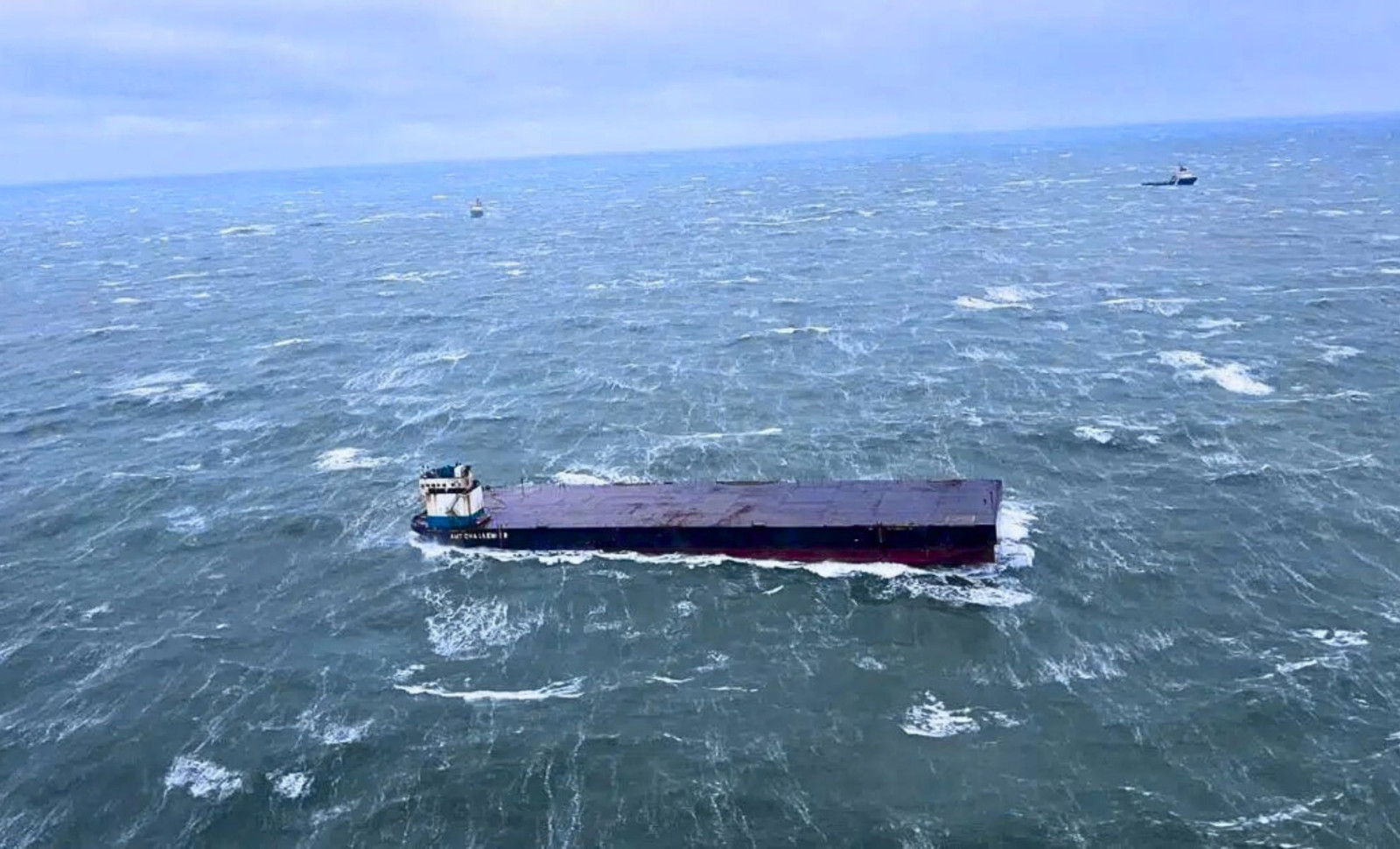
A powerful North Atlantic storm halted commercial shipping operations across the English Channel, forcing more than 100 vessels to anchor off the Normandy coast. This surge prompted one of the most extensive maritime emergency responses seen in recent memory.
An unmanned barge lost from its tow near the Isle of Wight drifted hundreds of kilometers before making landfall on a beach in northern France. Despite continuous salvage efforts in worsening weather, teams were unable to prevent its grounding.
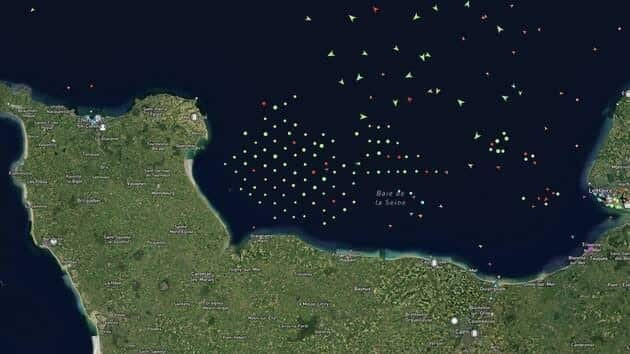
Authorities in France and the UK experienced increasing operational pressure as ships diverted into the Baie de Seine. Rescue coordination centers near Calais and Cherbourg reached full capacity. Officials characterized this level of coordinated maritime rerouting as unprecedented for the region.

Emergency units remain alert, with grounded barge recovery operations paused until weather conditions improve.
Baie de Seine Becomes Sanctuary for Over 100 Redirected Ships
On January 31, more than 100 cargo vessels sought shelter in the Baie de Seine, a designated refuge zone along France's northern coast. The convoy included tankers, container ships, and general cargo carriers rerouted from the English Channel during Storm Darragh, which unleashed sustained winds exceeding 40 knots.
As highlighted by Le Marin, this mass maritime diversion marked a historic first in regional operations. Vessels shifted course from Northern Europe toward southern ports including Spain, Portugal, and the Mediterranean. The geography of the Cotentin Peninsula provided limited defense against Atlantic swells, establishing the bay as a critical holding area during the storm's peak.
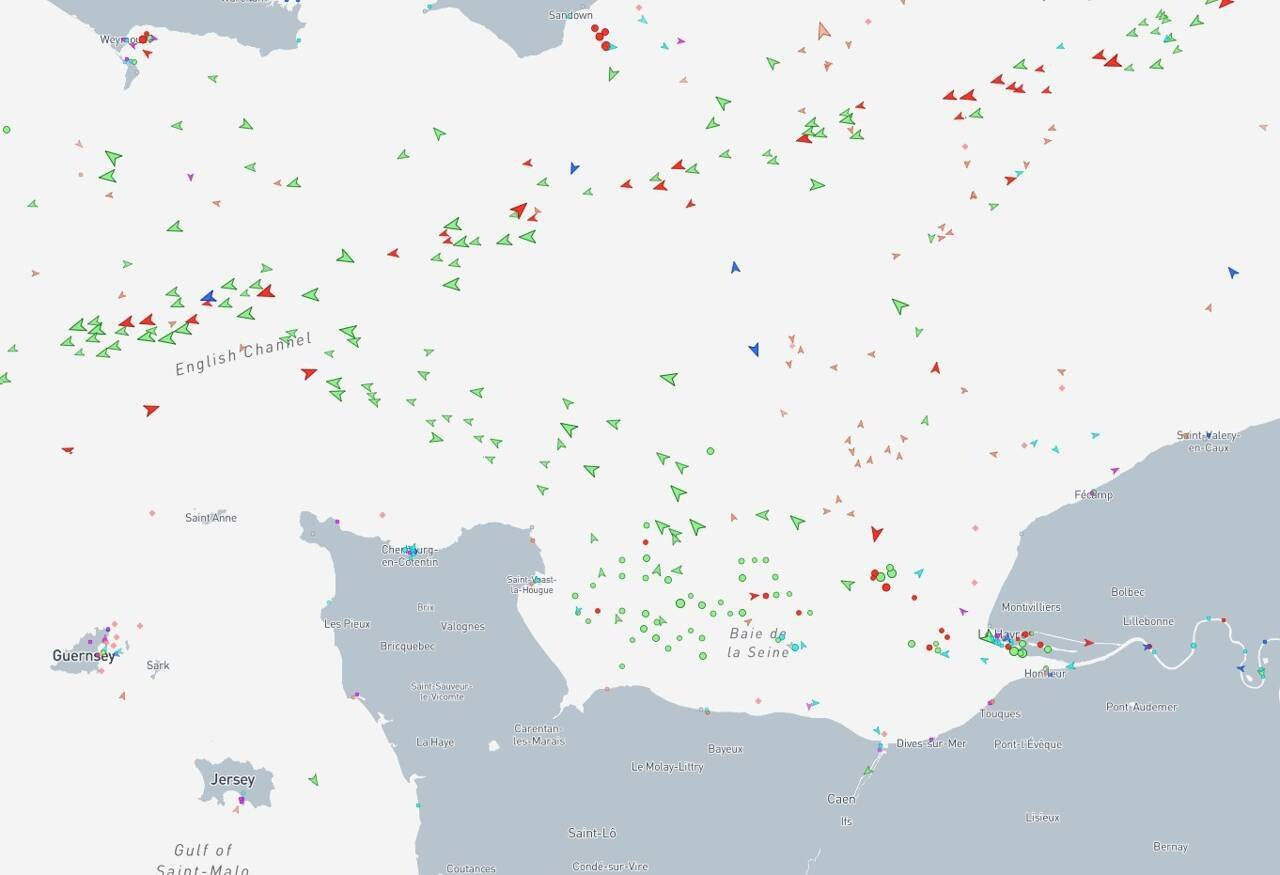
The Gris-Nez Regional Operational Surveillance and Rescue Centre (CROSS) oversaw the coordination of anchorage to maintain safe vessel spacing within the dense area. Operations at key ports—Le Havre, Cherbourg, and Caen—were temporarily reduced to support emergency traffic management.
AMT Challenger Barge Breaks Free, Grounds in Seine-Maritime
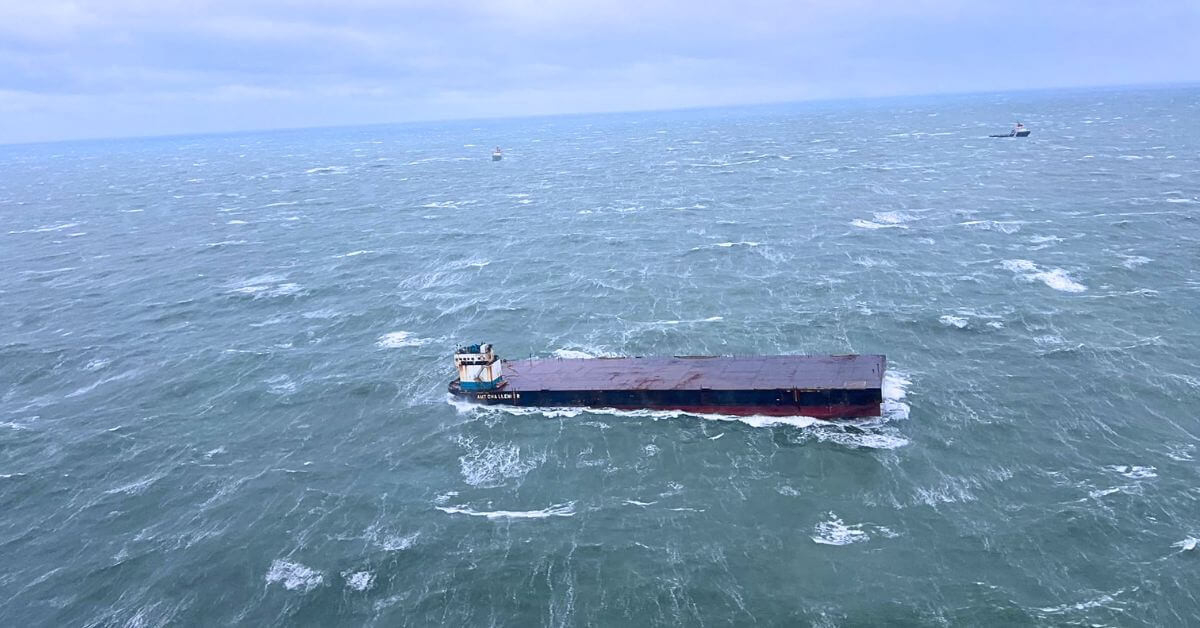
A separate event earlier in the season highlighted risks of towing in severe conditions. On December 6, 2025, the 120-meter AMT Challenger barge lost connection with its tug, the Boka Glacier, while seeking shelter near the Isle of Wight amidst the storm.
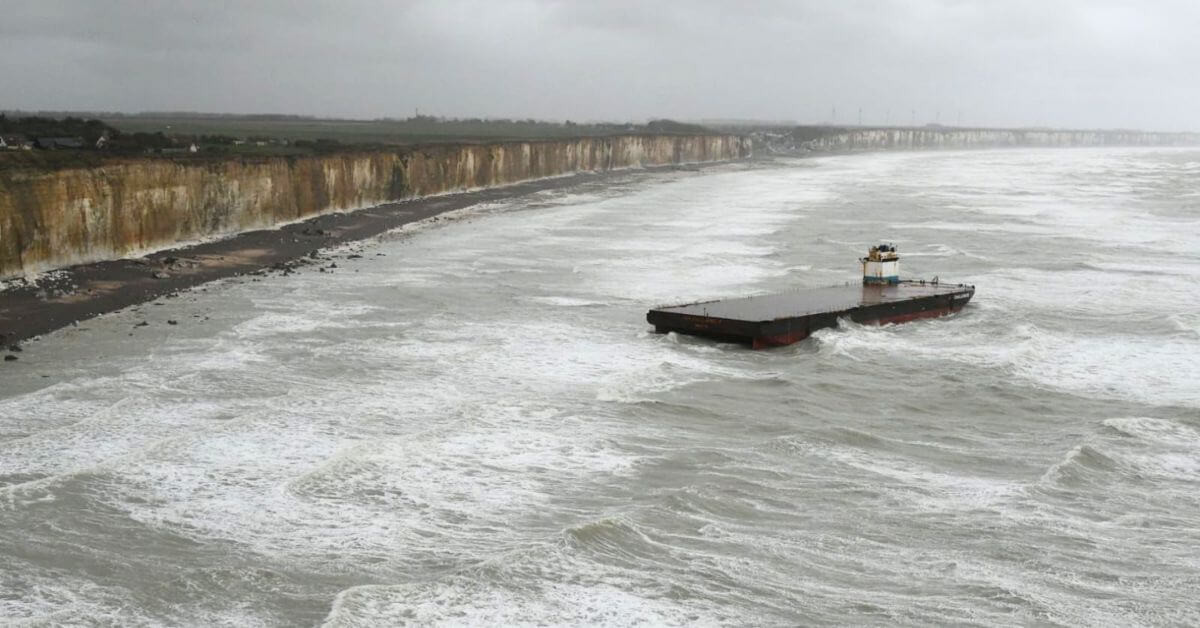
According to Marine Insight, the unmanned, cargo-free barge drifted unguided for nearly 48 hours following the towline failure. It crossed into French jurisdiction by the night of December 7.
Salvage attempts by French and Belgian recovery vessels—Abeille Horizon and Princess—were coordinated with British authorities but ultimately failed due to worsening sea conditions.
By early afternoon on December 8, the AMT Challenger had run aground on a sandy shore near Sotteville-sur-Mer, roughly 300 meters from unstable cliffs. Coverage by The Maritime Executive noted that multiple aerial and marine interventions were unsuccessful prior to grounding.
Minimal Environmental Impact; Coastal Zones Temporarily Closed
There were no crew onboard during the grounding of the AMT Challenger. French maritime authorities determined the vessel posed a low environmental hazard, containing only small stores of marine diesel fuel. Its onboard ballast system functioned effectively to maintain stability amid tidal changes.
Access to nearby beaches and coastal trails in Veules-les-Roses, Saint-Aubin-sur-Mer, and Sotteville-sur-Mer was restricted after the incident. Local officials cited concerns over cliff erosion and public safety dangers near the grounded vessel.
Emergency services established a command center in Veules-les-Roses to oversee the situation, supported by salvage ships under continuous radar monitoring. The Dieppe prosecutor’s office has initiated a legal inquiry focusing on towing practices and technical faults related to the incident.
- Categories:
- News





0 comments
Sign in to Comment