
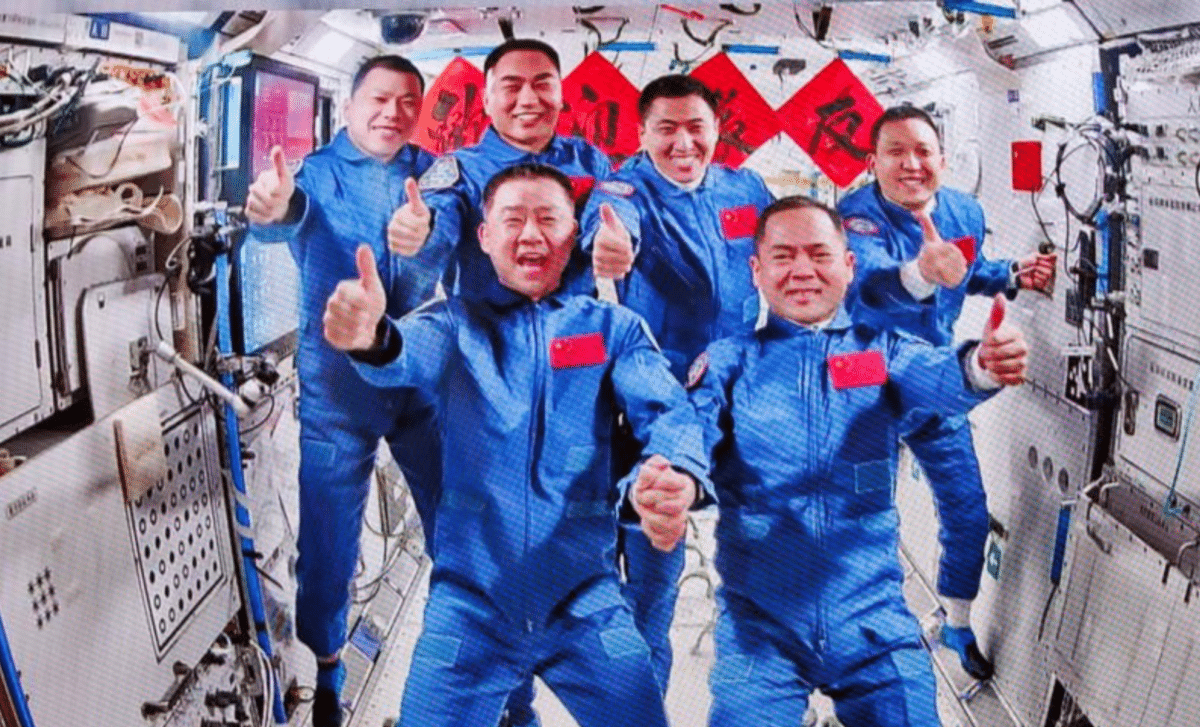
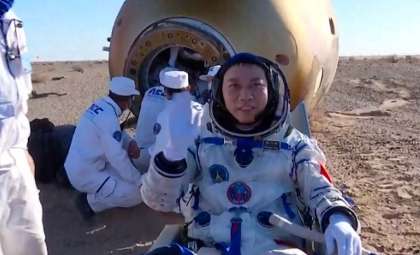
Following nearly three months in orbit, the astronauts aboard China’s Shenzhou-21 spacecraft are intensifying their scientific work aboard the Tiangong space station. Their experiments cover a broad spectrum including robotics, biomedicine, physics, and emergency preparedness. This mission exemplifies China’s expanding capabilities to perform sophisticated research in prolonged microgravity environments.
Enhancing Robotics and Biomedical Studies in Orbit
Now approaching 80 days in space, the crew members Zhang Lu, Wu Fei, and Zhang Hongzhang are ramping up their scientific agenda aboard the Chinese station. A key feature recently was their interaction with the robotic assistant Xiaohang. As reported by CGTN, these activities involved tactile interaction combined with autonomous flight maneuvers to optimize the robot’s responsiveness in microgravity, yielding valuable information for future improvements.
China's Shenzhou-21 crew continues with science experiments, life in orbithttps://t.co/vdho8vErDP pic.twitter.com/UvcXmimD5i
— CCTV (@CCTV) January 19, 2026Add Cosmo Herald as a Preferred Source

The team is also progressing in biomedical research by utilizing a space-based Raman spectrometer to analyze urine samples, helping to develop markers for metabolic alterations in microgravity. Additionally, they gathered saliva specimens to monitor microbial changes inside the space habitat, with post-mission analysis planned on Earth. These studies signify China’s dedication to understanding astronaut health and adaptation in space over extended periods.
Investigating Molecular Asymmetry and Material Science in Orbit
Among their ambitious experiments, the Shenzhou-21 team participated in a study focused on molecular chirality, examining how the left-right asymmetry of molecules behaves in space. This research could illuminate how the genetic code’s structure may have formed under extraterrestrial conditions. By retrieving and preserving experimental samples, the crew assists in tracking chiral interactions between amino acids and nucleosides, potentially shedding light on life’s chemical origins.
Concurrently, their microgravity physics experiments include electrochemical optical studies on lithium-ion batteries. These insights are crucial for advancing energy technologies critical to prolonged space missions, satellite systems, and future spacecraft engineering.
Space Station Upkeep, Emergency Protocol Drills, and Crew Health
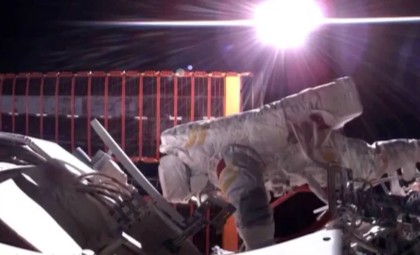
Beyond scientific inquiry, the Shenzhou-21 team is also ensuring the station remains operational. They replaced a sampling cover in the combustion science experiment module and conducted the disassembly and assembly of certain fluid physics experiment components. Such maintenance is key to sustaining and upgrading the station’s capabilities.
The crew additionally carried out a simulated emergency depressurization exercise designed to enhance prompt response strategies during potential pressure loss events. These drills improve teamwork onboard and coordination with mission control, reinforcing safety measures.
Regarding their physical condition, astronauts underwent regular medical evaluations including hearing tests, complemented by daily exercise routines like running to counteract the detrimental effects of long-term weightlessness on muscle strength and bone integrity.
Creating a Foundation for Future Space Exploration
As China advances its aims for deeper space exploration, the Shenzhou-21 mission showcases how a synergistic approach to robotics, biological sciences, physics, and astronaut training builds the basis for upcoming lunar and interplanetary journeys. The crew’s effective handling of intricate scientific work alongside routine station operations reflects a maturing space program ready to escalate its ambitions.
From analyzing the molecular origins of life to conducting critical safety drills, every aspect of this mission supports a broader vision of a sustainable, science-driven human foothold in orbit. The mission’s comprehensive scope underscores China’s resolve to emerge as a leader in the future of space exploration.
- Categories:
- Space





0 comments
Sign in to Comment