
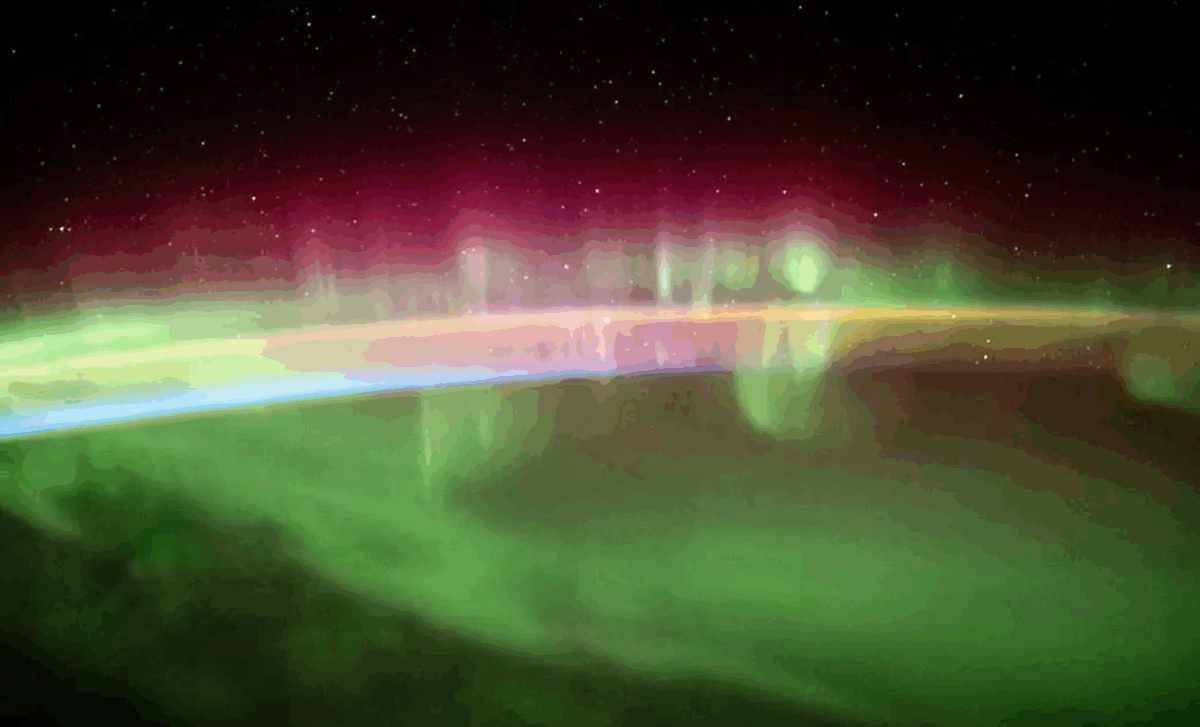
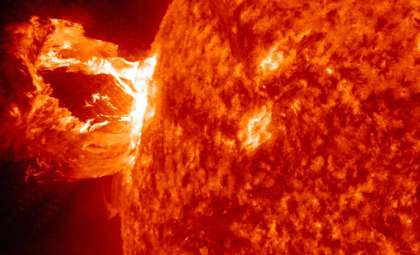
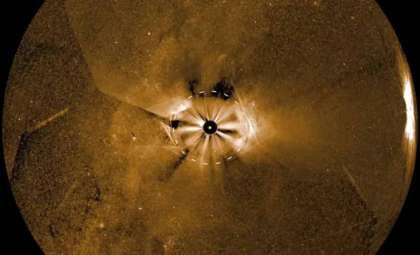
Recently, a powerful solar storm not only illuminated the night skies with luminous auroras over the Northern Hemisphere but also compelled the International Space Station (ISS) crew to take safety measures against heightened radiation. This surge in space weather activity originated from the sun releasing massive clouds of charged particles known as coronal mass ejections (CMEs), which bring both magnificent displays and significant risks to Earth and orbiting astronauts.
How Solar Storms Affect the ISS Environment
Solar storms are natural solar phenomena that can generate dazzling effects on Earth while posing genuine health threats to astronauts in orbit. On November 11 and 12, 2025, a sunspot cluster named AR4274 unleashed a series of CMEs that propelled energetic particles toward our planet. These charged particles interact with Earth’s magnetic shield to produce stunning auroras but also raise radiation levels, which can endanger the ISS crew.
“We entered into an energetic solar particle event this morning, and we’re going to go in and out of holes of higher than the baseline [radiation] risk,” one operator told NASA astronaut Mike Fincke over the comms channel.
Add Cosmo Herald as a Preferred Source

This message underscored the fluctuating intensity of radiation during the event, requiring astronauts to stay vigilant about their safety.
To mitigate radiation exposure, the ISS crew took specific protective steps. Russian cosmonauts Oleg Platonov, Sergey Ryzhikov, and Alexey Zubritsky moved to the station’s laboratory module overnight to benefit from its additional shielding. Meanwhile, astronauts from NASA and JAXA remained in their assigned dormitories.
Space.com notes that while the USOS crew stayed in their quarters, the Roscosmos team opted for the laboratory as a precaution. Taking such measures was vital to reduce potential long-term radiation risks faced by astronauts during intense solar events.
Understanding the Mechanisms Behind Solar Storms
To appreciate the crew’s response, it’s essential to understand what drives solar storms and their hazards. Solar energetic particle (SEP) events arise when the sun emits bursts of high-energy particles that travel through space. Upon arrival, these particles can disrupt satellites, affect GPS functionality, and even interfere with terrestrial power systems.
For astronauts aboard the ISS, the main concern is harmful radiation, since Earth’s atmosphere and magnetic field do not shield them completely in orbit. Although the ISS provides some protection, extreme solar activity demands that astronauts seek out better-shielded areas during such episodes.
In this instance, the CMEs emitted by AR4274 caused radiation surges significant enough to necessitate these safety actions.
“The USOS crew slept in their crew quarters and the Roscosmos cosmonauts camped out in the lab as a preventative measure due to the solar storm,” said Sandra Jones, a NASA public affairs official, to Space.com.
Heightened Vigilance for Upcoming Solar Activity
Solar storms happen regularly, but their severity varies. As human missions venture deeper into space, monitoring and preparing for such events grows increasingly critical. This current solar cycle exhibits some of the most vigorous sunspot regions in recent history, with experts anticipating more frequent and intense solar storms shortly.
For ISS astronauts, staying updated on solar weather is a vital safety component. Agencies like NASA rely on monitoring satellites such as the Solar and Heliospheric Observatory (SOHO) to forecast solar activity. Planning for future missions to the Moon and Mars will demand enhanced strategies to counteract radiation risks from solar storms.
Events like the one in November emphasize the challenges astronauts encounter beyond Earth's protective atmosphere. While auroras enchant observers on the ground, the accompanying radiation highlights the fine line between the cosmos’ beauty and its inherent dangers.
The Dual Nature of Auroras: Stunning Phenomena with Hidden Risks
Although the solar storm introduced radiation hazards for the ISS crew, it simultaneously treated Earth's inhabitants to mesmerizing auroral displays across the Northern Hemisphere. These waves of light form when solar particles interact with Earth’s magnetic field, exciting atmospheric gases and creating vibrant glows visible in the night sky.
To people on the ground, auroras are captivating natural light shows; however, for astronauts in space, these phenomena are reminders of potent solar forces. The very particles that paint the sky with color also represent a considerable radiation threat, underlining the delicate balance space explorers must maintain between awe and safety.
- Categories:
- News


0 comments
Sign in to Comment