
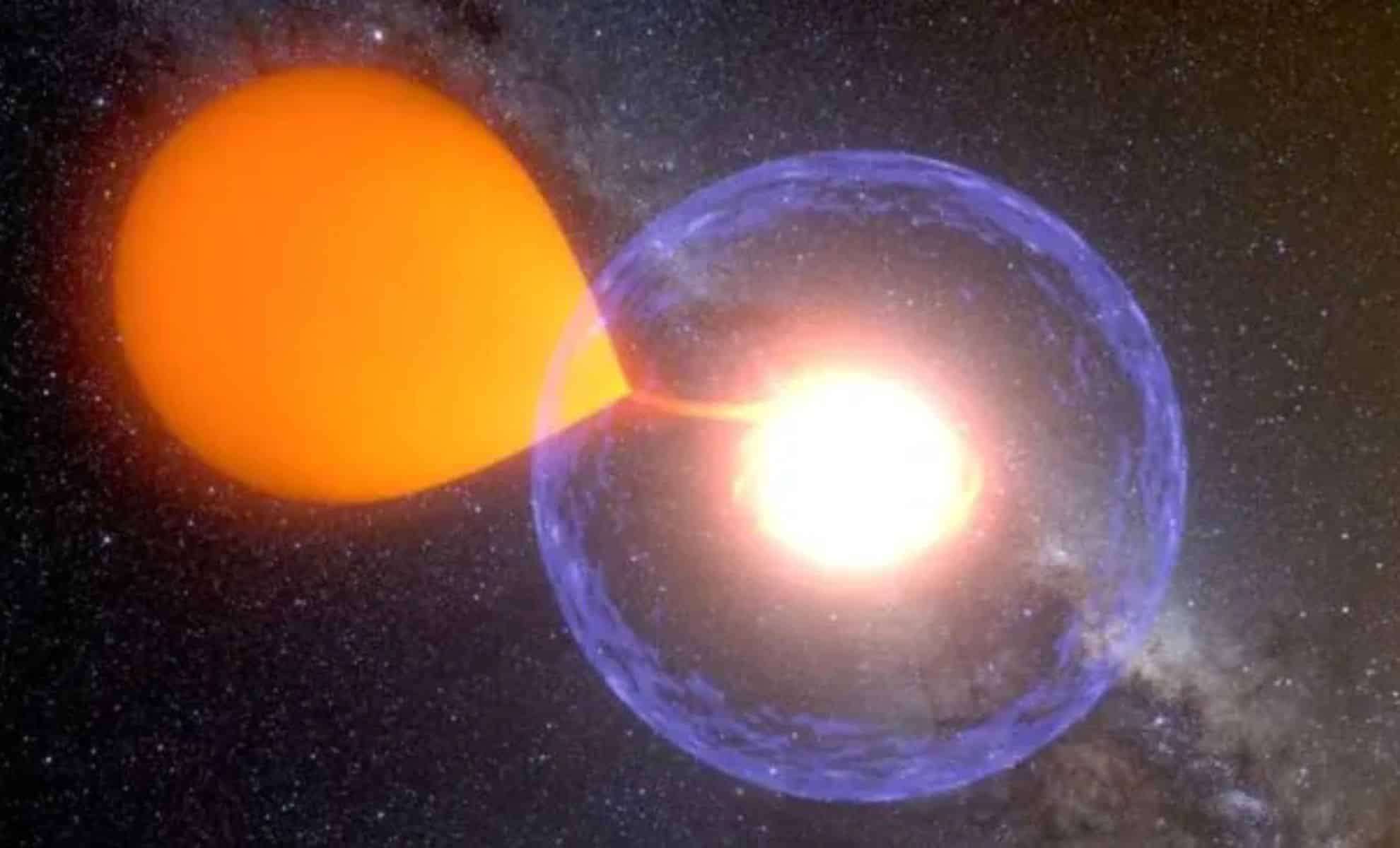
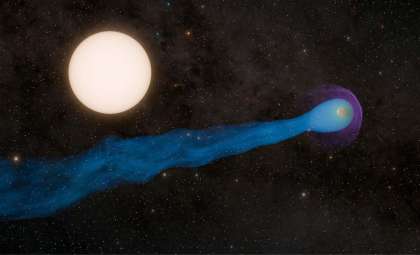
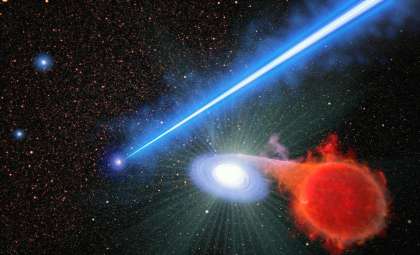
A major breakthrough in astronomy has led to the identification of millinovas, a novel type of cosmic explosion radiating 100 times more luminous than the Sun. Detected through examinations of satellite galaxies orbiting the Milky Way, these phenomena differ distinctly from classic stellar events such as novae or supernovae. Millinovas are believed to emerge in close binary systems where a white dwarf draws matter from a subgiant star, triggering energetic bursts that emit intense heat and X-ray radiation.
Reported in the Astrophysical Journal Letters by researchers at the University of Warsaw, this discovery offers significant progress in understanding stellar remnants and transient space events. Defined by their symmetrical, triangular-shaped eruptions, millinovas provide new perspectives on stellar dynamics and their impact on galactic evolution.
Tracing the Origins of Millinova Discovery
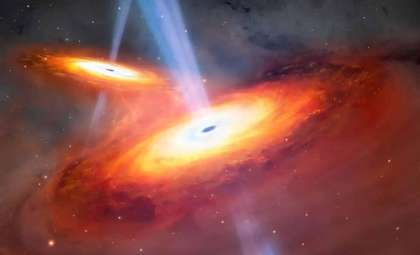
The discovery was serendipitous. Led by Przemek Mróz, the research team was originally examining two decades’ worth of data from the Optical Gravitational Lensing Experiment (OGLE), hoping to identify primordial black holes within the Milky Way’s dark matter halo. Although they found no evidence supporting their initial hypothesis, they encountered a unique set of stars showcasing unusual outburst behaviors.

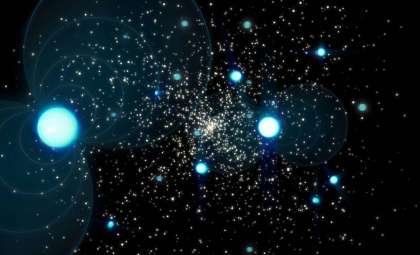
“We identified variable stars with strikingly triangular, symmetrical outbursts unlike any known types,” Mróz explained. This unexpected observation led to pinpointing 28 millinovas residing in the Large and Small Magellanic Clouds, the Milky Way’s closest satellite galaxies.
A notable example, OGLE-mNOVA-11, erupted in November 2023, allowing detailed study. Observations using the Southern African Large Telescope (SALT) revealed spectral emission from ionized helium, carbon, and nitrogen, indicating extreme temperatures. NASA’s Neil Gehrels Swift Observatory detected corresponding X-ray radiation, with gas temperatures soaring beyond 1 million degrees Fahrenheit (600,000 degrees Celsius), roughly triple the heat of the hottest known stars.
Understanding Millinovas
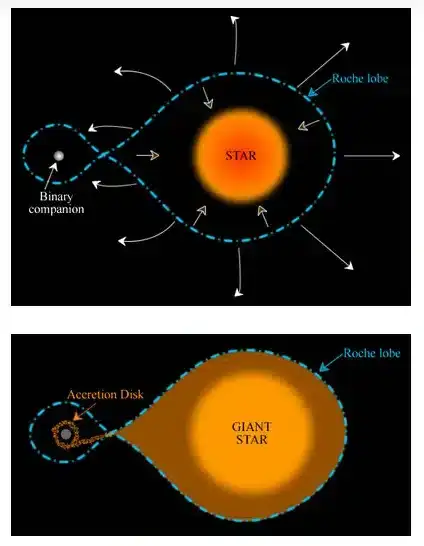
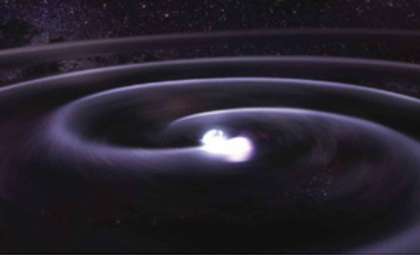
Millinovas define a new class of transient X-ray emitting phenomena. Unlike traditional novae or supernovae, these events stem from binary pairs consisting of white dwarfs and subgiant stars orbiting each other in close proximity, often with periods lasting just a few days. This closeness permits the subgiant to pass stellar material onto the white dwarf.
The accretion of matter leads to localized explosive events, albeit much less energetic compared to supernova explosions. Mróz noted, “Millinovas involve binary systems where a white dwarf gains mass from a companion star that has expanded after exhausting hydrogen fuel.” Their eruptions are distinct not only in scale but also frequency, with some recurring every few years, while others appear only once during monitored intervals.
The Mystery of Millinova X-Ray Activity
While the source of the X-ray emission remains unclear, scientists have advanced two leading theories. One suggests that the X-rays are generated within an equatorial belt on the white dwarf, where incoming material impacts and heats up. Alternatively, mild thermonuclear reactions, or a weak thermonuclear runaway, might occur on the white dwarf’s surface, producing radiation without significant ejection of matter.
Should the white dwarf amass enough material without losing mass, it may eventually reach a tipping point—potentially triggering a Type Ia supernova. Such supernovae serve astronomers as precise distance markers across the universe due to their consistent brightness. This potential link positions millinovas as possible precursors to these vital cosmic explosions, presenting an unprecedented window into the early stages of Type Ia supernova formation.
Key Facts About Millinovas
- Habitat: Located in the Large and Small Magellanic Clouds.
- Luminosity: Shines 100 times brighter than the Sun.
- Temperature: Exceeds 1 million degrees Fahrenheit (600,000 degrees Celsius).
- Occurrence: Some repeat cyclically every few years; others are one-time events.
- Composition: Emission signatures include helium, carbon, and nitrogen, indicating extreme thermal conditions.
- Source Systems: Binary star pairs of white dwarfs and subgiant companions.
- Categories:
- News



0 comments
Sign in to Comment