
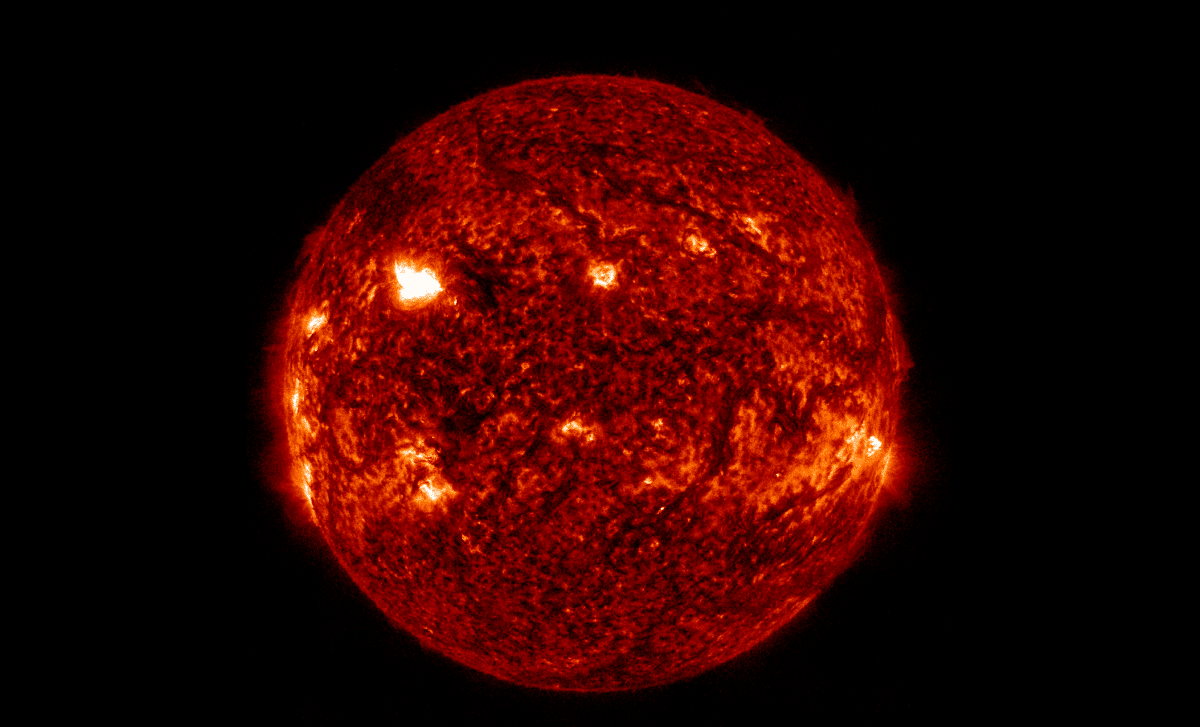
A highly dynamic area of the Sun has rotated into direct view from Earth, unleashing a powerful sequence of solar flares. These energetic events, closely observed by Spaceweather.com and NOAA, highlight increasing space weather activity near our planet.
An Earth-Facing Sunspot Exhibits Turbulent Magnetic Activity
Scientists are closely watching a swiftly changing sunspot now facing Earth, characterized by a highly unstable magnetic framework. Recent monitoring reveals that this active zone has emitted numerous flares in rapid succession, reflecting intense magnetic tension. The sunspot’s structure, with tightly coiled magnetic field lines, is known to favor sudden, explosive realignments that generate energetic solar bursts.
As the Sun nears the peak of Solar Cycle 25, episodes of such intense activity have become more common. Researchers note that the frequency of these latest flares sets this region apart, even compared to other peaks of solar activity. Each flare signifies a swift discharge of magnetic energy, releasing radiation across various wavelengths and providing a vivid illustration of solar forces in action.

What Spaceweather.com and NOAA Are Currently Observing
Experts at Spaceweather.com and NOAA’s Space Weather Prediction Center are attentively tracking this geoeffective region. Their monitoring tools assess the intensity and timing of flares, collecting data on associated X-rays and extreme ultraviolet emissions.
The main focus isn't solely on the flares but also on the likelihood of linked coronal mass ejections (CMEs). While flares are immediate bursts of radiation traveling at light speed, CMEs consist of magnetized plasma clouds that reach Earth in a matter of days. NOAA’s latest data show that recent flares have been strong in radiation but have not yet produced clear Earth-directed plasma clouds, although this situation could evolve as the sunspot develops.
Impacts on Earth and Near-Earth Environment
Intense solar flares on the Sun’s side facing Earth can disrupt near-Earth space conditions. High-frequency radio signals may experience short-lived interference, especially over the sunlit hemisphere. Polar flight paths are closely monitored due to the increased radiation environment, which may affect communication and navigational systems.
The longer-term influence hinges on whether major CMEs head toward Earth. Interactions with the planet’s magnetic field can energize the magnetosphere and trigger geomagnetic storms. Such storms can place stress on electrical grids, affect satellite operations, and enlarge aurora displays to lower latitudes. Despite these risks, Earth’s magnetic field remains a robust shield, although modern technology is increasingly vulnerable to space weather disturbances.
Signaling the Sun’s Rising Activity Cycle
This sequence of solar flares highlights the Sun’s progression into a highly active phase of its cycle. Solar researchers regard these events as critical for understanding how magnetic energy accumulates and releases on our star. Each solar eruption contributes valuable data that helps improve forecasting models for space weather phenomena.
For now, specialists recommend vigilance without undue concern. Constant monitoring from terrestrial and orbital observatories helps ensure rapid detection of significant solar developments. As the dynamic sunspot continues moving across the solar surface, heightened solar activity is expected, making upcoming days key for ongoing study and observation.
- Categories:
- News











0 comments
Sign in to Comment