

The comet known as Tsuchinshan-ATLAS or C/2023 A3 is set to reach its closest point to the Sun, called perihelion, on Friday, September 27, 2024, at a distance of roughly 59 million kilometers. As it travels through the inner solar system, this celestial visitor will put on a brilliant show visible from many locations, including large parts of Europe, the United States, and some areas of the Southern Hemisphere. Continue reading for viewing times tailored to different regions around the globe.

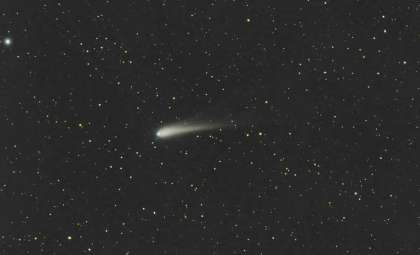
Yuri Beletsky – This morning, I captured another image of Comet C/2023 A3 (Tsuchinshan-ATLAS) from the site in the Atacama Desert, Chile . The view was absolutely stunning !!! The comet is clearly visible visually. My gear: Nikon D810a camera with a 135mm lens. Exposure: 20 x 30 seconds
Viewing in the United States: Peak times and ideal conditions
Across the United States, the comet will be visible as well, though the best viewing times vary. From September 27 through September 30, look toward the southeastern sky roughly an hour before sunrise for optimal visibility. Choosing spots away from bright city lights—such as national parks or rural landscapes—will greatly enhance the experience.

If you miss this early window, don't worry: the comet will return to view in mid-October. On October 13, it will make its closest passage to Earth at about 71 million kilometers and will be visible just after sunset in the western sky. This evening appearance offers an excellent chance to see the comet’s glowing tail against a clear horizon.
Europe: When and where to catch the comet
Observers in Europe will have their prime opportunity from September 27 until September 30 in the early morning hours. About an hour before sunrise, look southeast to spot the comet. For the clearest view, seek out dark skies free from urban light interference and ensure an unobstructed view of the horizon. Using binoculars or a modest telescope will reveal finer details like the comet’s bright tail consisting of gas and dust.
If you're unable to observe during those mornings, the comet will be visible again on October 13, 2024 after sunset, this time in the western sky. This provides a wonderful opportunity for evening skywatchers to enjoy the spectacle.
Southern Hemisphere: Catching the comet's fleeting appearance
For stargazers in the Southern Hemisphere, the Tsuchinshan-ATLAS comet will also be observable, but with a narrower viewing period. From late September, especially at higher latitudes closer to the equator, the comet will be visible in the early morning sky. Locations in countries like Australia and South Africa should consult local astronomical guides to pinpoint the best times, though the visibility window is expected to echo that of observers in Europe and North America.
Understanding the comet's dazzling glow
The Tsuchinshan-ATLAS comet is attracting significant attention due to its potential brightness, with estimates ranging from -3 to -4 magnitude. This brightness might surpass Venus, one of the brightest objects seen from Earth, and could even rival the legendary Hale-Bopp comet, which dazzled observers in 1997 with a magnitude of -1.8.
This comet originates from the distant Oort Cloud, the farthest region of the solar system abundant with icy bodies. As it nears the Sun, sunlight illuminates its tail—made of gas and dust particles—resulting in a breathtaking display. For astronomers, this event offers a rare opportunity to analyze the characteristics and makeup of such a rare visitor.
Notably, this appearance marks the comet’s first visit near the Sun in roughly 80,000 years, making it a once-in-a-lifetime spectacle for skywatchers worldwide. Wherever you reside, the Tsuchinshan-ATLAS comet is poised to be one of 2024’s most memorable astronomical events.
- Categories:
- Astronomy ,
- Space









0 comments
Sign in to Comment