

A striking nova named V462 Lupi has recently brightened the night sky, becoming briefly visible without aid to observers in parts of North America. This extraordinary event, classified as a classical nova, was initially detected by the All-Sky Automated Survey for Supernovae (ASAS-SN) and subsequently verified by astronomers worldwide. According to Sky & Telescope, this stellar flare-up may grow even more luminous in the next few days.
Discovery and Characteristics of V462 Lupi
On the night of June 12, ASAS-SN spotted a new bright object within the Lupus constellation, initially shining at a faint apparent magnitude of +8.7—too faint for unaided observation. However, by June 18, its brightness had surged to +5.7, rendering it visible to the unaided eye under dark sky conditions. During the early stages, it was referenced using various identifiers like AT 2025nlr and ASASSN-25cm, before receiving the official title V462 Lupi.
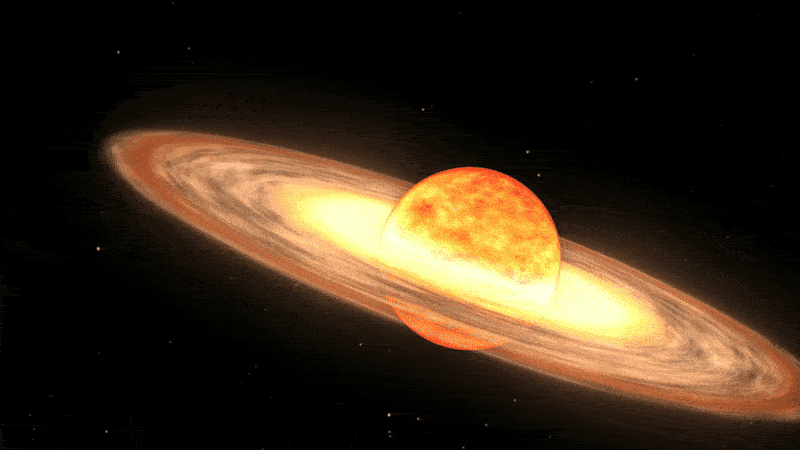
Astronomer Yusuke Tampo identified this brightening as a classical nova, a sudden burst caused by interaction between two stars orbiting each other. This outburst caused the system to shine roughly 4 million times brighter than its original star's luminosity. These occurrences are infrequent, with naked-eye novae emerging only about once annually around the globe.

Viewing V462 Lupi in the Night Sky
Located within the southern sky's Lupus constellation, V462 Lupi sits low near the horizon, making it more accessible to viewers from the Southern Hemisphere. Nevertheless, observers across North America have also reported sightings. Notably, it has been spotted as far north as Lake Superior and in states like California and Arizona, typically just after dusk near the southern horizon.
Although faint to the naked eye, using binoculars or small telescopes greatly improves the chances of detection, especially from locations where the nova appears close to the horizon. Observers should seek out dark, unpolluted skies and consult star charts to locate Lupus, nestled between the constellations Scorpius and Centaurus.
Formation and Significance of Classical Novae
Classical novae, like V462 Lupi, arise in certain binary star systems where a white dwarf accumulates hydrogen from a nearby companion star, often a cooler red giant. This buildup increases pressure and temperature until a thermonuclear explosion is ignited on the white dwarf’s surface. While this blast releases an enormous amount of energy, it does not obliterate the star, distinguishing it from a supernova.
The eruption ejects stellar debris and produces a bright flash lasting from several days to weeks. Studying such events provides valuable insights into stellar life cycles, the transfer of matter within binaries, and the eventual outcomes of these systems. Additionally, classical novae enrich the galaxy by dispersing elements key to the formation of future stars and planets.
Unique Features of This Nova Event
Although less destructive than supernovae, V462 Lupi stands out due to its rare visibility without instruments. It erupted with minimal prior notice, highlighting the unpredictable nature of binary star behavior and the challenges faced by current observation networks. This event contributes to an expanding collection of transient celestial phenomena, emphasizing the dynamic and ever-changing character of the night sky.
This nova also demonstrates that even regions of space thought to be well explored can surprise astronomers. As the first observed eruption from V462 Lupi, it remains uncertain whether it will behave as a recurrent nova like T Coronae Borealis—a system predicted to explode again soon after an 80-year interval—or represent a singular occurrence.
- Categories:
- News











0 comments
Sign in to Comment