
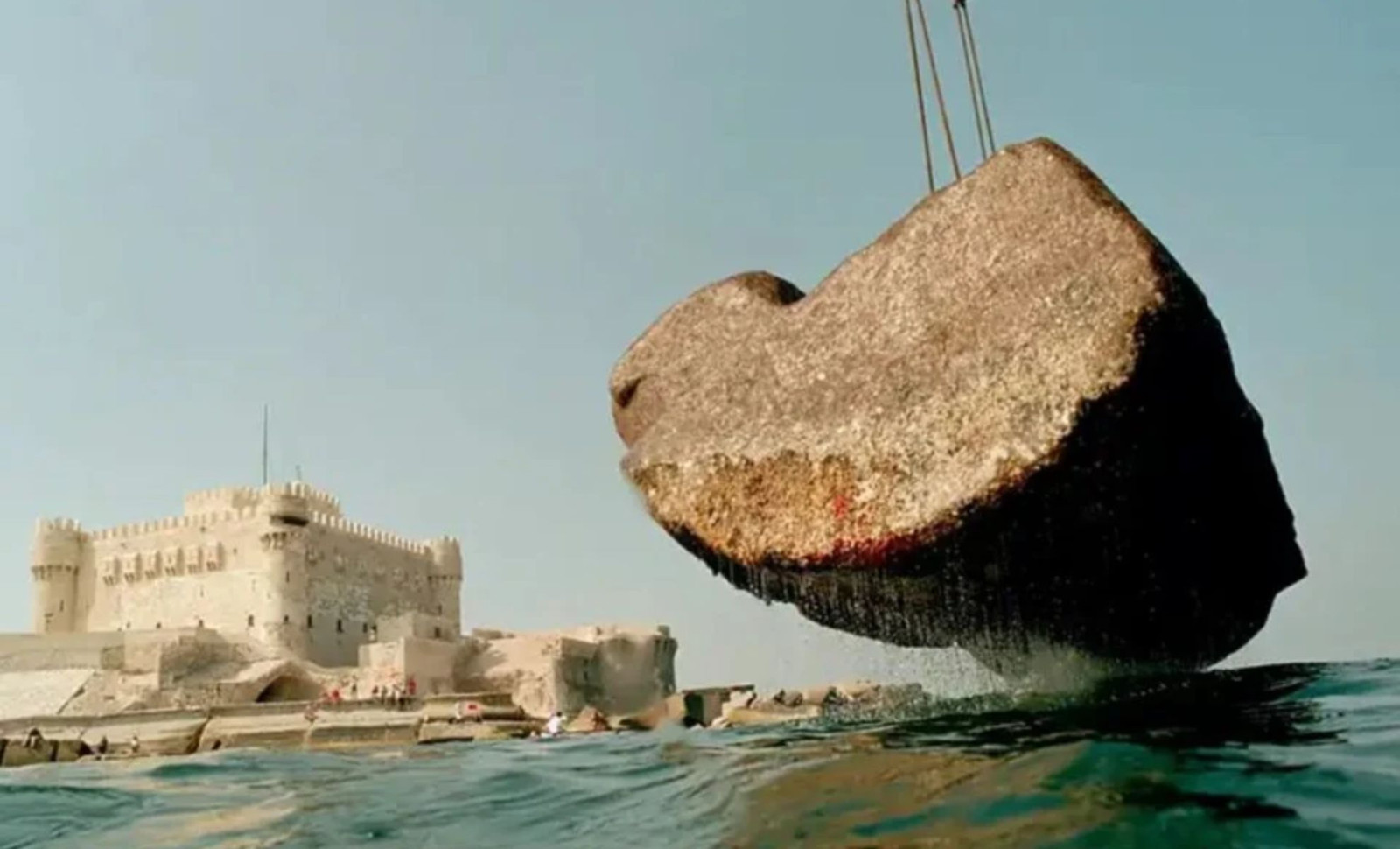
More than 1,600 years after vanishing beneath the waves, colossal stones from the iconic Lighthouse of Alexandria are being retrieved from the Mediterranean seabed. Archaeologists have successfully raised enormous stone blocks believed to be remnants of this ancient wonder.
Off the coast of Alexandria, a long-known underwater site is now unveiling some of its most remarkable discoveries. The PHAROS project recently announced the recovery of 22 massive stone blocks tied to the fabled lighthouse after extensive marine archaeology work.
Constructed in the 3rd century BCE, the lighthouse served as a vital navigational aid for ships sailing treacherous waters until it was destroyed centuries later. Its remnants, scattered underwater, are being meticulously recorded and studied.

Enormous Stone Blocks Extracted From Seabed
The retrieved pieces include lintels, doorjambs, thresholds, and paving slabs, each weighing between 70 and 80 tons, underscoring the monument’s immense scale. The research team led by Isabelle Hairy from CNRS suggests these blocks likely made up the lighthouse’s grand entrance, showcasing a blend of Egyptian and Greek architectural styles.
Since their discovery beneath the sea in 1968, these remains have fascinated experts. A decisive breakthrough occurred in 1994 when historian Jean-Yves Empereur spearheaded an expedition cataloging over 3,300 artifacts. These included sphinxes, obelisks, columns, and granite blocks associated with the lighthouse complex.
After close to 30 years of underwater investigations, this recent haul represents some of the largest and most significant stones ever recovered from the site, complementing earlier mapping and documentation work.
Reassembling History With Cutting-Edge Technology
The PHAROS project goes beyond stone retrieval. Each block undergoes detailed scanning via photogrammetry, enabling the creation of precise 3D digital replicas. According to the Dassault Systèmes Foundation:
“The goal of this exceptional and spectacular operation is to study and scan these architectural elements, adding them to a collection of over 100 blocks already digitized underwater over the past decade.”
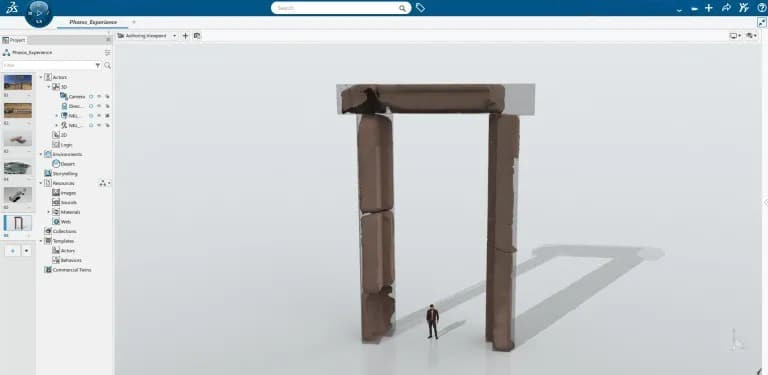
These digital reconstructions allow scholars to virtually piece together the lighthouse, treating the task like a massive jigsaw puzzle where each stone’s position must be carefully determined.
By combining physical evidence with historical texts and imagery, the project aims to produce the most accurate virtual reconstruction of the ancient structure ever attempted.
A Legendary Monument Gradually Revived
Commissioned by Ptolemy I Soter and designed by Sostratus of Cnidus in the early 3rd century BCE, the Lighthouse of Alexandria towered over 100 meters high, ranking among the tallest structures of antiquity.
For more than a thousand years, it served as a crucial beacon for mariners in the eastern Mediterranean, its light guiding ships safely to the bustling port of Alexandria.
Its destruction came after multiple earthquakes, with a devastating event in 1303 rendering it unusable. Over time, its stones were repurposed. Historical documents referenced by the PHAROS team reveal that in 1477, many blocks were integrated into the Qaitbay Citadel built at the same location. The recovered stones and their digital counterparts now enable historians to reposition these fragments, gradually restoring the lighthouse’s original grandeur.
- Categories:
- Science





0 comments
Sign in to Comment