
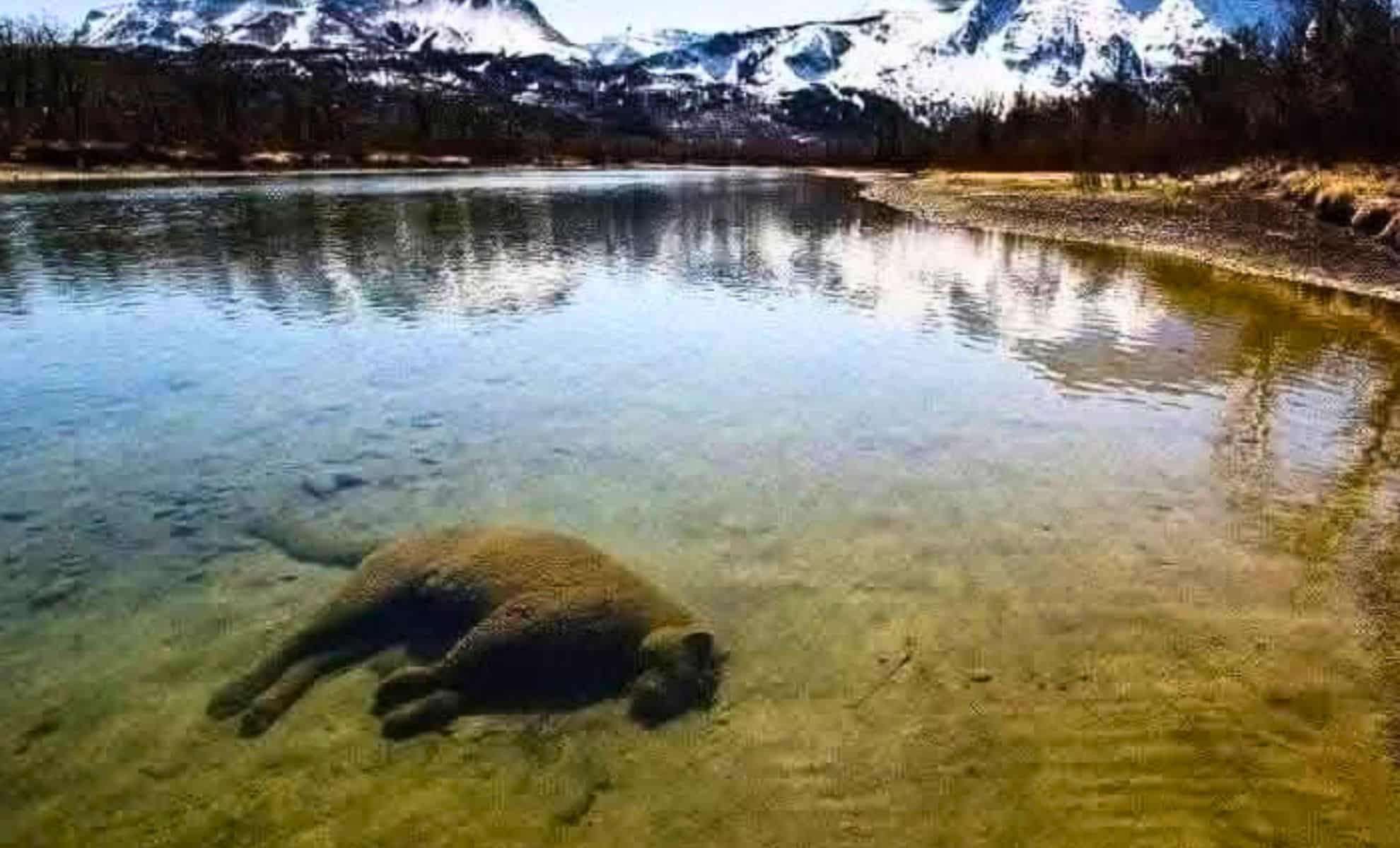
A striking image featuring a cougar resting motionlessly at the lake’s bottom has gained widespread attention online, sparking speculation it illustrates the initial phase of the fossilization process. While mesmerizing to behold, the photograph has raised questions about how fossils form and whether this scene genuinely signals fossil creation in progress.
An Eerie Sight Beneath the Water’s Surface
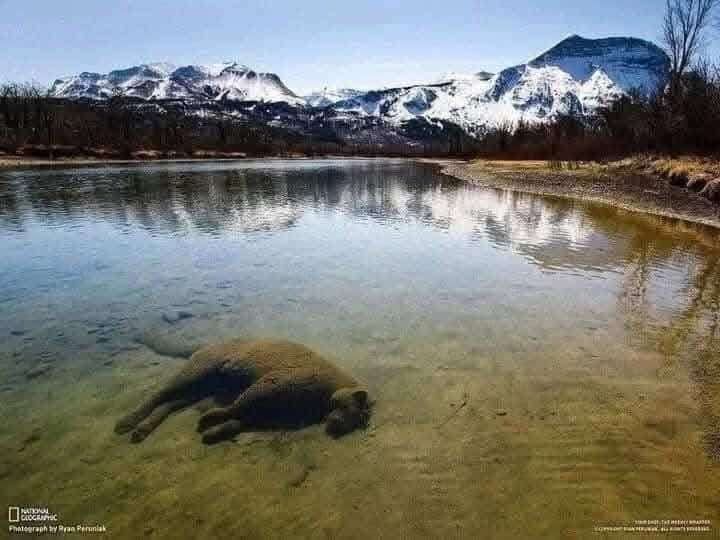
Captured by Ryan Peruniak, a park ranger working in Waterton Lakes National Park, Alberta, the picture shows a lifeless cougar lying underwater, covered with algae and a layer of sediment. Peruniak encountered the cougar while walking near the riverbank in early spring, soon after the ice thawed.
He described the animal’s pose as remarkably tranquil on the riverbed, comparable to a house cat napping in a sunny window. To capture the shot, Peruniak waded waist-deep into the cold water, composing the photo against a backdrop of nearby mountains.

The dedication resulted in an image that captivated social media audiences, evoking diverse—and sometimes incorrect—interpretations. Some viewers even confused the cougar for a kangaroo.
Is This the Beginning of Fossilization?
A post on social media proposed the idea that the photo might represent the early stages of fossilization. The speculation suggested that if undisturbed, the sediment enveloping the cougar could initiate natural processes eventually leading to fossil formation.
Yet, the reality is more complicated. Peruniak explained that the animal’s body did not remain stable.
“Unfortunately, people like to collect the skulls and claws of animals like cougars,” he said.
Due to the risk of disturbance by humans, park officials chose to remove the carcass and relocate it to a remote area. This action effectively prevented any chance of the cougar becoming fossilized.
Understanding the Science of Fossilization
For an object to be classified as a fossil, it generally needs to have existed for at least 10,000 years, according to the British Geological Survey. However, fossilization processes may start much earlier under suitable environmental conditions.
Research indicates that mineralization in soft tissues can begin within just a couple of years, but this depends heavily on the surroundings.
Key to this process are microbial mats, or biofilms, which create a protective layer that preserves soft tissues and accelerates fossilization by ceasing decay. In the case of the underwater cougar, the icy temperature probably halted microbial growth, reducing chances for this kind of preservation.
Dr. Susannah Maidment, a vertebrate paleobiologist at London’s Natural History Museum, highlighted how uncommon fossilization truly is.
“For the vast majority of animals that have ever lived, even their hard parts don’t remain,” she explained. “Usually that requires a quite unique set of burial conditions, often very rapid burial.”
Preservation Versus Decay: A Delicate Balance
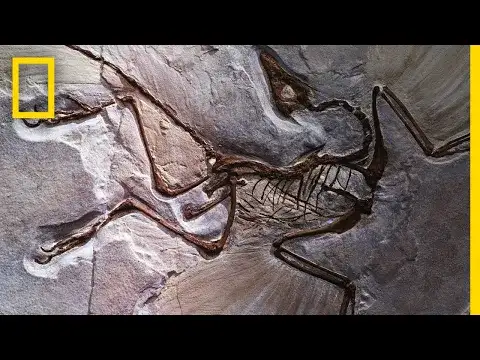
Chance of fossilization hinges on escaping the natural decomposition process, which breaks down the remains of living creatures. Typically, environmental agents efficiently dismantle remains, including bones, over time.
Maidment illustrated this by saying, “Imagine your dinosaur dies on a flood plain… scavengers like vultures and lions will tear it apart, then bacteria finish the job.”
Rapid burial is essential for fossil preservation. Some of the best fossils come from animals quickly covered by sediments in lakes, swamps, or through sudden events like volcanic ash falls.
In Peruniak’s experience, though the cougar unfortunately fell through ice and sank, these conditions alone weren’t enough for preservation to occur.
- Categories:
- Science


0 comments
Sign in to Comment