
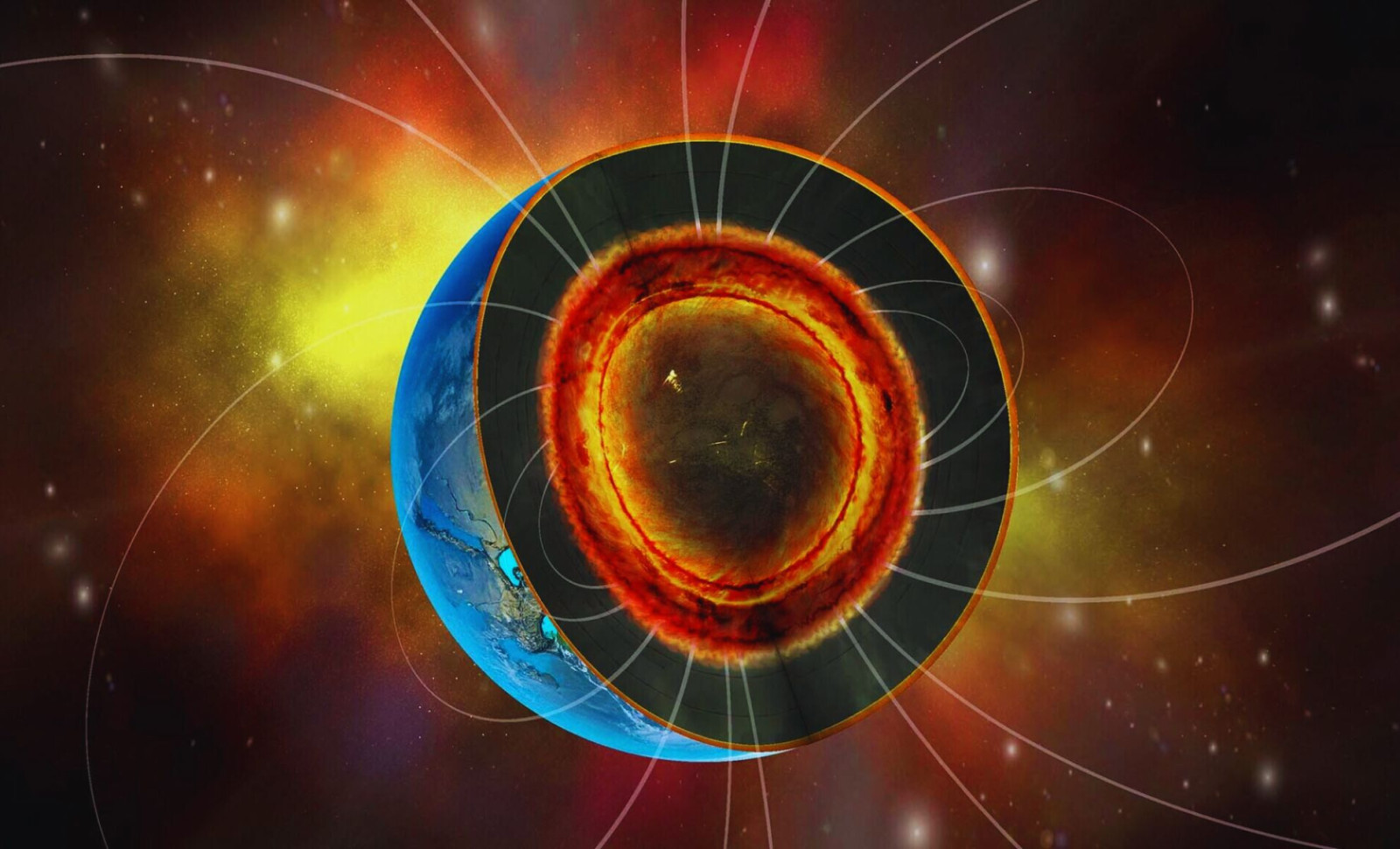
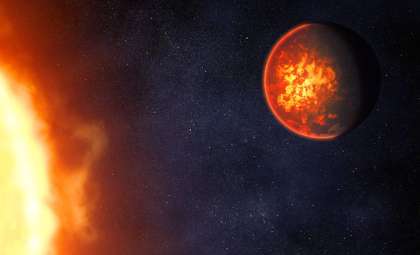
Deep beneath the crusts of rocky super-Earths, expansive molten rock oceans may quietly serve as vital protectors by generating magnetic fields that shield planets from harmful radiation. New research suggests these hidden magma reservoirs could act as enduring planetary shields against cosmic threats.
Published in Nature Astronomy, the study led by Miki Nakajima of the University of Rochester introduces a novel concept: the basal magma ocean (BMO) as a source of planetary magnetism. In contrast to Earth's magnetic field, driven by its liquid iron outer core, BMOs in massive rocky exoplanets might become electrically conductive under intense pressure, creating magnetic fields that influence planetary habitability.
Magma Oceans Powering Planetary Dynamos
Earth’s magnetic field arises from the movement of its molten iron core. Larger rocky planets, however, may possess cores that are either entirely solid or fully liquid, conditions that might hinder dynamo generation. Lead author Miki Nakajima explains:

“Super-Earths can produce dynamos in their core and/or magma, which can increase their planetary habitability.”
The team proposes that the deep mantle's BMOs, molten rock pools at the bottom of the mantle, could generate magnetic fields if electrically conductive. Whereas Earth’s basal magma ocean likely dissipated shortly after its formation, more massive super-Earths might retain these molten layers for billions of years due to elevated internal pressures.
The Nature Astronomy paper suggests that this conductivity enables molten rock to act similarly to metal in magnetosphere generation. This mechanism could allow a planet to maintain a protective magnetic shield against solar and cosmic radiation, even if its core no longer supports a dynamo.
Replicating Exoplanet Interiors in the Laboratory
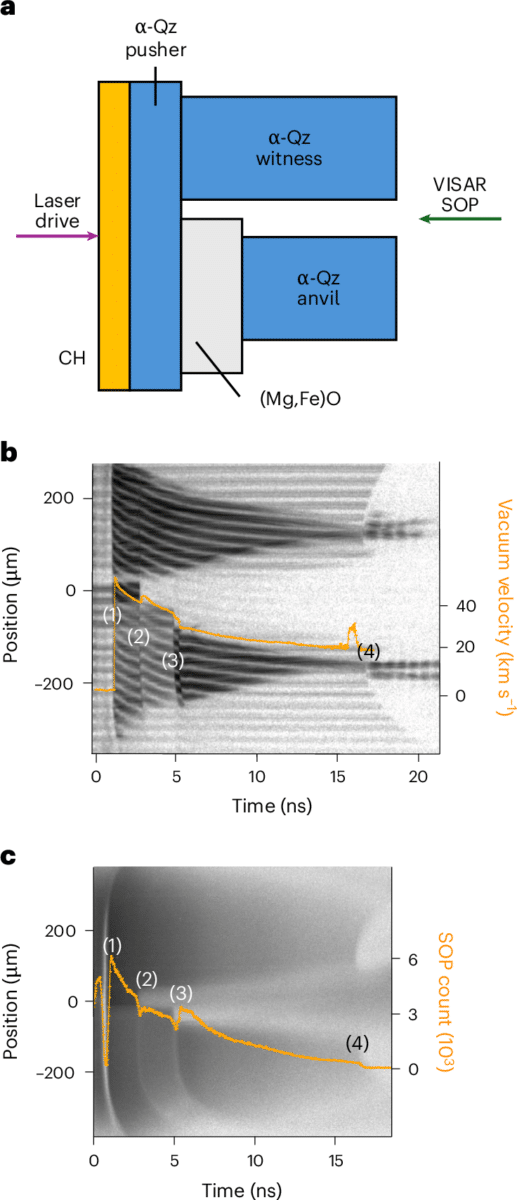
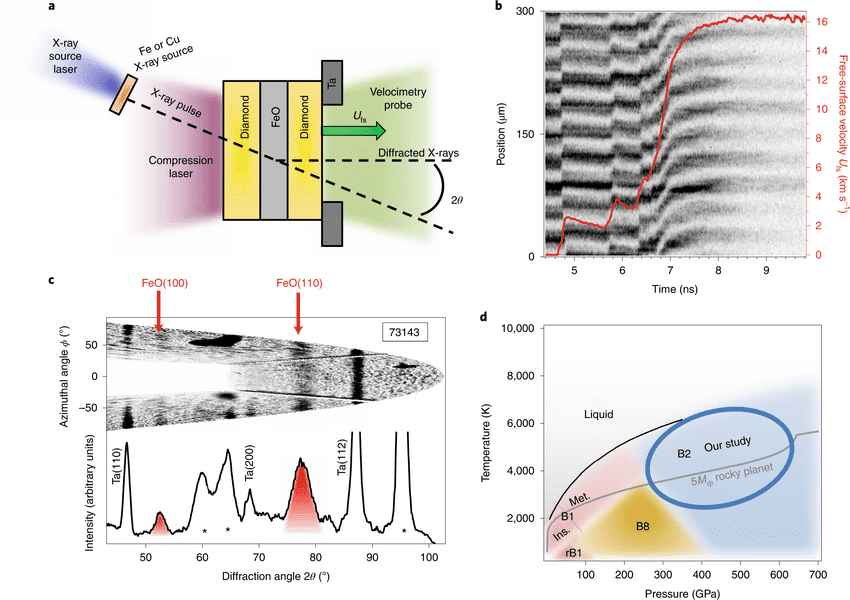
To investigate if molten rock conducts electricity under super-Earth-like conditions, Nakajima and colleagues conducted laser shock experiments at the University of Rochester's Laboratory for Laser Energetics. These tests simulated the extreme pressures thought to exist deep under massive rocky exoplanets’ mantles. Alongside quantum mechanical simulations and models of planetary evolution, these experiments examined how molten mantle materials behave under such conditions.
The focus was on (Mg,Fe)O, a prevalent mineral within planetary mantles. Results demonstrated that at pressures similar to those within super-Earths, this molten rock exhibits sufficient electrical conductivity to sustain a magnetic dynamo.
“This work was exciting and challenging, given that my background is primarily computational and this was my first experimental work.” said Nakajima, who usually works in computational modeling. She credits the interdisciplinary team’s collaboration as key to the project’s success.
The researchers suggest that if a planet hosts a large, persistent BMO, it could generate magnetic protection comparable to or exceeding that of Earth’s, helping to sustain the planet’s atmosphere over billions of years.
Rethinking Habitability Beyond Our Solar System
Magnetic fields are crucial for safeguarding planetary atmospheres from energetic cosmic particles, yet they are often overlooked in habitability studies. This new BMO-driven dynamo model expands the criteria for habitable planets, especially those previously dismissed due to inert or non-metallic cores.
Super-Earths with active basal magma oceans emerge as promising candidates in the quest for life outside the solar system. As Nakajima remarked:
“I cannot wait for future magnetic field observations of exoplanets to test our hypothesis.”
Such future observations could verify whether subsurface molten rock plays a crucial role in shaping life-supporting environments throughout the galaxy.
- Categories:
- Astronomy







0 comments
Sign in to Comment