
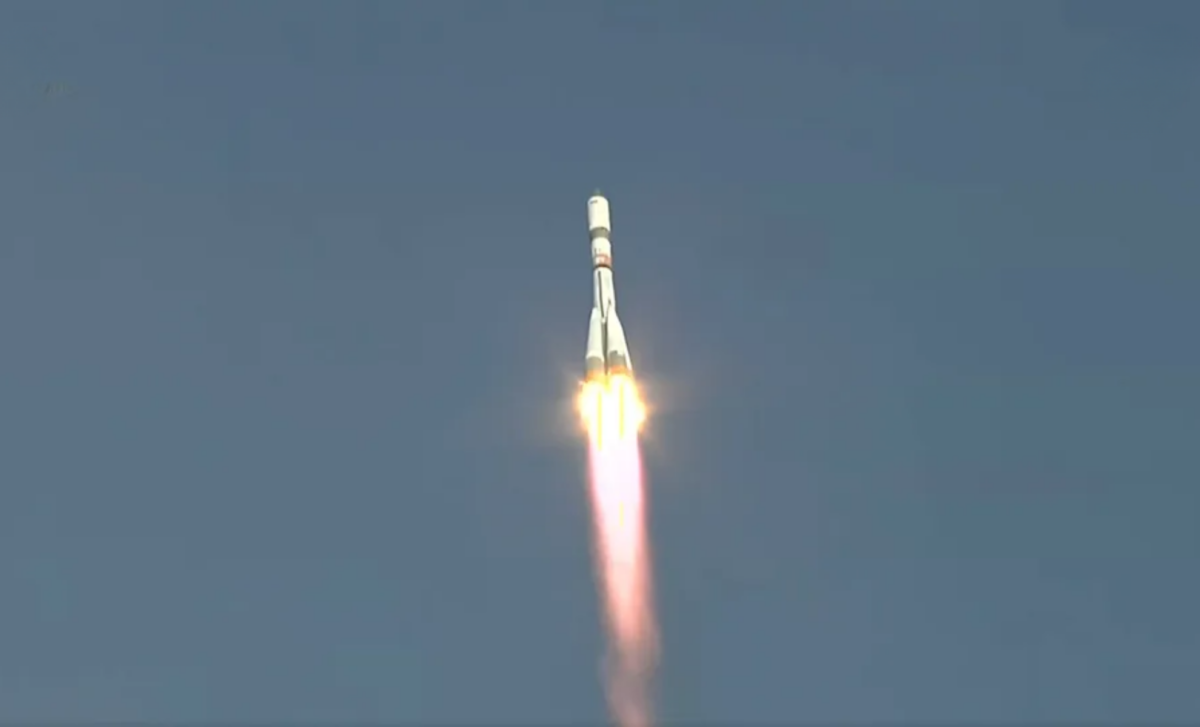
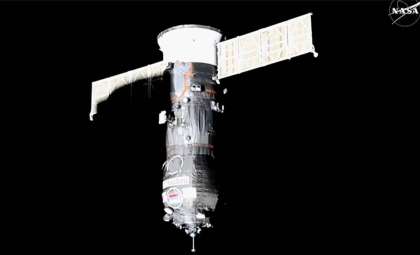
A newly dispatched Russian cargo ship en route to the International Space Station is experiencing a major technical fault, intensifying operational challenges for mission teams and astronauts, per updates from NASA.
From Smooth Launch to Critical Mission Challenge
The Progress 94 cargo vehicle lifted off with precise timing and flawless execution from the historic Baikonur Cosmodrome in Kazakhstan. Launched aboard a reliable Soyuz rocket, the uncrewed vessel carries nearly three tons of essential provisions, including food, fuel, and scientific gear for the crew on the International Space Station.
Its initial ascent and entry into orbit proceeded without issue, reflecting decades of proven Soyuz system reliability. However, soon after orbital insertion, ground teams detected a malfunction that shifted priorities from routine to critical. One of the spacecraft’s vital antennas, responsible for automated approach and docking, failed to deploy as intended.

This antenna is crucial for the vehicle’s autonomous alignment and attachment to the station. Without it, the mission faces significantly greater complexity. Engineers swiftly began reviewing telemetry and developing contingency plans, demonstrating how minor in-space hardware failures can rapidly escalate in importance.
Despite this setback, the spacecraft remains stable on course to the ISS, retaining essential power, navigation, and propulsion functions. This steadiness affords mission control valuable time to consider responses carefully. The incident underlines the delicate interaction between automated systems and human intervention in modern spaceflight, where redundancy is vital.
Joint Efforts Between NASA and Roscosmos to Address Issue
The developing situation has attracted focused collaboration between Roscosmos and NASA, reflecting the close-knit partnership governing ISS activities. NASA reports confirm that aside from the antenna problem, all other core systems aboard Progress 94 are functioning normally, giving teams room for cautious optimism.
“All other systems are operating as designed, and Progress will continue toward its planned docking at 9:34 a.m. EDT on Tuesday, March 22,” agency officials said via X on Sunday.
“Troubleshooting will continue and if the antenna cannot be deployed, Roscosmos cosmonaut Sergey Kud-Sverchkov will manually pilot the spacecraft through a backup system for rendezvous and docking at the space station.”
This message emphasizes the spacecraft’s engineering resilience and highlights the critical role of human supervision in space missions. The backup system mentioned is a trusted manual control mode that allows ISS cosmonauts to directly steer inbound spacecraft. Although seldom needed recently due to automation advances, it remains an essential contingency.
Noting Sergey Kud-Sverchkov as the possible operator demonstrates readiness for a scenario requiring precise, manual control. Such a docking procedure demands expert timing and spatial judgment, where even small mistakes can pose safety risks. Effective coordination between ground control and crew will be vital if manual docking becomes necessary.
NASA’s active participation underscores the broader cooperative framework of the ISS, where international partners jointly ensure mission safety and success. This episode reminds us that despite Earth-bound geopolitical strains, space collaboration endures as essential and effective.
Looking Ahead: Progress 94’s Path Forward
As Progress 94 closes in on the station, engineers race to fix the antenna issue before the designated docking time. If the antenna can be deployed, automated docking will proceed, reducing risk and lessening crew workload aboard the station.
If not, the mission will switch to manual control, a rare but carefully prepared alternative to standard operations. Such manual approaches are more demanding, requiring vigilant monitoring, immediate adjustments, and flawless communication between astronauts and mission teams.
The cargo aboard increases the urgency. These deliveries support ongoing scientific projects, station upkeep, and daily needs for astronauts. Although the ISS maintains some reserves, timely resupply avoids operational disruptions.
After docking, the spacecraft is expected to remain attached for around six months. It will serve as additional storage and later be filled with station waste before safely burning up during atmospheric re-entry, following standard procedures for Progress vehicles.
- Categories:
- Space



0 comments
Sign in to Comment