
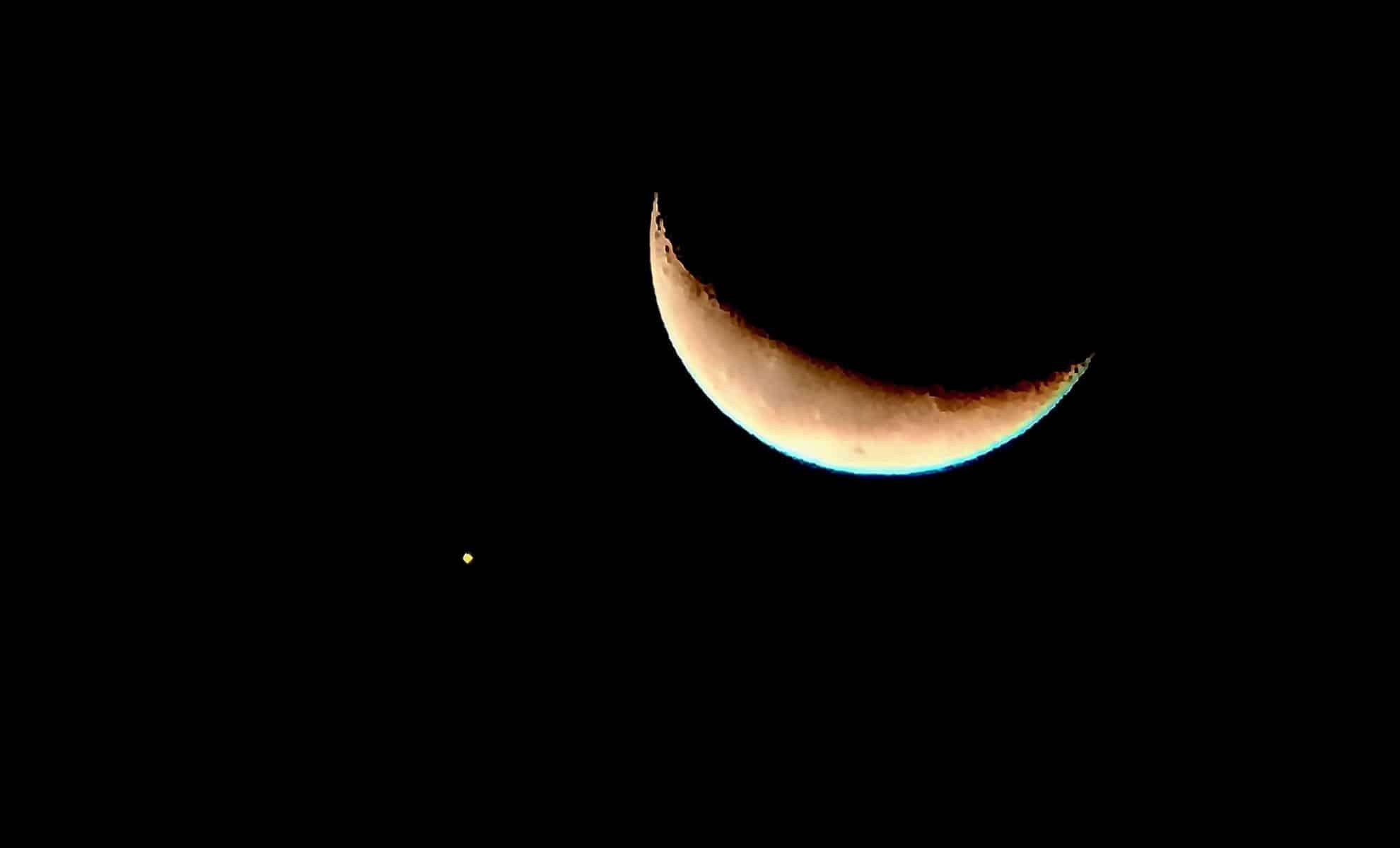
On the evening of August 30, 2025, stargazers are in for a memorable experience as the waxing Moon approaches the brilliant red supergiant star Antares nestled in the constellation Scorpius. As highlighted by Space.com, this unique celestial conjunction will be visible low in the southwestern sky just after sunset, providing an extraordinary spectacle before a series of impressive lunar events climaxing in a total lunar eclipse the following week.
When And Where To Spot This Celestial Pairing
Shortly after dusk on August 30, look toward the southwestern horizon where the half-illuminated Moon, nearing its first quarter phase, will appear about 20 degrees above the horizon. To gauge this height, extend your arm and stack two clenched fists vertically, each fist approximating 10 degrees.
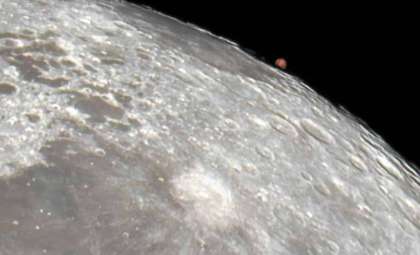
Just 5 degrees to the upper left of the Moon, observers will find the striking reddish glow of Antares. This pairing sets the neutral tones of the Moon's cratered surface against Antares' fiery crimson shine, forming a vivid cosmic contrast. Known as the “heart of the scorpion”, Antares is the brightest star in Scorpius and one of the most easily recognizable red supergiant stars visible to the naked eye.

The Moon reaches its first quarter precisely at 2:25 a.m. EDT on August 31 (06:25 GMT), when its right side will be fully sunlit, highlighting features such as Mare Serenitatis and Mare Tranquilitatis—vast ancient lava plains formed billions of years ago.
Meet Antares: The Red Giant Star Marking Scorpius’ Core
Antares is not just a bright star; it is a colossal red supergiant with a diameter exceeding that of the Sun by more than 700 times. If placed at the center of our solar system, it would engulf the orbits of Earth and Mars. Located about 550 light-years away, Antares forms part of a binary system, accompanied by a smaller, hotter white companion star, whose light is often lost in Antares' radiant glow.
As a late-stage star nearing the end of its life, Antares is destined to eventually explode as a supernova. Meanwhile, it shines prominently in the summer skies, especially across the Northern Hemisphere, where Scorpius dominates the southern horizon during the warmer months.
Antares’ prominent position in Scorpius has made it a symbol of power and mythology throughout history, admired by ancient cultures such as the Greeks and Babylonians for its intense red coloration and fiery presence.
The Moon’s Path Across the Zodiac Constellations
After its rendezvous with Antares, the Moon will continue advancing eastward through the zodiac constellations. Over the following week, it will traverse Sagittarius, Capricornus, and Aquarius until it culminates at full moon on September 7. This full moon will coincide with a highly anticipated total lunar eclipse, during which the Earth’s shadow casts a deep, reddish-orange glow on the lunar surface—often called a blood moon.
The eclipse will be visible in multiple regions worldwide depending on weather and geographic location. Astronomers and casual observers alike should prepare appropriate gear and check local visibility charts. For capturing both the Antares-Moon pairing on August 30 and the eclipse on September 7, telescopes like the Celestron NexStar 8SE offer exceptional performance that suits both beginners and advanced users.
Viewing Tips for Stargazers and Astrophotographers
For the best viewing experience, seek a dark site with clear, unobstructed views toward the southwestern horizon. While urban lights may diminish dimmer stars, the brightness of both the Moon and Antares ensures they remain visible despite moderate light pollution. The optimal observation window is within an hour post-sunset, prior to the pair sinking below the horizon.
Photographers are encouraged to use DSLR cameras with telephoto lenses, or preferably, telescopes equipped with tracking mounts to capture crisp images. Short exposures help avoid overexposing the Moon while still recording Antares’ rich red tone. Techniques like exposure bracketing and image stacking can enhance the quality of final photos. For those eager to improve their astrophotography skills, exploring specialized gear reviews and tutorials is highly recommended.
- Categories:
- News





0 comments
Sign in to Comment