
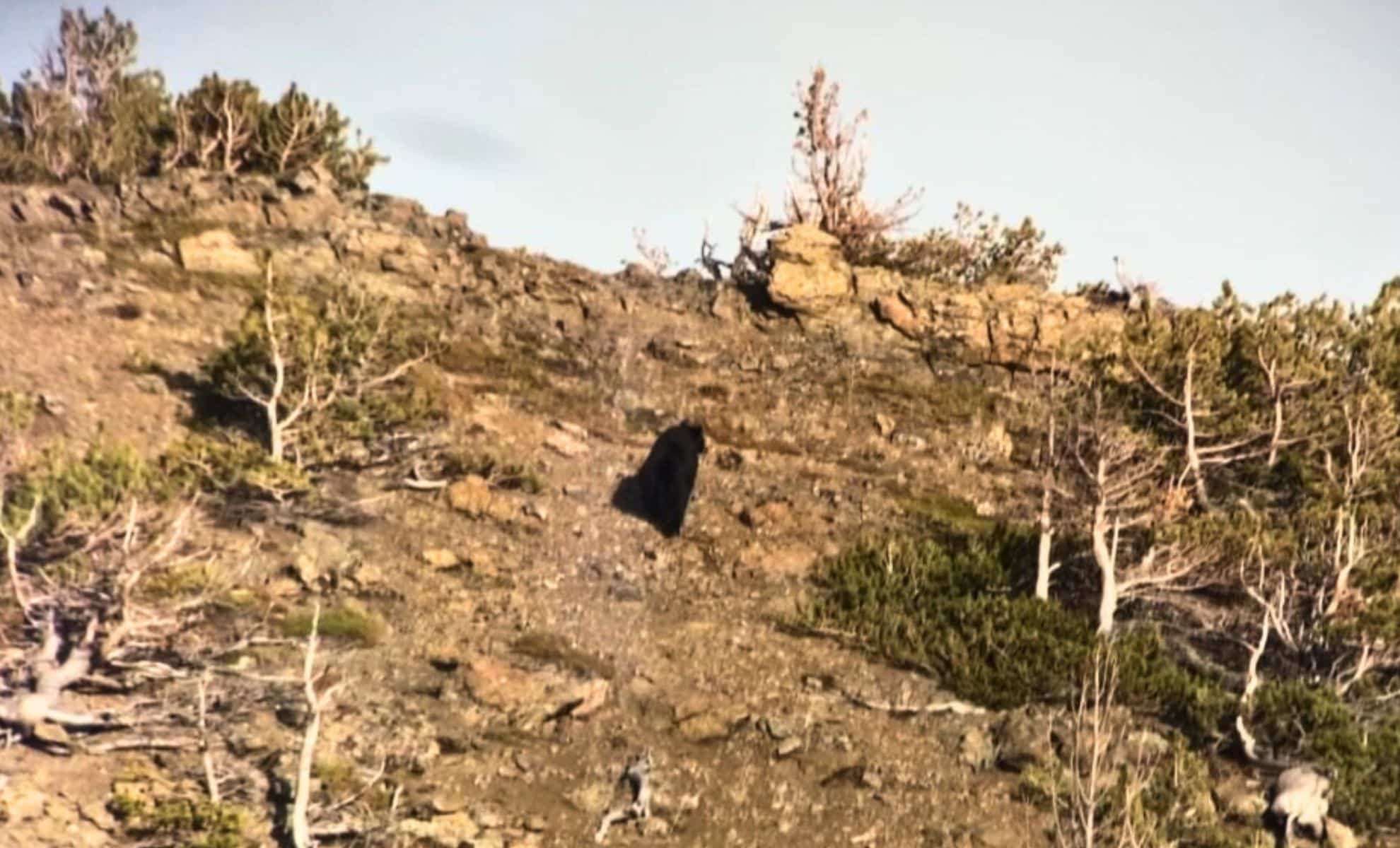
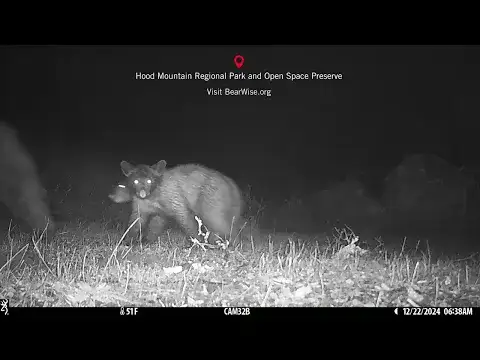
A trail camera recently documented an extraordinary event at Hood Mountain Regional Park and Open Space Preserve — providing thefirst verified footage of black bear cubs since conservation efforts started nearly ten years ago.
The recordings, taken in the early hours of December 22, 2024, display a mother black bear accompanied by two cubs estimated to be about a year old. The young bears were seen sticking close to their mother, providing a rare insight into bear family dynamics in their natural surroundings.
Signs of Successful Bear Reproduction at Hood Mountain
This development is a significant milestone for wildlife researchers tracking bear populations at Hood Mountain over the past decade. Although individual bears have been spotted before, this is the first time reproduction has been visually confirmed within the park’s 3,600-acre expanse.

“While we suspected that bears were reproducing and not just passing through on occasion, to finally actually see the cubs, that was very exciting,” said Sheila Murphy, a Wildlife Management Technician with Sonoma County Regional Parks.
Murphy notes that the cubs are expected to separate from their mother by late spring or summer, consistent with typical black bear behavioral patterns.
Expanding Bear Ranges Within Sonoma County
The sighting of cubs in the eastern foothills of Santa Rosa reflects a wider natural migration and growth of black bears in Sonoma County. These animals are slowly extending their habitats from nearby areas including Mendocino, Lake, and Napa counties.
“It’s just a natural process of needing to move into new spaces,” Murphy explained. “And we know if animals are reproducing in our parks that there is adequate habitat for them to do so.”
For conservation authorities, this observation is much more than an uncommon wildlife event. It indicates that the ecosystem can sustain top-level predators not only transiently but as a viable reproductive environment.
“It’s a good sign as to the health of our parks; being able to provide them with enough food and shelter to not just survive but to also reproduce,” Murphy said.
Trail Cameras Showcase Conservation Success
The discovery was made possible by a trail camera, an essential tool in contemporary conservation work. These motion-sensitive devices allow researchers to observe wildlife behavior and population trends without intrusion, preserving natural conditions.
The Cool Down reports that such technology plays a vital role in confirming species recovery and assessing conservation measures. This recent footage confirms that efforts to protect local black bears are bearing fruit.
Preparing for Long-Term Bear Presence
As black bears become more prominent residents within the Sonoma County park system, management teams are working proactively to ensure peaceful coexistence.
Measures are under way to deploy bear-resistant trash bins, dumpsters, and food storage lockers in parks, especially near campgrounds and areas frequented by visitors. These installations aim to minimize human-bear conflicts.
The nonprofit Sonoma County Regional Parks Foundation is spearheading this initiative, utilizing grant money to acquire bear-proof containers.
“Bear-proof infrastructure continues to be a critical priority in Sonoma County Regional Parks,” wrote Melissa Kelley, the foundation’s Executive Director, in a statement to The Press Democrat. “These containers will be installed throughout the Regional Parks system.”
Each bear-proof locker or bin costs approximately $2,000. The foundation welcomes donations through sonomacountyparksfoundation.org to help cover these expenses.
Guidelines for Safely Encountering Bears
With the gradual increase of black bears in the area, authorities urge the public to follow bear safety recommendations during outdoor activities like hiking and camping.
“If bears become comfortable coming in close to people, that’s when they can be more at risk for harm, and people can be more at risk for harm,” Murphy cautioned.
Should you spot a bear in developed locations such as a parking lot or campsite, experts suggest hazings—creating loud noises, shouting, banging pots, and behaving assertively to frighten the bear away.
If encountering a bear on a wilderness trail, consider these actions:
- Keep ample distance from the bear
- Avoid running
- Speak softly to alert the bear of your presence
- Refrain from direct eye contact
- Slowly back away
- Do not climb trees
- Keep food and backpacks secure
- Leave the area if feasible
- Notify park officials about the sighting
Following these protocols promotes safe interactions for both humans and bears, helping to prevent dangerous encounters and protect wildlife populations.
Support Through Education and Research
Sonoma County Regional Parks participates in the North Bay Bear Collaborative, which focuses on educating the community and conducting research on regional black bear populations.
The group’s goal is to foster harmonious coexistence with these returning wildlife inhabitants. Additional resources are available at beingwithbears.org.
- Categories:
- Nature








0 comments
Sign in to Comment