
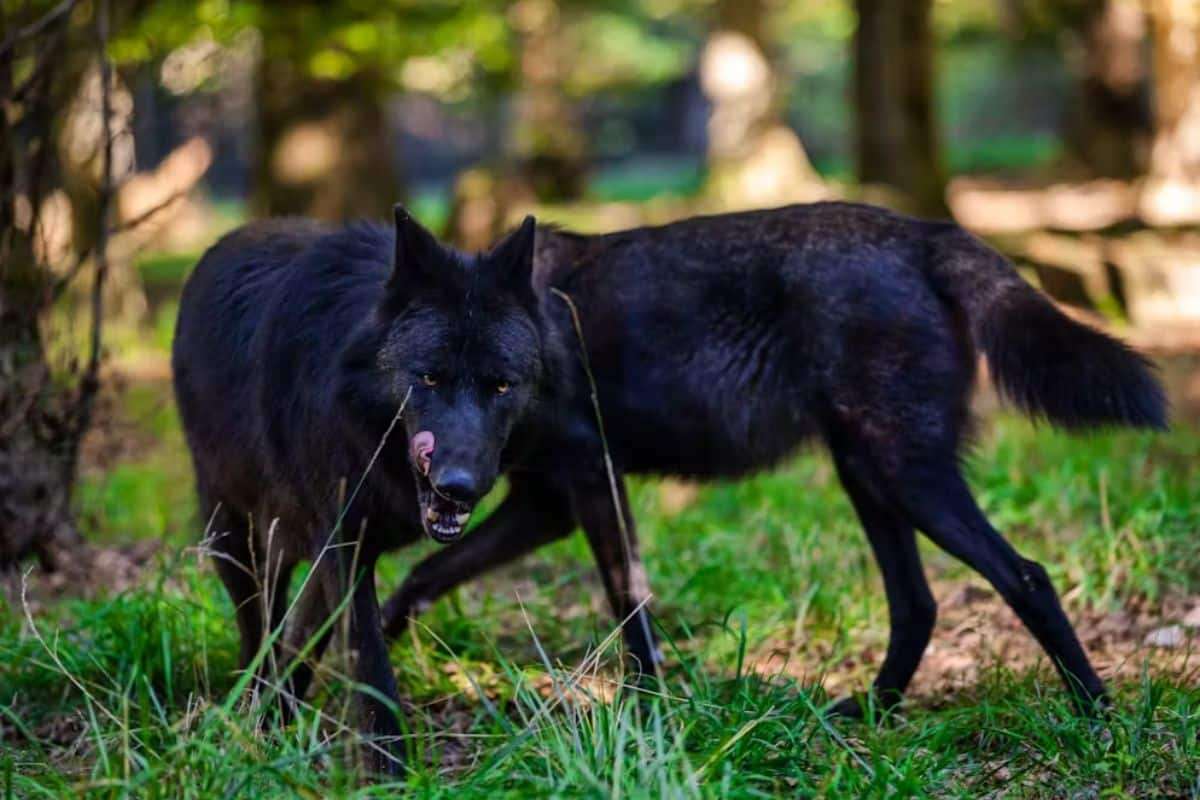
The discovery of uncommon black wolves roaming in Poland has captured the attention of researchers and wildlife experts alike. These melanistic wolves, predominantly seen in North America, represent a rare sight in Europe, where wolf coats usually range from gray to brown hues.
This unusual coloration might point to unique genetic traits, environmental adaptations, or possible influences from human activity on local ecosystems.
Enigmatic Black Wolves Roaming Poland’s Ancient Woodlands
Recent observations of these dark-furred wolves occurred in the Białowieża Forest, an extensive ancient woodland straddling the Poland-Belarus border, celebrated for its rich biodiversity. This primeval forest hosts various wildlife species, including the commonly gray-coated Canis lupus. Joanna Toczydłowska, a coordinator at the SAVE association, remarked, “It’s an unexpected and intriguing discovery.”

Conservationists and wildlife photographers were the first to capture images of the black wolves, igniting a wave of scientific curiosity. The rarity of such dark pigmentation among Europe’s wolf populations has prompted further research into their genetic background and ecological role.
The Role of Genetics Behind Black Wolf Fur
The melanistic coat seen in these wolves results from a genetic mutation causing excess dark pigment production. This mutation is believed to have originated in domestic dogs and subsequently entered wild wolf populations through interbreeding.
While black wolves are prevalent in regions like the Rocky Mountains and Yellowstone National Park, where almost half the wolf population possesses this genetic trait, European wolves have traditionally exhibited gray or brown coats, making Poland’s black wolves particularly rare.
Origins and Theories Surrounding Black Wolves in Europe
Experts suggest multiple explanations for the sudden presence of black wolves in Poland. One hypothesis is that melanism developed independently within European wolves, although it remains an infrequent mutation here.
Another possibility involves genetic links to North American wolves, potentially stemming from past conservation introductions involving melanistic individuals. Hybridization between wild wolves and domestic dogs carrying the melanism gene is also considered a contributing factor.
Environmental influences may play a role too, mirroring the situation in North America where black wolves are more frequent in dense forests, potentially offering better camouflage and enhancing survival chances.
Two extremely rare black wolves have been caught on camera in Poland.
The animals – which are grey wolves with a genetic mutation changing the colour of their fur – are relatively common in North America but little seen in Europe pic.twitter.com/AUJHJomYNz
— Notes from Poland 🇵🇱 (@notesfrompoland) February 9, 2025
Implications for European Wolf Populations
The emergence of black-coated wolves in Poland underscores the ongoing evolutionary processes shaping regional wildlife and showcases the recovery success of wolves in Europe following historical declines due to hunting and habitat loss.
Nevertheless, specialists express caution about the genetic consequences. While genetic diversity tends to enhance species resilience, there is concern that unregulated hybridization with domestic dogs might disrupt the genetic integrity of wild wolf populations.
Ongoing Enigma in the Heart of Poland’s Wilderness
The observation of black wolves in Poland presents a captivating biological mystery and highlights nature’s capacity for change. These elusive wolves continue to inhabit the Białowieża Forest, their ancestry still a subject of investigation, with their survival offering a compelling avenue for future research.
- Categories:
- Nature












0 comments
Sign in to Comment