
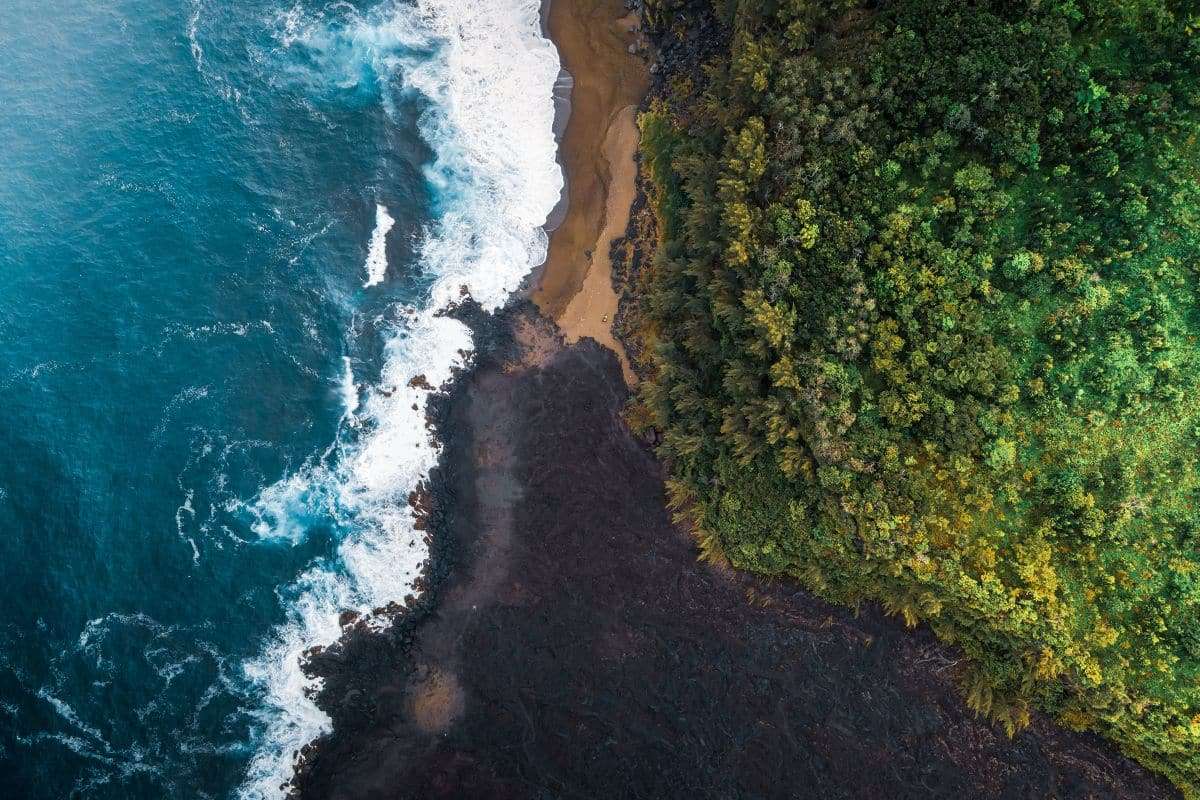
Throughout human history, Earth has been famously described as the “Pale Blue Dot,” a phrase coined by astronomer Carl Sagan inspired by Voyager 1’s iconic 1990 photograph. However, long before this, the planet’s seas displayed a very different color. Billions of years ago, Earth’s oceans appeared vividly green, shaped by early microbial life and unique chemical conditions.
Today, researchers caution that our oceans might be turning green once again, but this transformation stems from entirely new environmental dynamics.
Origins of Earth's Ancient Green Oceans
Insights from a recent study at Nagoya University shed light on why ancient oceans exhibited such a striking green coloration. Published in Nature Ecology & Evolution, the research indicates that iron hydroxide, abundant in primitive seas, absorbed blue wavelengths, while water absorbed reds, letting green wavelengths dominate the visible reflection.

Additionally, early photosynthetic microorganisms known as cyanobacteria contributed to this effect. These organisms harnessed sunlight via chlorophyll, and also contained phycobilins, pigments that enhanced their ability to absorb red and green light. This adaptation made cyanobacteria exceptionally successful, imparting a green tint to the oceans for eons.
About 600 million years ago, as atmospheric conditions evolved and more complex organisms arose, ocean composition changed, ushering in the familiar deep blue seas we recognize today.
Understanding the Shifting Ocean Colors
The Nagoya University team used computational models to mimic the light environment for early photosynthesizers. Their results highlighted how cyanobacteria’s phycobilins were optimally matched to ancient light conditions, providing an evolutionary benefit.
Lead author Taro Matsuo remarked, “Assuming an atmosphere like today’s, the greenish ocean reflection would likely mix with blue light scattering, resulting in a teal or bluish-green shade rather than pure blue.”
Scientists also propose that Earth’s oceans were once more expansive, amplifying their effect on the planet’s visual profile.
Is a Green Ocean Era Emerging Again?
The once blue oceans have maintained their color for hundreds of millions of years. However, research from MIT in 2019 suggests that by century’s end, half of global oceans might show greener hues due to climate-driven factors.
By 2023, satellite observations confirmed this trend—the greening of 56% of ocean waters over two decades. This transformation is linked to phytoplankton, tiny photosynthetic organisms fundamental to the marine food web.
Variations in ocean temperature, nutrients, and carbon dioxide levels influence phytoplankton abundance. As Earth warms, these shifts promote widespread blooms, changing how ocean surfaces absorb and reflect sunlight.
Implications of a Greener Ocean
This emerging greening signals more than just a color change; it marks substantial ecological impact. Elevated phytoplankton populations can alter marine food chains, affect commercial fisheries, and influence carbon cycling on a global scale.
Phytoplankton also modulate cloud formation through atmospheric chemicals, potentially shaping regional climates. While some areas may benefit from increased marine productivity, distinguishing natural variability from human-induced change remains a major challenge.
Oceans in Constant Transformation
Earth’s marine environments have always been dynamic. From iron-rich green waters in the past to the blue expanse we see now, ocean hues mirror the planet’s evolving conditions.
Scientists continue to observe these developments closely. Whether this green shift is fleeting or a lasting change is yet to be determined. However, it’s evident that the appearance of Earth’s seas is transforming more rapidly than anticipated.
As ongoing research unfolds, the pressing question is whether the term “Pale Blue Dot” will someday be replaced by “Pale Green Dot.”
- Categories:
- Nature















0 comments
Sign in to Comment