
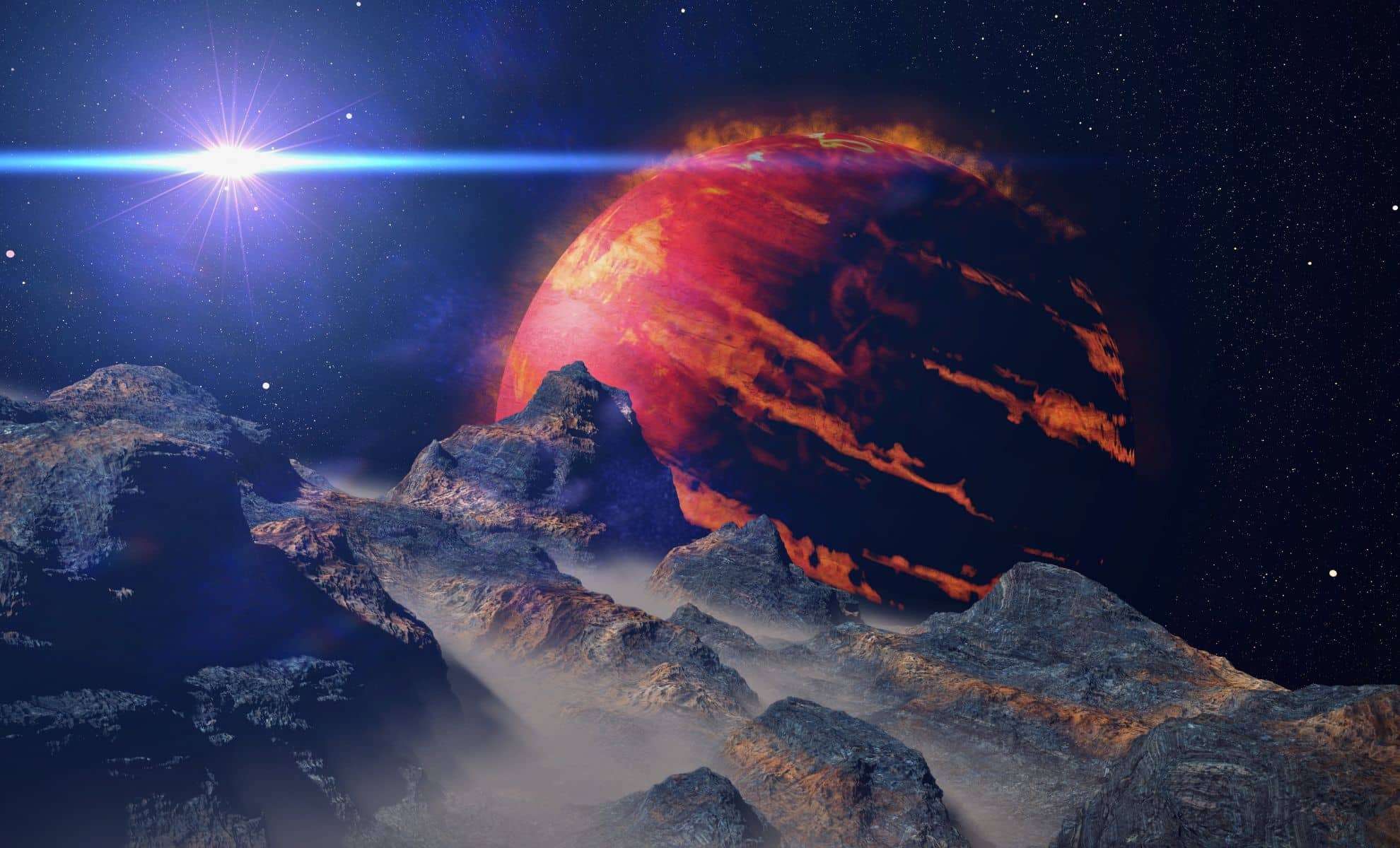
NASA has discovered a novel way to engage the public’s interest by portraying distant exoplanets as enticing travel locations. This imaginative initiative, originally launched in 2015, is now the subject of recent research published in the Journal of Science Communication. Led by writer and scholar Ceridwen Dovey, the study explores the collaboration between scientists and artists who bring to life planets typically hidden and inhospitable, located far beyond our reach.
Transforming Scientific Data Into Imagined Worlds
Unlike the breathtaking images from the Hubble Space Telescope, most exoplanets are not directly pictured. Instead, astronomers deduce their existence by observing the effects these planets have on their parent stars or the starlight they emit. When direct photos are available, they usually appear as mere blurry dots against the void. As Dovey points out, “there are very few direct images of exoplanets, and usually they are not very visually appealing: they’re just a grainy dot around a sun.”
This lack of captivating visuals posed a challenge for public engagement. How can you spark curiosity with so little to show? The solution emerged through creative storytelling. NASA’s Exoplanet Travel Bureau created vintage-style posters, immersive virtual tours, and even activity books that reimagine these remote planets as actual destinations.

A Vintage Poster Craze
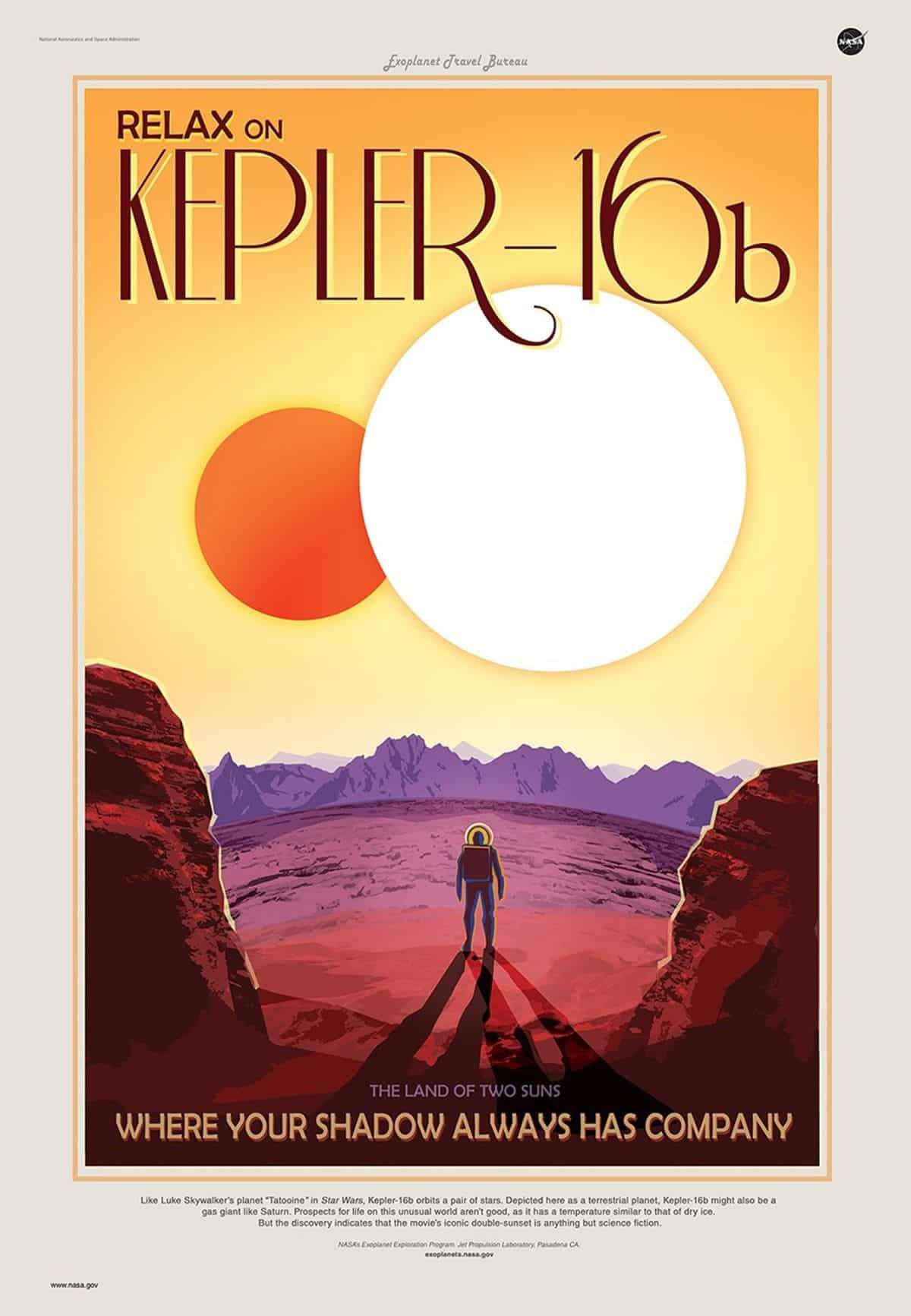
The posters quickly became a cultural hit. Modeled after the 1930s Works Progress Administration travel ads promoting U.S. national parks, NASA’s collection uses vibrant colors and nostalgic fonts to depict worlds many light-years away as ideal spots for holidays. One poster features Kepler-16b, a gas giant with two suns, promising that “your shadow always has company.” Another showcases PSO J318.5-22, a solitary rogue planet wandering space, describing it as the place “where nightlife never ends.”
Just like WPA’s famous efforts that attracted visitors to places like Yellowstone and Yosemite, these space-themed posters stir a sense of adventure and the allure of travel. They convert unimaginable journeys into playful daydreams, linking dense astrophysical data with everyday wonder.
A Fusion of Art and Scientific Insight
Guided by Joby Harris, a visual expert with experience in film and music, NASA’s creative team tackled the task of imagining inhospitable exoplanets as real-world destinations. Through consistent interaction between artists and researchers, these extreme environments were re-envisioned while maintaining scientific integrity.
According to Ceridwen Dovey, scientists already depend on imaginative thinking to interpret abstract data into tangible concepts. The artistic input enhanced this translation, opening fresh perspectives for understanding. “We can really be helpful to the scientists, too: not only by questioning their assumptions about how things work, but by going back to the foundations of their planning—mission planning—and showing how research design can be enriched by bringing in a multidisciplinary team from very early on.”
The project’s popularity proves that storytelling and creative representation of exoplanets hold significant potential to shape the future of astronomy alongside actual scientific discoveries.
- Categories:
- News



0 comments
Sign in to Comment