

The United Kingdom is set to pioneer outdoor experiments focused on solar geoengineering, aiming to examine whether deliberate changes to the Earth’s radiation balance can help curb rising global temperatures.
With a government commitment of £50 million, this initiative represents the UK’s most ambitious involvement so far in the contentious domain of climate intervention strategies.
Field Research to Assess Cooling Approaches
Led by the Advanced Research and Invention Agency (ARIA), this new program seeks to collect critical data on how solar geoengineering might work under real atmospheric conditions.

ARIA notes that these limited experiments will be conducted with strict oversight and are instrumental in determining the practicality of techniques designed to lower the planet’s surface temperatures.
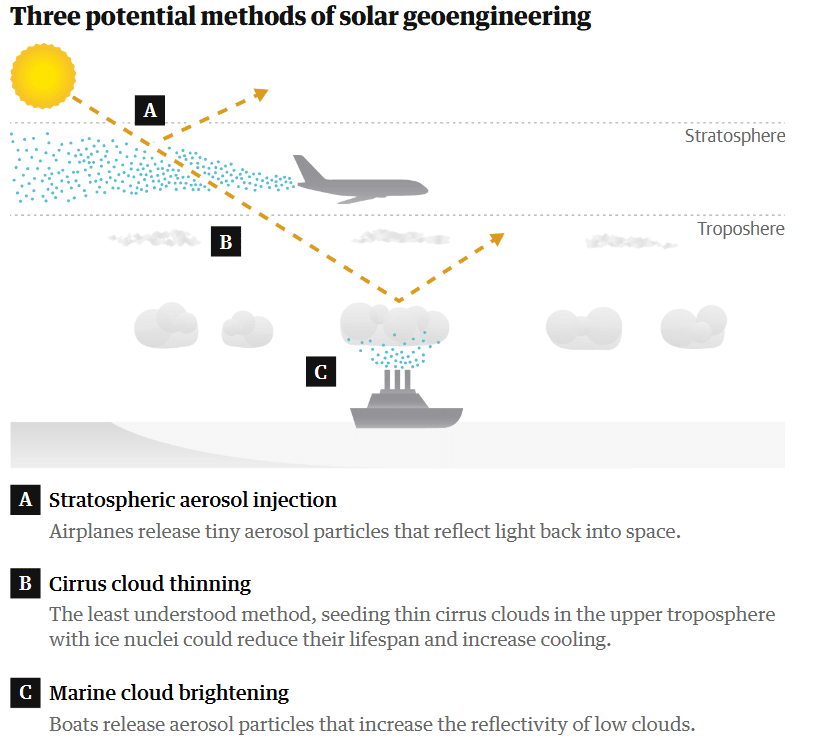
The tests will explore methods like dispersing reflective particles into the atmosphere and enhancing cloud reflectivity to bounce sunlight away from Earth.
Should these trials prove effective, they could provide a temporary means to slow climate change’s progression and mitigate some environmental impacts.
Advocates regard this research as a crucial potential “last resort” tool, especially as global carbon emissions continue to climb and heat records break.
Scientific Debate Surrounds Solar Radiation Modification
The UK’s major financial support now makes it one of the leading global backers of Solar Radiation Modification (SRM) research, a contrast to the reduced interest seen in the US in recent years.
While proponents highlight the need to be prepared for climate emergencies, critics point to the risks of unforeseen environmental consequences.
Concerns frequently raised include shifts in rainfall patterns that could threaten agriculture and food supplies in susceptible areas. Additionally, some argue geoengineering could divert attention from the urgent priority of lowering fossil fuel emissions.
Some experts describe SRM as reckless and warn it risks distracting from more sustainable solutions, likening it to “treating cancer with aspirin.”
Nevertheless, Professor Mark Symes, who heads the ARIA effort, stresses that the possibility of crossing climate tipping points demands experimental study outside of theoretical models.
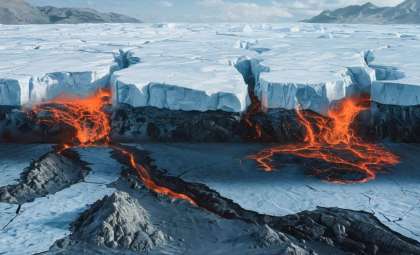
“The uncomfortable truth is that our current warming trajectory makes a number of such tipping points distinctly possible over the next century,” Symes said. “This has driven increased interest in approaches that might actively cool the world in a short timeframe in order to avoid those tipping points.”
Symes pointed out that despite plentiful computer simulations and lab work, physical outdoor evidence is still missing to fully understand the impacts and performance of these technologies.
“Having spoken to hundreds of researchers, we reached the conclusion that a critical missing part of our understanding was real world, physical data,” he said.
Various UK Initiatives Advance Geoengineering Studies
Alongside ARIA’s trials, the Natural Environment Research Council (NERC) unveiled a parallel £10 million project in April to examine solar geoengineering effects.
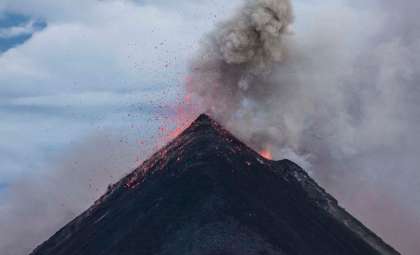
Unlike ARIA, NERC’s work will rely on analysis of existing data, climate models, and natural phenomena such as volcanic eruptions and variations in maritime emissions, without launching new outdoor experiments.
“Our role is to provide the best possible, robust evidence, but without advocating for [geoengineering] one way or the other,” said Kate Hamer, a director at NERC.
Among NERC-funded researchers, Professor Jim Haywood of the University of Exeter projects it may take close to a decade to fully develop an operational SRM system.
“At the moment, all of these ideas need to remain on the table,” Haywood said, “because otherwise climate change in the coming decades could be extremely damaging.”
Dr. Sebastian Eastham from Imperial College London, also supported by NERC, highlighted plans to include diverse global perspectives in the research.
“We know that SRM, or the prospect of SRM, would affect international relations – it’s a serious research question,” Eastham said.
He further anticipates the data will help rule out some approaches, allowing scientists to focus on the safer, most promising options.
“I expect we will gather a small amount of observational evidence and it will close the door for some. Then we’ll know we focus our efforts on the areas that are going to be most helpful and least harmful.”
Ensuring Safety and Transparency in UK Geoengineering Experiments
ARIA has confirmed that no toxic chemicals will be released during these trials. The program will conduct thorough environmental reviews and engage with local communities in advance.
While details are forthcoming, official reports also mention that Russia plans to invest about $66.5 million in similar geoengineering research.
Both nations focus on two main strategies: stratospheric aerosol injection, dispersing substances like sulfur dioxide high in the atmosphere, and marine cloud brightening, which involves spraying seawater to enhance cloud reflectivity.
Experts caution that large-scale solar alteration might disrupt worldwide rainfall and weather patterns, creating complex challenges.
Still, growing concerns over impending climate thresholds encourage more comprehensive data collection and measured experimentation.
- Categories:
- Science







0 comments
Sign in to Comment