
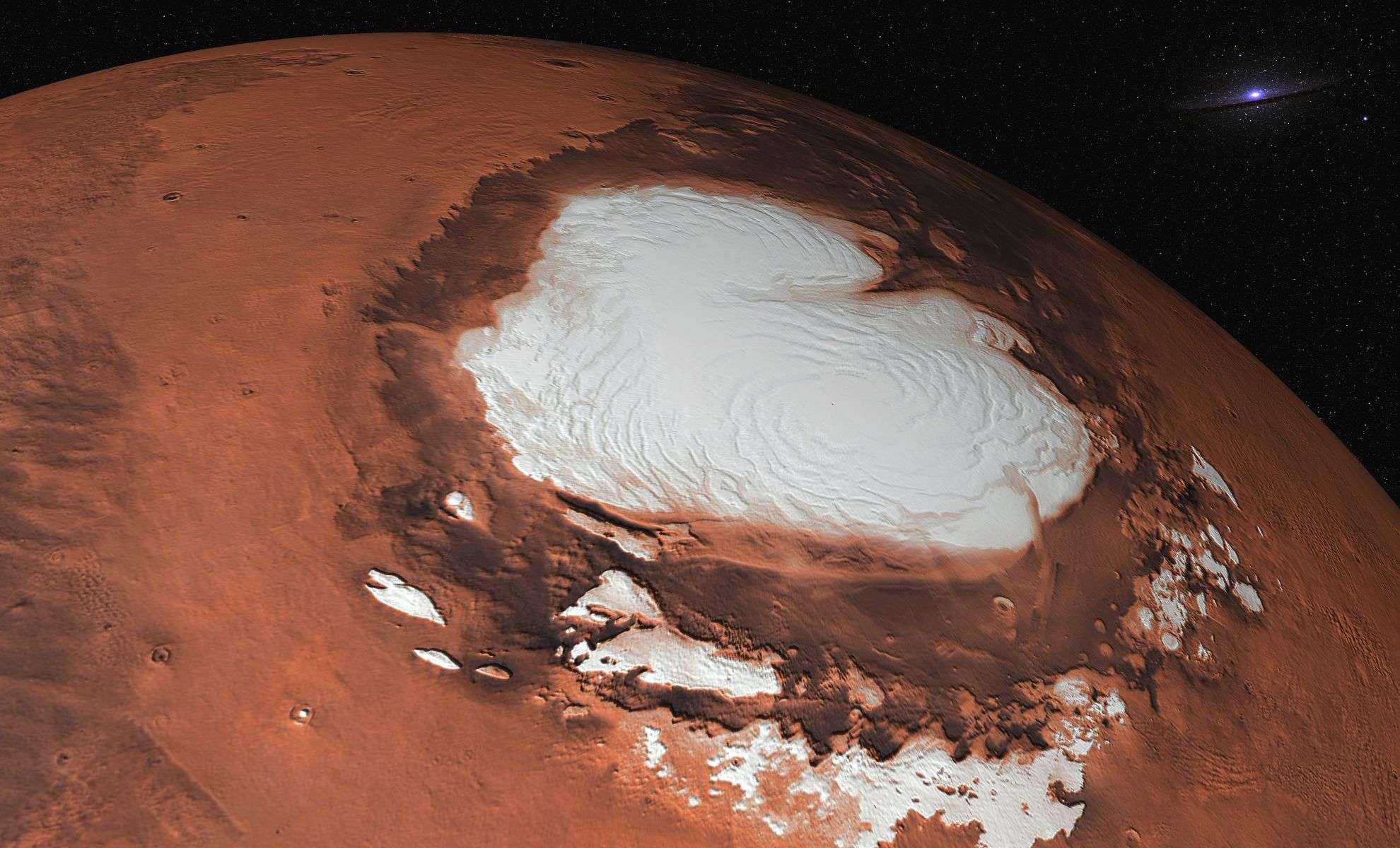
A remarkable phenomenon has been observed in the frigid atmosphere above Mars’s northern polar ice cap. In the planet’s prolonged winter darkness, where temperatures plummet to extreme lows and sunlight is completely absent, researchers have detected an unusual increase in ozone levels. This rare observation reveals new details about the chemical processes shaping Mars’s atmosphere and offers fresh insights into the planet’s climatic past. The research, published at the European Planetary Science Congress, was spearheaded by Dr. Kevin Olsen from the University of Oxford.
An Unanticipated Spike in Ozone During the Polar Night
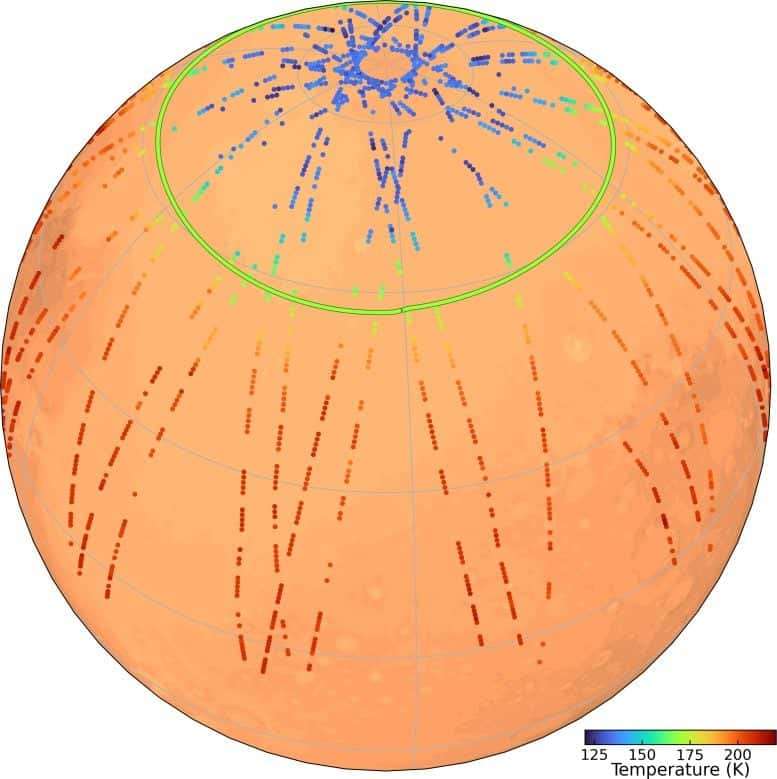
Utilizing measurements gathered by the European Space Agency’s ExoMars Trace Gas Orbiter, the researchers examined the cold, swirling air mass enveloping Mars’s North Pole. They were intrigued to find that within this vortex, temperatures can be around 40 degrees Celsius colder than the surrounding atmosphere. Such an intense chill causes Martian water vapor to freeze and settle onto the polar cap’s surface.
This freezing halts the typical chemical reactions responsible for breaking down ozone. On Mars’s sunlit regions, ultraviolet radiation interacts with water molecules to degrade ozone, but with the absence of light during winter, this destructive pathway ceases. Consequently, ozone accumulates in the cold, isolated air mass, creating a unique chemical environment exclusive to the polar night.

“Ozone is a very important gas on Mars – it’s a very reactive form of oxygen and tells us how fast chemistry is happening in the atmosphere,” Olsen explained. “By understanding how much ozone there is and how variable it is, we know more about how the atmosphere changed over time, and even whether Mars once had a protective ozone layer like on Earth.”
The Dynamic Polar Vortex of Mars’s Northern Hemisphere
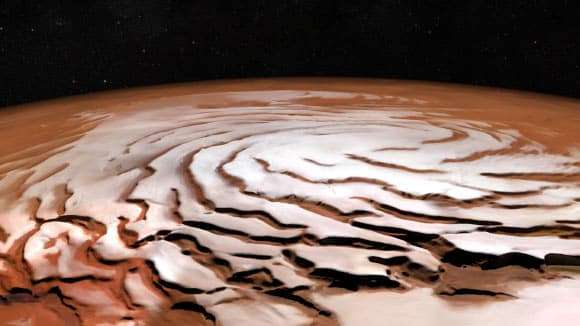
Mars’s polar vortex is generated by the planet’s axial tilt of approximately 25.2 degrees, which drives its distinctive seasonal changes. As summer concludes in the northern hemisphere, frigid air begins to whirl around the pole, producing a long-lasting vortex that persists well into spring. While similar in nature to Earth’s polar vortex, Mars experiences much lengthier and darker winters, complicating direct observations.
To better understand this atmospheric event, Olsen’s group combined data from NASA’s Mars Reconnaissance Orbiter and its Mars Climate Sounder, which records temperature fluctuations in the atmosphere. Sharp temperature drops indicating entry into the vortex were then compared with ozone measurements from ExoMars’s Atmospheric Chemistry Suite (ACS). These combined observations confirmed that ozone concentrations increase distinctly inside the vortex due to the cold, dark conditions.
Insights Into Mars’s Ancient Atmospheric Evolution
This discovery provides crucial clues about the historical development of the Martian atmosphere. If Mars once maintained a more substantial ozone layer, it might have offered protection against harmful ultraviolet radiation, potentially enabling microbial life to persist in earlier epochs.
The European Space Agency plans to expand this research with the upcoming deployment of the ExoMars Rosalind Franklin rover, set for launch in 2028. This rover will investigate the planet’s surface for ancient signs of life while orbital missions continue to monitor atmospheric changes remotely.
Though Mars’s winter darkness seems inhospitable, the planet’s atmosphere quietly narrates a story of change, resilience, and chemistry. The cold, ozone-rich environment above its north pole might still be conveying secrets from an era when Mars was far more vibrant than today.
- Categories:
- News








0 comments
Sign in to Comment