
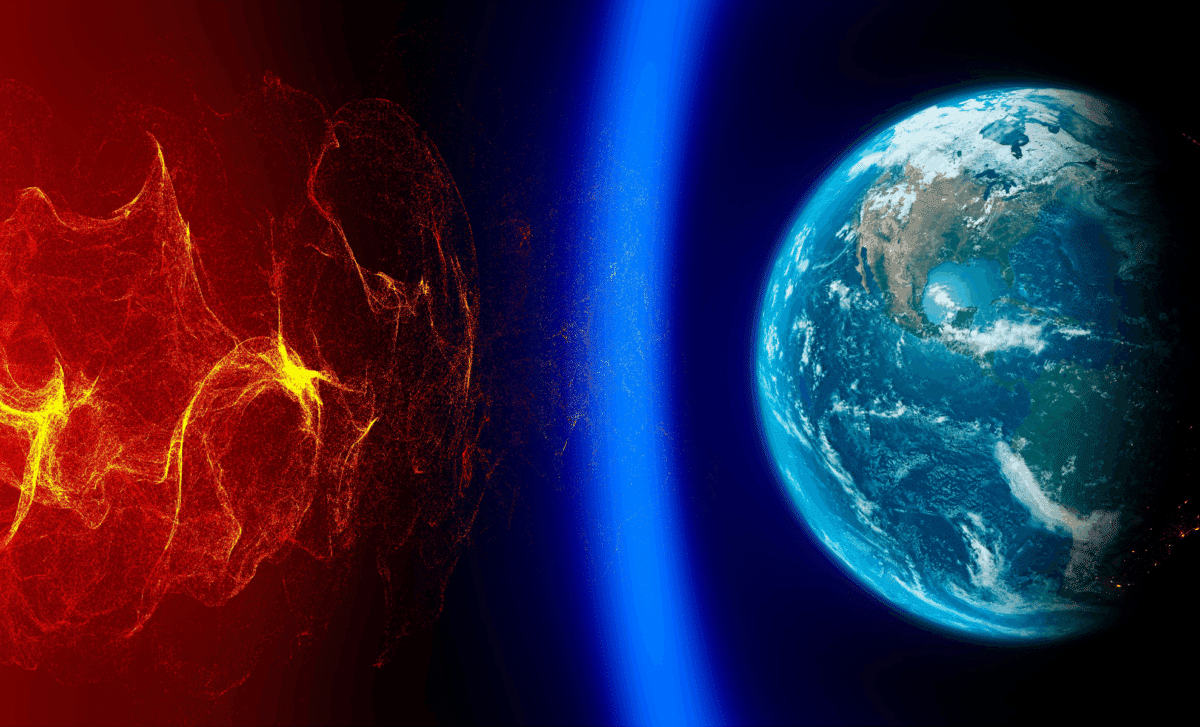
Researchers have uncovered a startling new aspect of Earth’s magnetosphere that overturns long-standing scientific beliefs. Previously, it was accepted that the magnetosphere’s charge configuration had the morning side as positively charged and the evening side as negatively charged. However, recent findings demonstrate the opposite arrangement: the morning sector carries a negative charge while the evening sector is positively charged. This revelation is set to transform current concepts about plasma behavior and space weather processes.
The Vital Role of Earth’s Magnetic Shield
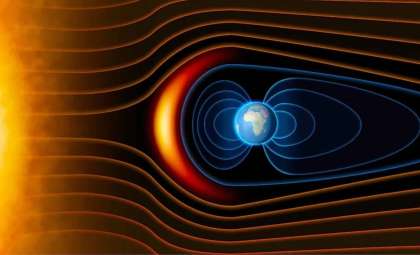
The Earth’s magnetosphere functions as a protective layer enveloping our planet, defending it from intense solar radiation. Stretching deep into space, it constantly interacts with the solar wind and charged particles emitted by the Sun. This invisible defense system plays a crucial role in regulating space weather, which affects satellites and electricity networks on Earth. Until now, scientists assumed a straightforward charge distribution, with the morning side being positive and the evening side negative.
This conventional perspective seemed consistent with how electric charges generally behave, where positive charges move toward negative areas. Yet, fresh data from satellites paints a different picture—the morning side is, in fact, negatively charged, and the evening side holds a positive charge. These insights have forced experts to overhaul existing models linked to the magnetospheric environment.

Reevaluating Electric Forces and Plasma Flows
In response to this puzzling discovery, scientist teams from Kyoto University, Nagoya University, and Kyushu University employed sophisticated magnetohydrodynamic simulations to replicate conditions within Earth’s magnetosphere. Their results showed that the electric field moves from morning to evening, contradicting earlier assumptions and supporting the observed charge inversion.
Yusuke Ebihara, principal investigator of the research featured in the Journal of Geophysical Research: Space Physics, clarifies,
“In conventional theory, the charge polarity in the equatorial plane and above the polar regions should be the same. Why, then, do we see opposite polarities between these regions? This can actually be explained by the motion of plasma.”
This plasma movement, influenced by solar wind and magnetic fields, accounts for the reversal of charges, exposing the intricate dynamics occurring in the magnetosphere’s equatorial zone.
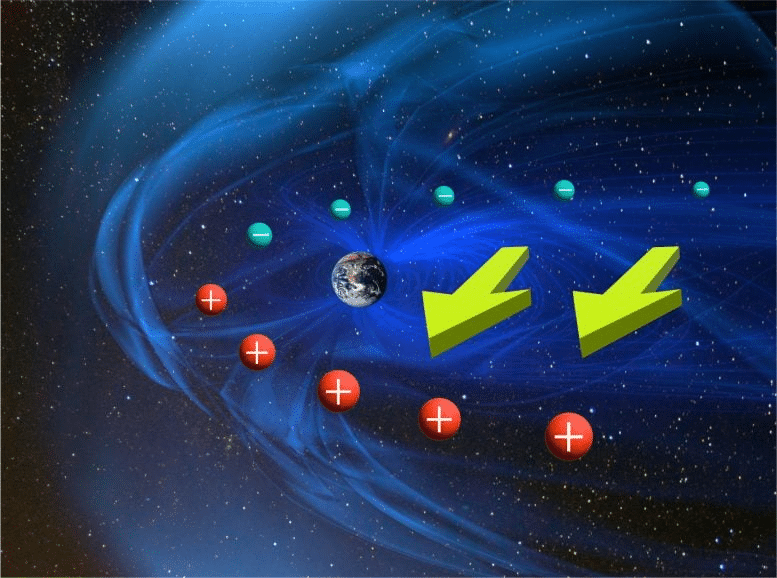
Differences Between Polar and Equatorial Charge Patterns
An intriguing feature of this breakthrough is the distinct contrast between polar and equatorial charge behaviors. At the poles, charge arrangements align with conventional understanding. But closer to the equator, Earth’s magnetosphere shows a striking switch: the morning side is negatively charged while the evening side is positive.
Ebihara and colleagues attribute these opposing patterns to how plasma flows interact with Earth’s magnetic field. Solar magnetic energy enters the magnetosphere and circulates clockwise on the dusk side toward the poles. Differences in magnetic field orientation between equatorial and polar zones drive these plasma flows to create the observed charge reversal.
This finding challenges previous assumptions about uniform plasma behavior, proving that charges are shaped by plasma movements responding to magnetic forces rather than the other way around.
Broader Impacts on Space Weather Science and Planetary Research
The consequences of this research extend well beyond Earth. A better grasp of plasma dynamics near Earth can enhance forecasting of space weather events such as geomagnetic storms, which affect satellite reliability, GPS accuracy, and terrestrial power systems. With a revised understanding of charge distributions, scientists can improve predictions and develop strategies to mitigate these disruptive space weather impacts.
Moreover, the insights gained here could apply to other planets with strong magnetic fields, including Jupiter and Saturn. These gas giants also possess enormous magnetospheres protecting them from solar influences. Comparing their magnetic environments with Earth’s will deepen comprehension of plasma and magnetic interactions across the solar system.
- Categories:
- News




0 comments
Sign in to Comment