
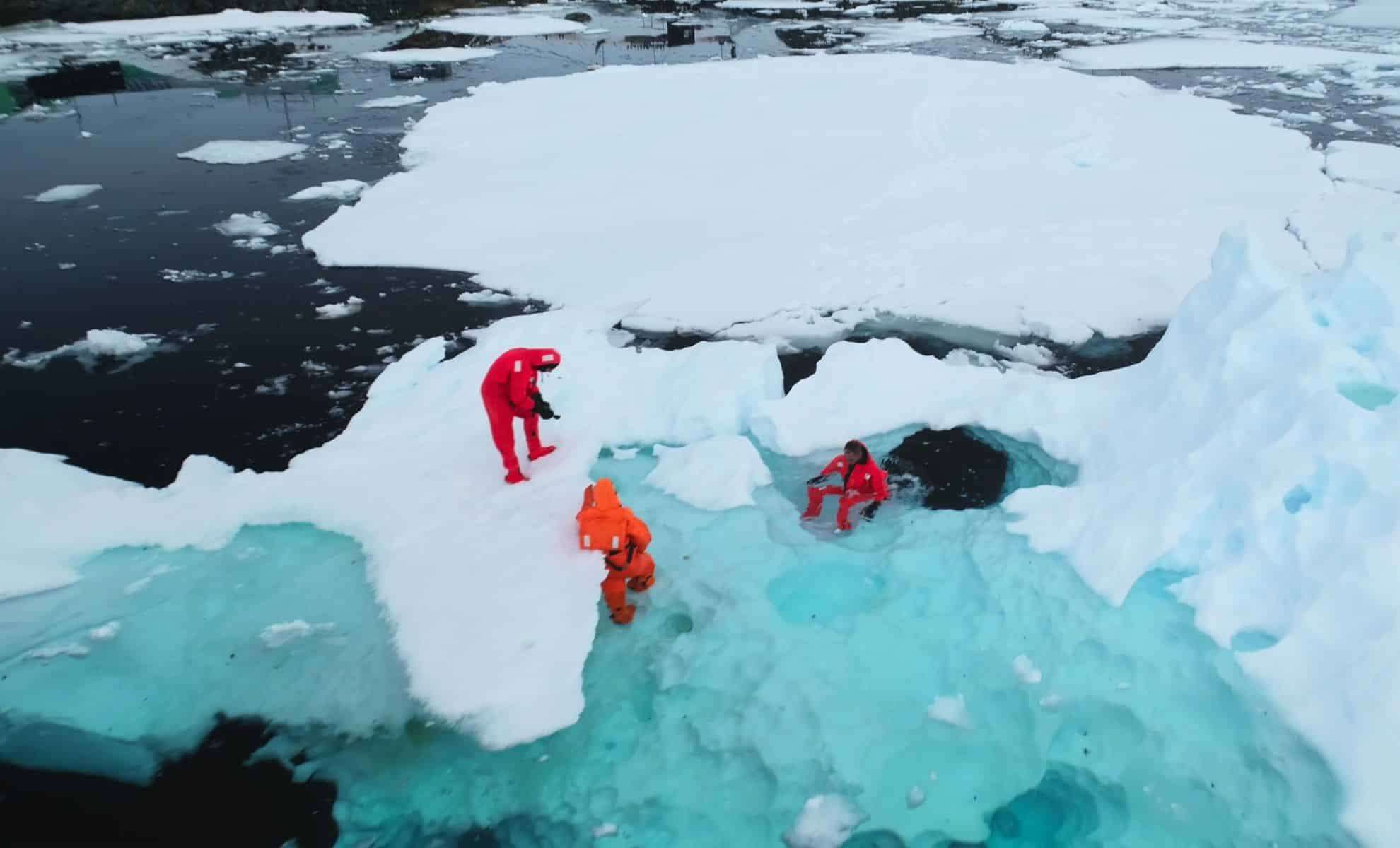
Greenland’s vast and icy expanse has piqued scientific curiosity for decades. The mysteries beneath its thick snow and ice layers are now starting to unfold thanks to a recent breakthrough. Researchers have uncovered findings, detailed in the journal Microbiome, that could transform our comprehension of ecosystems, climate dynamics, and the influence of viruses in natural settings.
Discovery of Colossal Viruses Within Frozen Realms
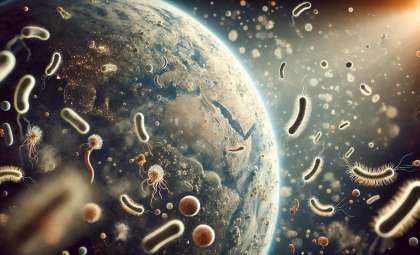
Amid Greenland’s icy and remote terrain, scientists stumbled upon a startling revelation: giant viruses thriving amidst the microalgae on the ice sheet. These viruses are exceptionally large compared to typical viruses, inhabiting regions once presumed devoid of such life forms.
This marks the inaugural detection of these massive viruses in Greenland’s snow and ice ecosystems, broadening our grasp of viral existence and their ecological roles in polar environments.

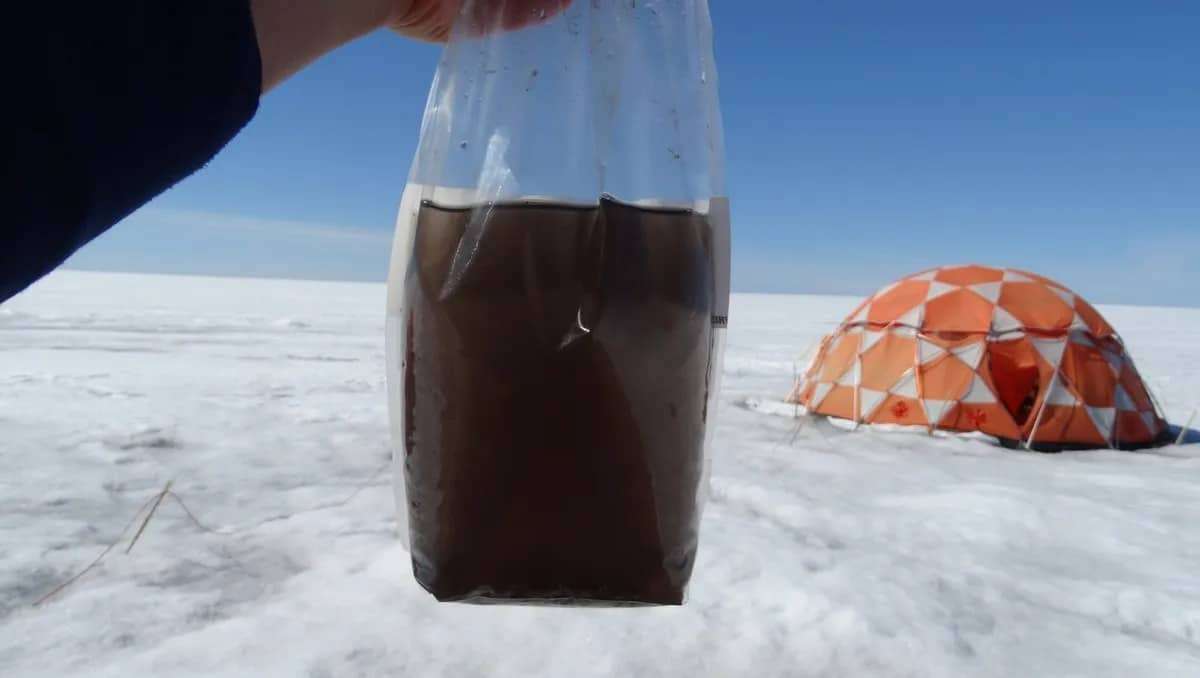
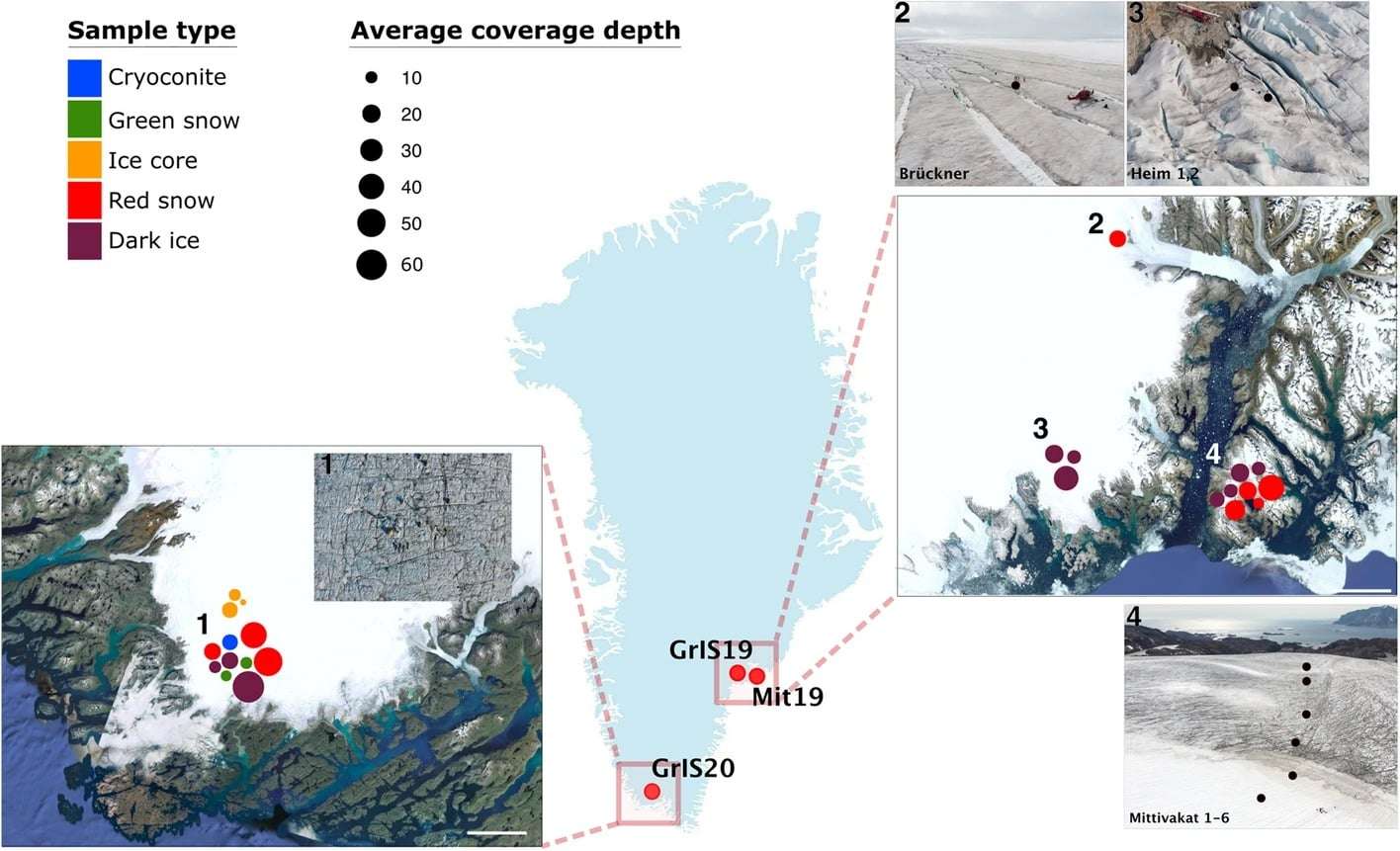
Leading this research, Laura Perini from Aarhus University’s Department of Environmental Sciences gathered samples from diverse icy locales on the Greenland Ice Sheet. By analyzing their DNA and RNA content, the team confirmed not only the existence but also the active presence of these giant viral forms in extreme cold conditions.
Some of these viruses reach dimensions up to 2.5 micrometers, making them roughly 125 times larger than common viruses typically studied, marking a significant departure from known microscopic viral pathogens.
Interactions Between Viruses, Algae, and Ice Melting
As Arctic ice sheets gradually thaw, interactions between giant viruses and surface microalgae become increasingly significant. These algae substantially influence the melting process, darkening the ice and boosting solar absorption during warmer periods.
The newfound giant viruses might naturally curb algae blooms, acting as ecological regulators to prevent excessive algal growth, which in turn could moderate the acceleration of glacier melting.
Perini’s team found the virus-algae relationship critical for maintaining the delicate ecological balance necessary for preserving the ice sheet’s stability.
Broader Consequences of Giant Viruses on Earth’s Ecology
Finding these giant viruses in Greenland extends beyond local interest, revealing their possible role in shaping ecosystems worldwide. Known as nucleocytoplasmic large DNA viruses (NCLDVs), they are established inhabitants of marine and freshwater systems but are now confirmed in terrestrial polar ice habitats.
This discovery implies that such viruses could influence microbial populations, alter carbon cycling, and affect the liberation of greenhouse gases stored in ice, thereby potentially impacting global climate dynamics.
Unraveling the Mysteries Ahead
Despite this intriguing revelation, numerous questions persist. It's unclear which algae species the viruses infect, whether there is host specificity, and how these dynamics operate on a molecular level. Continued investigation aims to unravel these unknowns within frozen ecosystems.
This finding offers a novel perspective on microbial communities beneath the ice, shedding light on the complex biological processes influencing the polar environment. However, the full ramifications remain to be explored.
- Categories:
- Science







0 comments
Sign in to Comment