
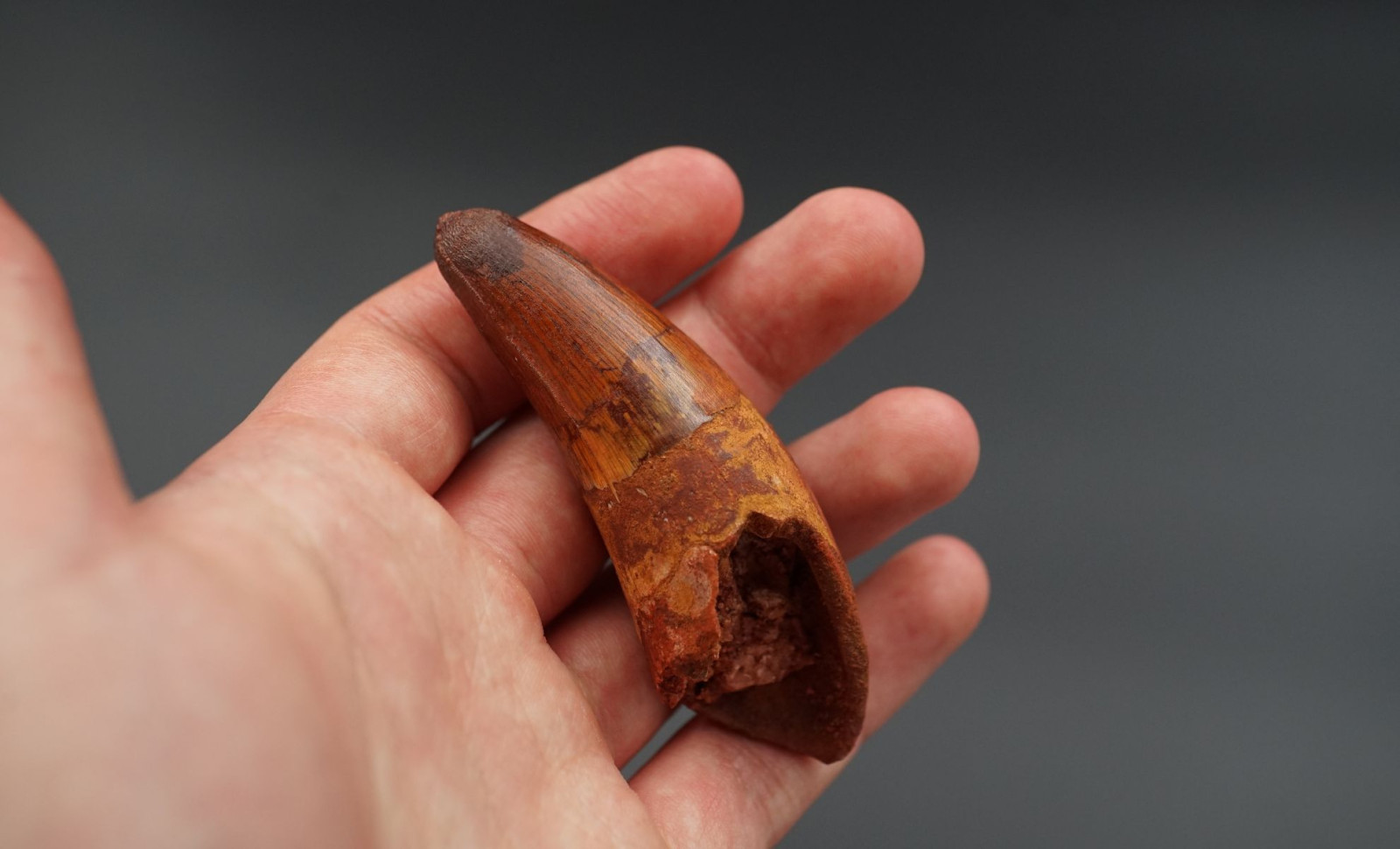
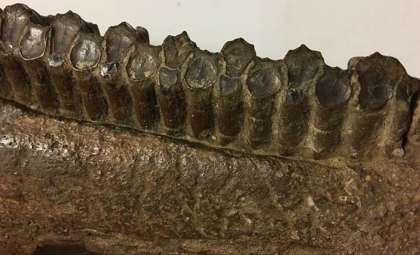
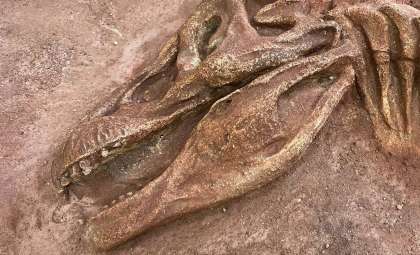
Initially appearing to be a typical dinosaur fossil, a closer look at the Edmontosaurus skull unearthed in Montana’s Hell Creek Formation revealed an extraordinary feature: a tooth still embedded firmly within the bone.
The research, featured in PeerJ, highlights the rarity of such finds, offering a rare glimpse into dinosaur behavior beyond indirect evidence like isolated bones or tooth marks. Now displayed at the Museum of the Rockies, this specimen provides unprecedented insight.
Embedded Tooth Offers Clear Clues About the Attacker
Pinpointing which predator left bite marks can be challenging. However, the embedded tooth offers a direct link. Researchers examined its shape, size, and serration patterns in detail. Taia C. A. Wyenberg-Henzler, a doctoral researcher at the University of Alberta, stated:

“Although bite marks on bones are relatively common, finding an embedded tooth is extremely rare.” She added, “The great thing about an embedded tooth, particularly in a skull, is it gives you the identity of not only who was bitten but also who did the biting.”
The study confirms that these features closely correspond to the Tyrannosaurus rex fossils from this area. By comparing against other theropods, the team confidently excluded other carnivorous species.
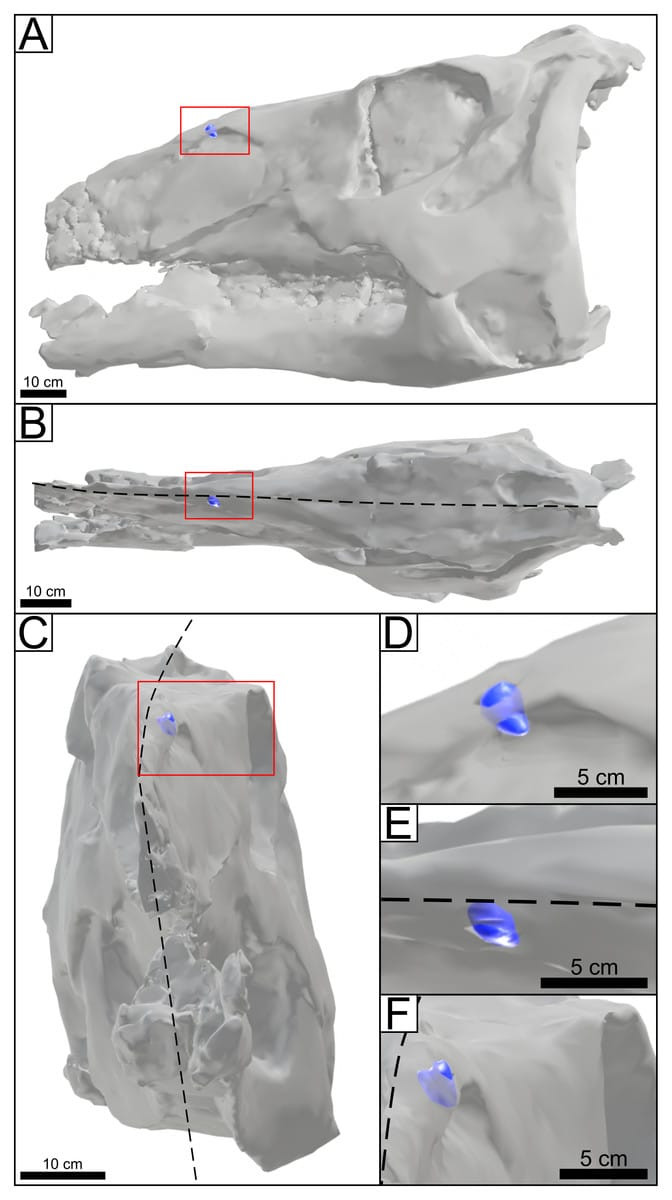
CT imaging revealed the tooth’s angle of penetration, suggesting a frontal attack forceful enough to break the tooth upon impact. The serration details indicate the attacker was an adult T. rex, implying a deliberate and powerful bite.
A Glimpse of a Deadly Encounter
No indications of healing were found on the wound, an important detail. John B. Scannella from the Museum of the Rockies explained that this suggests the Edmontosaurus either died from the injury or was already deceased when bitten.
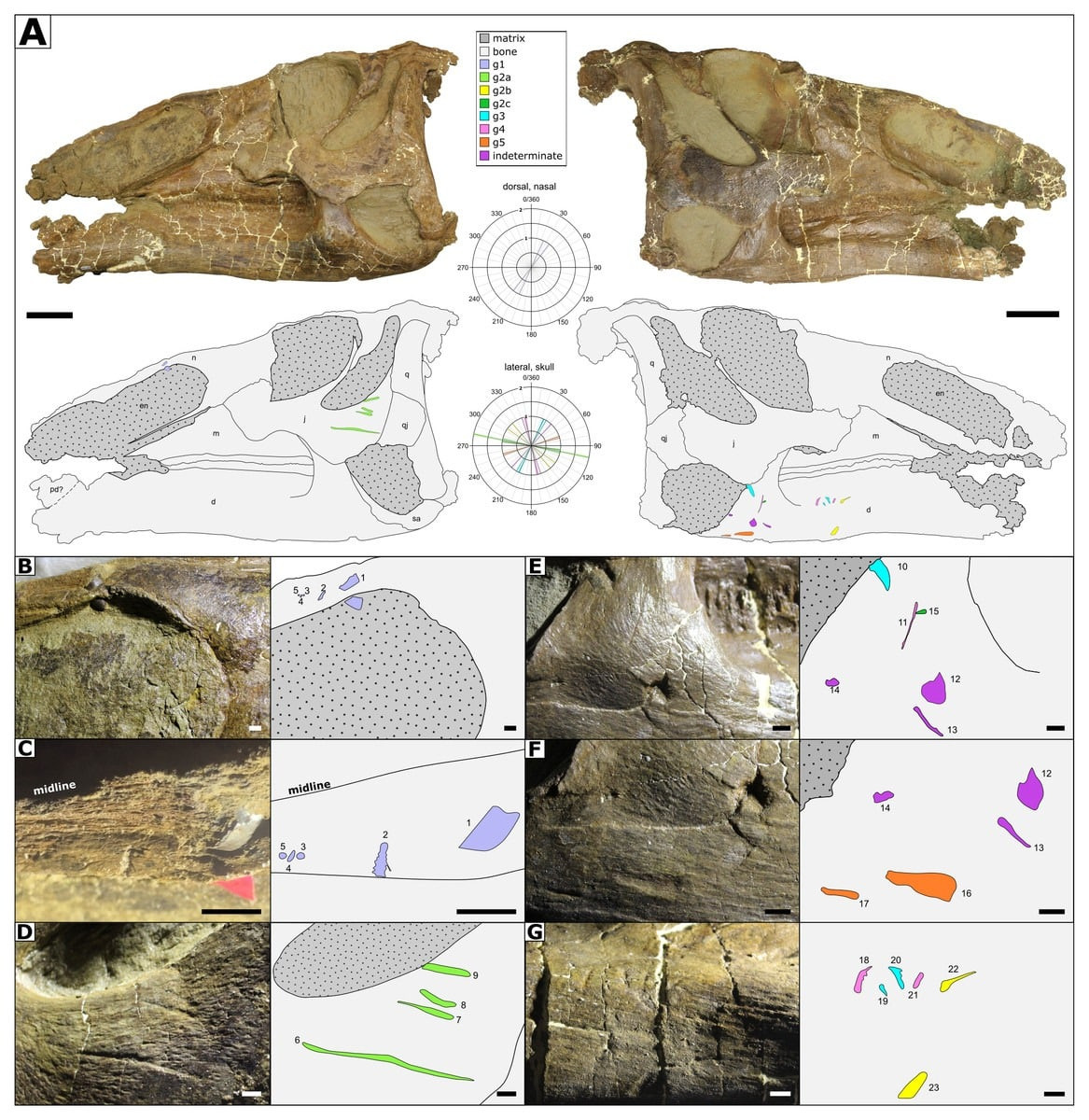
Both possibilities remain open, though the bite's position on the snout points to a close, forceful attack — far from a casual nibble. While this fossil does not resolve the debate on whether T. rex was primarily a predator or scavenger, it captures a violent or nearly fatal encounter with exceptional detail.
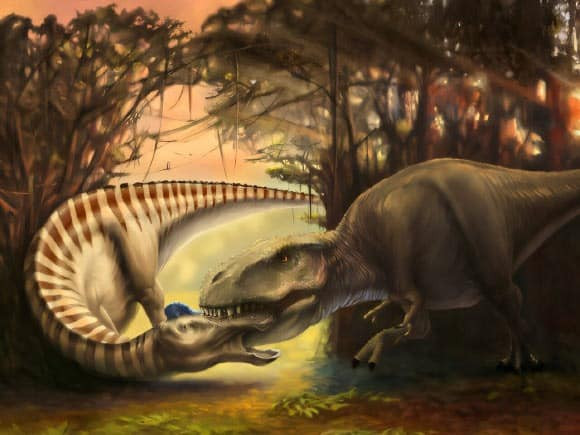
“Looking at the way the tooth is embedded in the nose of the Edmontosaurus suggests that it met its attacker face-to-face, something that usually happens to an animal that was killed by a predator,” he explained.
Bite Marks Reveal What Followed the Attack
The fossilized skull also features multiple bite marks behind the eye and along the lower jaw—areas dense with muscles in hadrosaurs like Edmontosaurus. According to the study, this pattern mirrors feeding behavior seen in present-day carnivores that target softer tissues after the initial strike.
The positioning of the bite marks implies continuous feeding on the head post-attack. The absence of other skeletal remains suggests the rest of the body was likely consumed or dispersed prior to fossilization.
- Categories:
- Science






0 comments
Sign in to Comment